
Refine by
Grab Sampling Articles & Analysis
131 articles found
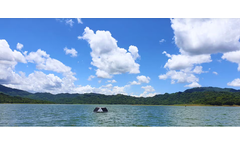
When reservoir monitoring relies on periodic grab samples, the information available to guide treatment decisions is always lagging. A bloom that develops between weekly samples may not appear in laboratory data until concentrations are already rising steeply at the intake. ...
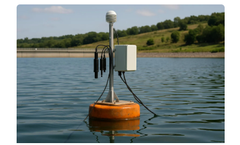
The distinction matters. Grab sampling provides a snapshot at a single moment, whereas real-time monitoring yields a continuous record. ...
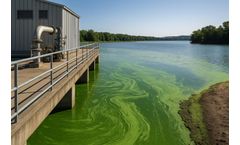
Monitoring frequencies range from grab sampling to continuous systems offering daily or hourly data, with continuous monitoring providing earlier warning for rapid blooms.Monitoring Approaches and ThresholdsAnnual planning should define monitoring strategy; grab sampling offers periodic snapshots, while continuous monitoring ...
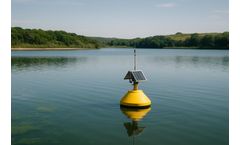
This enabled real-time tracking of bloom development rather than reliance on weekly grab samples. The ultrasonic component delivered targeted pulses to disrupt cyanobacteria gas vesicles, preventing cells from accessing surface light and sediment nutrients. ...

The Groundwater Modeling Problem Nobody Talks About There are roughly 60,000 leaking underground storage tank (LUST) releases in the EPA's active remediation backlog, and over 1,343 active Superfund sites on the National Priorities List.(1,2) The average remediation timeline for both exceeds 10 years.(3) Most of these sites share one thing: either no numerical groundwater model at all, or a ...
ByLiORA
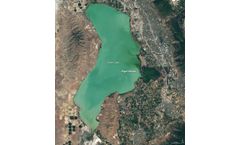
Introduction When people talk about water quality, they often focus on clarity or colour, but lake nutrients quietly shape almost everything that happens below the surface. A modest increase in nutrient loading can be the difference between a clear, oxygen-rich reservoir and one that drifts into chronic eutrophication with recurring algal blooms. For drinking water managers, understanding lake ...
Running a lake or reservoir without good data can feel a bit like driving at night with the headlights dimmed. A water quality monitoring system gives operators a clearer view by turning occasional samples into a continuous story about the water. With online water quality monitoring in place, teams no longer wait for weekly laboratory results; they can watch how temperature, algae and dissolved ...
Introduction Water and pH sit at the heart of water quality decisions because when potential of hydrogen changes, metals dissolve, pipes corrode, and this is how ecosystems behave. Even when water looks clear, the pH levels can drift with weather, geology, and biological activity. This guide explains what are the optimal levels of safe drinking water parameters, why it matters, and how to ...

How our in-house pilot studies replicate field conditions to generate meaningful methane data. In a previous blog we discussed some of the pros and cons of BMP studies on anaerobic digesters. While they’re excellent for showing how much methane can be produced from a food substrate, they have less utility as a representative site study and will only work well in some cases. The best-case ...
As winter melts into spring, environmental field teams gear up for one of the busiest times of the year: the spring sampling season. With snowmelt runoff, rising groundwater levels, and increased mobility in field conditions, spring is a critical window for collecting representative groundwater samples—especially in regions impacted by agricultural runoff or legacy contamination. A recent ...
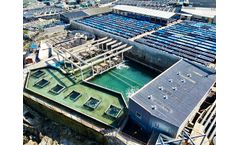
These improvements led to almost zero mortalities in 2019, however, staff still relied on grab samples to determine whether to shut off the pumps, and the sampling process took time to complete. ...

The Harrison Wastewater Treatment Plant is a 2.3 MGD average daily design flow wastewater plant servicing the City of Harrison in Southwest Ohio. During the pilot testing, the plant was receiving an average daily flow of approximately 1.1 MGD. Due to local industries and residential waste, the influent wastewater to the Harrison plant occasionally experiences a high fat, oil, and grease (FOG) ...
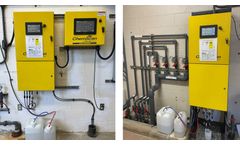
While operators conduct sampling events as frequently as possible, this still leaves an eight-hour interval between manual sampling. ...
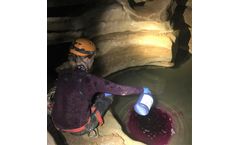
Charcoal monitoring only provides point-to-point connections and grab sampling requires significant effort for lower-resolution data. ...

Overview The Pono Kai Seawall is located on the eastern coastline of the island of Kaua’i. It was significantly damaged from years of exposure to high tides, heavy rains, and pounding surf. The seawall was to be repaired by constructing a sheet pile wall with a rock toe and adding beach nourishment. However, the repair project could result in suspended sediment that might degrade water ...

” Phathom is one of these new technologies helping to improve efficiency and environmental outcomes, with results that are far superior to alternative methods of water quality monitoring. Take grab sampling, for example. Water quality is often monitored simply by having someone drive to a site, wade out into a stream or pond, and collect a jar of water ...
ByPhathom
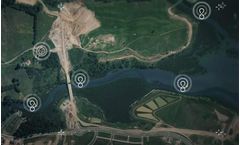
In the past, your only option was sending an apprentice down to the retention pond to grab a water sample, hoping they do it right and then waiting for the lab analysis. ...
ByPhathom
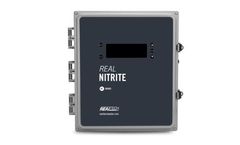
When nitrite is used as a corrosion inhibitor, it becomes crucial to maintain its concentration above a certain level to prevent localized corrosion from happening.Monitoring of nitrite is most commonly done by grab sample testing. The testing is typically done using kits that rely on drop count titration methods which may require a third-party service company to ...
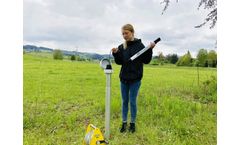
Monitoring the conductivity of groundwater and surface water is an essential task for maintaining the quality and safety of our water resources. Continuous monitoring of conductivity can help identify long-term trends and seasonal variations in water quality, which are used to predict changes in water availability and quality over time. This can aid in the development of effective ...

ABOUT UVT UV transmittance, UV transmission or UVT is a measurement of the amount of ultraviolet light (commonly at 254 nm due to its germicidal effect) that passes through a water sample compared to the amount of light that passes through a pure water sample. To measure UVT, ultraviolet light at 254 nm is passed through a 10 mm quartz cell containing the ...