
Grain Kernel Articles & Analysis
13 articles found
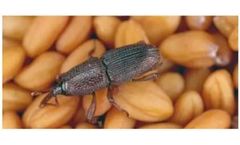
The loss of grain in storage relating to or resulting from living things such as insects, pests, rodents, and fungi and form physical rather than biological such as temperature or moisture lead to global losses that exceed 80 million metric tons in grain storage. Most of the time, Aluminium Phosphide is used for fumigation, though it can be dangerous. Also, insects and pests have developed ...

When grains are harvested, there is nearly always plenty of leftover waste materials. Not merely are there any the stalks of the plants to take into account, but nearly every grain has a hull, or husk, that hard outer shell that protects the inner grain kernel. ...
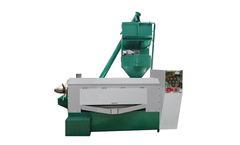
In the pressing, peanut will not be pressed into a cake but has been reserved for the whole grain of defatted peanut kernel. In this way, peanut shape, taste, and natural nutrients will not be destroyed. ...
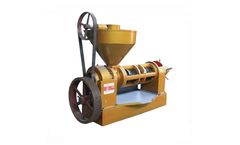
In the pressing, peanut will not be pressed into a cake but has been reserved for the whole grain of defatted peanut kernel. In this way, peanut shape, taste, and natural nutrients will not be destroyed. ...
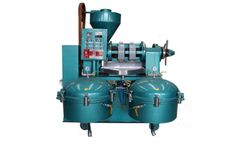
In the pressing, peanut will not be pressed into a cake but has been reserved for the whole grain of defatted peanut kernel. In this way, peanut shape, taste, and natural nutrients will not be destroyed. ...

At commercial harvest, cobs from 20 randomly selected plants per plot from were harvested, weighed and the length, girth at the cob base and length of tip not filled with kernels was measured. The grain was removed from each cob and weighed. A subsample of 100 grains was selected from the grain from each cob and weighed to ...

Relative to less crowded, N-fertilized environments, the 104,000 plants ha–1, 0 kg N ha–1 treatment combination exhibited (i) reduced pre- and postanthesis plant height (PHT), stem diameter (SD), and total biomass; (ii) greater preflowering leaf senescence and lower R1 leaf areas at individual-leaf, per-plant, and canopy levels; (iii) enhanced floral protandry; (iv) lower pre- and postanthesis ...
Information regarding genotypic variability for maize (Zea mays L.) grain-filling patterns is scarce, especially at the inbred level. We characterized a large set of public and elite proprietary inbred lines for kernel growth traits. ...
Planting date was the most significant component of the total variation in grain yield due to environment while year, as a source of variation, was more significant for whole kernel milling yield. ...
Grain β-glucan content is the most important attribute for barley (Hordeum vulgare L.) varieties destined for the human food market. ...
The pea-rotation benefits to wheat grain quality are uncertain. A 6-yr study was conducted to determine (i) if grain protein content, kernel weight, and test weight were enhanced for wheat in a WP rotation compared with WW, and (ii) if an interaction between cropping and tillage systems existed. ...
Water stress reduced grain yield, test weight, and kernel weight and diameter. Reducing irrigation increased average grain protein content from 116.4 to 128.3 g kg–1. Nitrogen treatment did not affect grain yield. Additional N increased grain protein content and hardness for all genotypes. Reductions in test ...
Nitrogen level, N timing, and seeding rate showed no significant effect on grain yield across environments. However, genotype significantly influenced grain yield. Increasing seeding rate failed to increase grain yield of the three cultivars, but ND 740 was most productive at the lowest seeding rate. Increasing the level of N significantly ...