
Refine by
Groundwater Laboratory Articles & Analysis
19 articles found
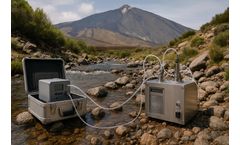
Dissolved gas analysis is a critical component of volcanic groundwater monitoring. By evaluating gas, liquid and soil samples on-site or in the laboratory, operators can identify volatile signatures tied to active systems. ...
But today, good fieldwork is only the beginning.A single environmental project can now produce soil results, groundwater data, field readings, laboratory reports, logger data, GIS layers, photographs, chain-of-custody records, regulatory standards, and compliance tables. ...

Environmental programs today generate more data than ever: groundwater and surface-water monitoring, lab results, emissions testing, borehole logs, and field observations across multiple sites. Many organisations still manage this through spreadsheets, PDFs, and legacy systems — and it’s becoming a serious operational risk. Fragmented data makes compliance reporting slower and more error-prone. ...

This study focused on a nitrobenzene-contaminated groundwater site located in Jilin City, China. The actual nitrobenzene-contaminated groundwater was taken from Jilin City to simulate in-situ groundwater bioremediation in the laboratory. The feasibility of in-situ bioremediation for nitrobenzene-contaminated ...

Background Leakages of TCE and the subsequent groundwater contamination at an industrial facility in Adelaide have led to an ongoing investigation and remediation program conducted since 1999. This work comprised site characterisation and remediation, including borehole drilling, monitoring well installation, soil, groundwater and vapour sampling, ...

The Autoscribe Informatics LIMS solution can be easily configured to meet the laboratory workflow rather than laboratory practices being adjusted to fit the LIMS. ...
However, so far the majority of applications have been carried out only as laboratory tests using model samples in many cases. The application of ferrates in remediation programs has so far proved to be more complicated with results failing to meet expectations. Therefore there is a necessity to consider the suitability of their use or consider their possible combination with ...
Nitrate contamination of groundwater is an important issue in rural areas. In this study, an electrolytic method for the denitrification of groundwater was investigated in a laboratory reactor. ...

A study was undertaken to determine the success for aerobic bioremediation of aromatic hydrocarbons (BTEX) and MTBE (methyl tert-butyl ether) in high temperature, saline groundwater conditions. The study included laboratory microcosm experiments, as well as a field trial in Saudi Arabia, in which Solinst Waterloo Emitters were used. To view the full paper ...

The USEPA radionuclides regulations have spurred significant research efforts for developing better technology for radium removal from groundwater. The use of barium chloride to remove radium from groundwater is a promising technique. For that, laboratory experiments were carried out to evaluate the effectiveness of different barium chloride ...
Several studies on waste- or drinking water treatment processes as well as on groundwater have recently shown that some pharmaceutical residues (PRs) are redox-sensitive. Hence, their (bio)degradation depends on the redox conditions prevalent in the aquifer. Groundwater, providing raw water for drinking water production, is often anoxic and aeration is a ...
Leakages of TCE and the subsequent groundwater contamination at an industrial facility in Adelaide have led to an ongoing investigation and remediation program conducted since 1999. This work comprised site characterisation and remediation, including borehole drilling, monitoring well installation, soil, groundwater and vapour sampling, ...

Polyethylene diffusion bag (PDB) samplers are low-density polyethylene bags containing deionized water, used to collect water samples in groundwater wells for laboratory analyses of volatile organic compounds (VOCs). PDB samplers are passive devices, relying on the movement of groundwater from the aquifer or water-bearing zone through the screen ...

One project utilized accelerated anaerobic in-situ bioremediation to promote the anaerobic biodegradation of TCE and cis-1,2-dichloroethene (cDCE) in the groundwater. Laboratory and field studies by RTDF members, including Dr. ...
A series of laboratory and field studies were conducted to determine the ability of the Snap Sampler to recover representative concentrations of VOC and explosives in ground water. For the laboratory studies, statistical analyses of the data (for each analyte) were conducted to determine if the concentrations of analytes in samples taken with the Snap Sampler were significantly different from ...

By designing a 70-foot deep barrier wall, Black & Veatch was able to cut off contaminant source areas from a creek near New Castle, Delaware. The groundwater treatment system that Black & Veatch designed prevents site contamination from reaching the underlying drinking water aquifer. ...

The Air Force has installed a granular activated carbon (GAC) adsorption system to remove contamination from groundwater at a remote Air Force Research Laboratory (AFRL) Propulsion Directorate ...

A promising new technology, in situ Chemical Oxidation (ISCO), has the potential to supplant the more widely used pump-and-treat groundwater remediation technology by destroying groundwater contamination in situ (in place). ...
ByAECOM

Difficulty in obtaining representative undisturbed specimens as well as problems with extrapolating laboratory test results to the field has caused many to place increased reliance on in situ testing. ...