
Refine by
In Stack Sampling Articles & Analysis
29 articles found

ANSI N13.1-2011 stack sampling location qualification testing ANSI N13.1 stack sampling system design Custom air sampler design Integration of radiation detectors and air sampling systems ANSI N13.1-2011 Design Considerations ANSI N13.1-2011 requires that sampling systems satisfy the ...

In this blog post, we answer the most frequently asked questions about our fully optimized solutions for continuous monitoring of mercury emissions, CMM and?CMM AutoQAL, our new continuous mercury monitoring system that has an EN 15267 certified, integrated and automatic QAL3 Validation ...
CVAF instrument only detects atomic mercury vapor (Hg0) whereas stack gas contains also oxidized mercury compounds such as HgCl2. In the CMM and CMM AutoQAL systems, the sample gas passes through an optimized 700 °C thermal converter, located just before the sample cell. ...

What Is Stack Emissions Testing? Stack emissions testing (stack sampling or stack monitoring) is the experimental process for evaluating the characteristics of waste gas stream emissions into the atmosphere from industrial facilities to meet environmental standards. ...

§ 261.21): Update the flash point test methods required for determining if a liquid waste is an ignitable hazardous waste; Codify existing guidance regarding the regulatory exclusion in the ignitable characteristic for aqueous liquids containing alcohols; Codify existing sampling guidance regarding waste mixtures having multiple phases when determining whether a waste ...

In 2012, FORCE Technology developed a method for long term monitoring of biogenic and fossil CO2 in stack gas based on measurement of the carbon-14 content of CO2, continuously sampled from the emitted stack gas. ...
These substances are considered by many institutions as key pollutants, but their low concentration (ng/m3 in emissions), the difference of toxicity between the different congeners, their presence in all phases (dust, droplets and gases), lead to sampling diffi culties (long time sampling, reliability of instrumentation, experienced technicians...) and complex ...

Removable side combs All of the roller mixers now have removable side panels – these ensure there is no chance of samples sliding off the sides of the unit while it is left to run unattended. ...
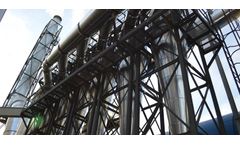
To design the most efficient system, an isokinetic dust sample was collected at the stack and measured by ACS in a laser sizer to obtain the Particle Size Distribution (PSD). ...
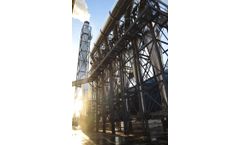
In order to design the most efficient system for this case, an isokinetic dust sample was collected at the stack and measured by ACS in a laser sizer to obtain the Particle Size Distribution (PSD). ...
Introduction This paper overviews the challenges of monitoring particulate in wet and dry stack conditions found after wet and dry FGD arrestment plant fitted to coal fired power plant. ...
Abstract Presently, particulate emissions from stacks are measured by sample and weigh methodology, which despite their status as ‘reference methods’ are often slow and sometimes not very repeatable. ...
Due to the fact that environmental regulations are on the way to be harmonised in the EU countries, the measurements of those compounds in the stack gas of e. g. waste incinerators will increase. All EU countries now have a stack discharge limit of 0.1 ng TEQ/m³N for hazardous waste incinerators, several countries have this limit for municipal waste ...
While the available stack testing methods appear to provide reliable measurements of stack gas metal concentrations at the time of sample collection, there has been no provision for interim or continuous compliance assurance. ...
The licensing criteria for each nuclear facility specify the industry standard to be used for stack and duct sampling. Current licensing criteria establish ANSI/HPS N13.1-2011 as the standard to be used in designing the sampling systems. ...
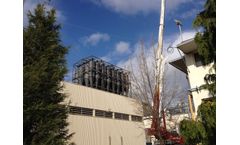
The heat generation units supply 9 MKcal/h as thermo-fluid and 3.6 MKcal/h as vapour producing nearly 54.000 m3/h at 177ºC flow rate at the flue-stack. Emissions of particulates amounted to 1.240 mg/Nm3. The goal of ACC was to decrease it by a factor of 10, to under 100 mg/Nm3. In order to design the most efficient system for this case, an isokinetic dust ...

Whether sampling surface water or groundwater, conducting soil investigations, making air quality measurements or collecting soil-vapour samples, LSPECS is flexible, adaptable and robust. ...

1 Introduction The Alaska North Slope tracer study1 (see Figure 1) involved 44 hours of buoyant SF$ releases from a 39-in high turbine stack. Tracer sampler coverage ranged over seven arcs from 50 to 3000 m downwind. Meteorological data, including wind speed, wind direction, temperature, sigma-theta and sigma-w, were available from an on-site tower at the 33-m level. Atmospheric stability and ...
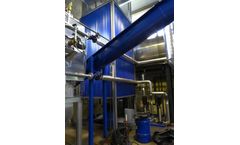
To design the most appropriate system for this case, a dust sample was collected through an isokinetic sampling at the stack of another plant with equivalent operating conditions. The sample was subsequently measured in a laser sizer to obtain the Particle Size Distribution (Fig. 2). ...

IDENTIFYING THE PROBLEM AND SOLUTION The existing cyclone after the dryer was not efficient enough to meet the Portuguese emission limit (150 mg/Nms). Measured emissions at the stack reached 1,625 mg/NmJ of total suspended particles (mass flow of 9 kg/h). ...