
Refine by
Indoor Air Articles & Analysis
654 articles found

As part of Europe’s largest-ever study to assess gas cooking’s impact on indoor air quality, the Netherlands Organisation for Applied Scientific Research (TNO) partnered with ENVEA to conduct field testing of key pollutants (NO2, CO, PM2.5) released from gas hobs in the home. ENVEA’s Cairsens microsensors were crucial to the study’s ...
ByENVEA

Gas sensors are a fundamental element of industrial safety, environmental monitoring, and process control systems. They are used to detect toxic and combustible gases, monitor air composition, and provide early warning in hazardous environments. Different gas detection technologies are based on chemical, physical, or optical principles and differ significantly in terms of accuracy, stability, ...

Introduction Soldering operations in electronics manufacturing generate more than just visible smoke. When flux compounds are heated during soldering, they release volatile organic compounds (VOCs), resin vapors, odors, and fine airborne contaminants that can accumulate rapidly in enclosed workspaces. While particulate filters capture smoke particles, gaseous contaminants require a different ...

The Interstate Technology and Regulatory Council published its Vapor Intrusion Toolkit in January 2026. The Toolkit consolidates three earlier ITRC documents into one resource: the 2007 VI-1 guidance, the 2014 PVI-1 petroleum guidance, and the 2021 VIM-1 mitigation ...
ByLiORA
Introduction Soldering operations in electronics manufacturing generate fumes that contain flux vapors, fine particulate matter, and volatile organic compounds (VOCs). These fumes are released directly into the operator’s breathing zone and can quickly accumulate in enclosed workspaces if not controlled effectively. ...
Introduction Soldering is a critical process in electronics manufacturing, PCB assembly, and repair operations. While the process itself appears relatively clean compared to heavy industrial applications, soldering generates airborne contaminants that can accumulate rapidly in enclosed workspaces. These fumes are primarily produced when flux compounds are heated during soldering and may contain ...
Although soldering fumes may appear less intense than welding fumes, prolonged exposure in enclosed workspaces can significantly affect indoor air quality and operator health. ...

With tightening requirements for heat stress and indoor air quality, proactive monitoring has moved from a best practice to a compliance imperative. ...
Introduction Welding fumes consist of submicron particulate matter, metal oxides, and gaseous byproducts that are difficult to remove without properly engineered filtration systems. While capture at the source is critical, the effectiveness of a welding fume extraction system ultimately depends on how efficiently these contaminants are filtered before the air is discharged or recirculated. ...
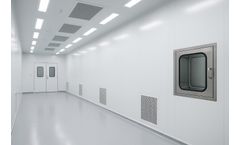
ISO 14644-1 classifies cleanrooms by the maximum allowable airborne particle concentrations per cubic meter of air, covering ISO classes 1 through 9. The classifications rely on particle size measurements, most commonly 0.1 µm, 0.2 µm, 0.3 µm, 0.5 µm, and 5.0 µm. ...
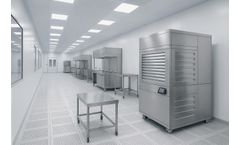
The scale runs from ISO 1 (the cleanest) to ISO 9 (closest to standard indoor air). The lower the ISO class number, the tighter the particle limits and the more stringent control measures required. ...

Today, the long-term durability and sustainability of buildings depends on a solid foundation of waterproofing. Water is known to cause serious damage to building materials and therefore waterproofing has become a key element of protecting buildings from water ...

In a world where air pollution and carbon emissions are pressing issues, finding sustainable fuel alternatives is more important than ever. ...

Combustion-based Equipment: Emissions from incomplete combustion of fuels in heating systems such as boilers, furnaces, and backup diesel generators.Welding and Thermal Processes: Soot particles and byproducts from incomplete combustion during welding, laser cutting, and thermal fabrication processes.Paint Shops and Curing Ovens: Particulate emissions from curing ovens and solvent-based coatings ...

This study develops a biodegradable photocatalytic membrane with titanium dioxide (TiO2, p25) nanoparticles with a polylactic acid (PLA) support to remove volatile organic compounds (VOCs) from indoor air. It addresses two challenges simultaneously: (i) achieving effective gas-phase photocatalytic oxidation (PCO) of VOCs and (ii) enabling more sustainable ...

Plants can enhance outdoor air quality, though there is often a misunderstanding about their beneficial impact. ...
Sensing systems support manufacturing facilities by providing accurate, reliable measurement data over long operating cycles. Environmental Air Quality Monitoring Environmental air quality monitoring is a foundational dimension of facility-level inspection in industrial manufacturing environments. Stable environmental conditions including airborne particle ...
Why Workstation Design Matters in Soldering Soldering workstations are often compact and closely spaced. Operators work near heated solder joints for long hours. During this process, flux fumes rise directly into the breathing zone. If the workstation design ignores fume control, workers face continuous exposure. A safe workstation combines correct layout, proper posture, and effective fume ...
Why Flux Choice Matters for Air Quality Flux plays a critical role in soldering. It cleans metal surfaces and helps solder flow correctly. However, when flux heats up, it releases fumes. These fumes directly affect indoor air quality, especially in electronics assembly areas with continuous soldering. ...
Why High-Density Electronics Assembly Needs Fume Control High-density electronics assembly involves many soldering points within a small area. Operators work close to circuit boards for long hours. During soldering, flux and heated materials release fumes that stay trapped around the workstation. Without proper control, these fumes affect worker health, product quality, and overall efficiency. ...