
Refine by
Infrared Camera Articles & Analysis
62 articles found
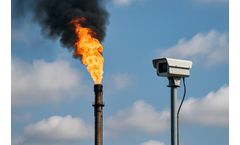
The Role of Thermal Imaging in CAM VerificationAutomated thermal imaging uses forward-looking MWIR sensors to detect heat energy emitted by the flare region. Calibrated infrared cameras visualize the flame with high spatial precision, remaining effective in smoke, steam, or changing daylight conditions. By monitoring infrared wavelengths ...
ByOPGAL
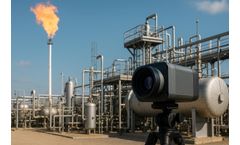
As a result, many LDAR teams deployed first-generation infrared cameras with NETD around 25 mK to 30 mK. In practice, these legacy cameras are unable to detect low-volume or low-contrast leaks and require a substantial temperature differential to render a plume visible. ...
ByOPGAL
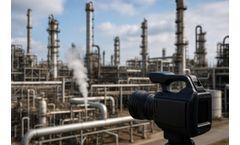
By 2026, the downstream sector—including refineries, chemical plants, and storage terminals—deploys versatile infrared cameras to detect leaks across dozens of gases, from benzene and butane to ethylene and propylene. ...
ByOPGAL
An optical sorter uses high-resolution cameras, near-infrared (NIR) sensors, and image processing algorithms to identify and differentiate materials in a mixed stream on a conveyor belt. ...
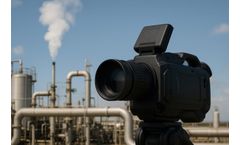
A certified professional knows how to reposition to achieve the optimal thermal background.Complex Geometry: Many CH4 connections are hidden behind equipment or located in dead zones where air currents are stagnant. The professional uses infrared camera leak detection to scan through the complexity and detect the characteristic flicker of a gas plume that an ...
ByOPGAL

In a facility with thousands of components, a full survey can take weeks, poses safety risks, and can yield false negatives when leaks are not encountered by the probe.Optical gas imaging (OGI) cameras visualize infrared absorption to provide a real-time, top-down view of plumes. They enable rapid screening of hundreds of CH4 connections, offer contextual ...
ByOPGAL
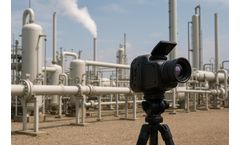
In a facility with thousands of components, a full survey can take weeks, poses safety risks, and can yield false negatives when leaks are not encountered by the probe.Optical gas imaging (OGI) cameras visualize infrared absorption to provide a real-time, top-down view of plumes. They enable rapid screening of hundreds of CH4 connections, offer contextual ...
ByOPGAL
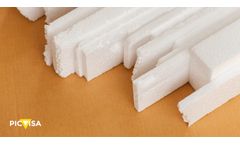
These solutions use high-resolution cameras (RGB) and near infrared technology (NIR) to identify and differentiate polystyrene from other plastics (PET, PE, PP, PVC, etc.) and separate them by color or chemical composition. ...
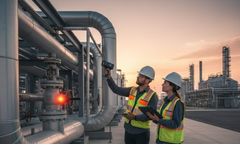
When combined with other inspection tools, including an infrared camera to detect leaks, thermal imaging improves situational awareness and helps teams focus their efforts more ...
ByOPGAL
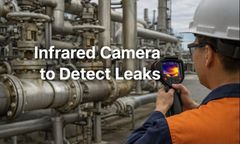
Traditional inspection methods often rely on point sensors, manual checks, or pressure testing, which may miss hidden or intermittent issues. An infrared camera to detect leaks offers a fundamentally different approach. Instead of measuring gas or fluid concentration at a single point, infrared imaging visualizes temperature and emission ...
ByOPGAL
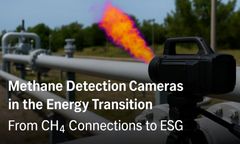
This is where methane detection cameras play a vital role. A methane camera makes the invisible visible, identifying leaks that would otherwise go undetected. By using infrared absorption techniques, these cameras can visualize CH4 plumes, enabling operators to quickly repair leaks, minimize product loss, and demonstrate ...
ByOPGAL
That’s why more and more facilities are turning to infrared camera leak detection as a frontline strategy for emission control and preventative maintenance. Unlike traditional leak detection methods that rely on contact sensors or time-consuming manual checks, infrared cameras enable operators to visually detect gas leaks ...
ByOPGAL
Other companies in the market also stand out for their innovative solutions, helping to improve the recovery of recyclable materials and reduce reliance on virgin resources.Como utilizan la IA los robots de reciclaje para mejorar la gestion de residuos Driven by AI breakthroughs, the waste management industry is undergoing an unprecedented transformation: robots guided by computer vision systems ...
Thermal and infrared leak detection cameras are transforming industrial safety. Learn how these technologies enable early detection, regulatory compliance, and operational efficiency across ...
ByOPGAL
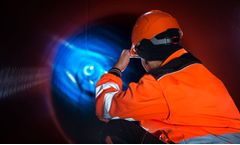
Optical Gas Imaging (OGI) is a powerful technique that utilizes a specially designed infrared cameras to visually detect and monitor gas leaks. By capturing and analysing infrared radiation emitted by gases, OGI cameras can identify leaks that are invisible to the naked eye. ...
ByOPGAL

The rapid rise of electric vehicles (EVs) has brought about a surge in demand for high-quality lithium-ion batteries. These batteries are the heart of EVs, providing the power needed to propel these vehicles. However, manufacturing lithium-ion batteries is a complex process that demands meticulous control over various factors, including particle ...
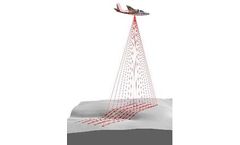
Disadvantages:Requires installation of sensors on the lines, while the area analyzed by one sensor is limitedSignificant financial investments are required to monitor long power linesData analysis can be complex and require specialized softwareUltrasonic inspection and vibration analysis are combined to provide more complete and accurate condition monitoring of power lines.Inspection automation ...
Continuous emission monitoring is vital for industries to adhere to environmental regulations and mitigate the impact of pollutants on public health and the environment. Optical Gas Imaging (OGI) has emerged as a potent tool in this regard, offering real-time detection and visualization of gas leaks. However, ensuring reliability and minimizing false alarms remains a challenge. In this article, ...
ByOPGAL
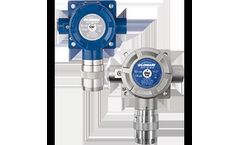
Teledyne GFD has an exciting new offer in this area: the Spyglass IR3-H2-V flame detector quickly detects hydrogen and other 'energy transition' fires in support of rapid response efforts. A near-infrared camera provides personnel with the ability to see invisible hydrogen flames in all weather and light conditions. ...

Introduction: The quest for innovative solutions to tackle Volatile Organic Compound (VOC) emissions has led to the exploration of airborne platforms equipped with Optical Gas Imaging (OGI) technology. This article delves into the potential of using airborne platforms as a viable tool for VOC emission reduction, with a specific focus on how OGI enhances detection, monitoring, and mitigation ...
ByOPGAL