
Refine by
Interferometer Articles & Analysis
86 articles found

CMM calibration is not just a routine quality task. It is the foundation of reliable dimensional measurement. When accuracy matters, calibration defines ...
The measurement of manufactured components has evolved across decades. Traditional coordinate measuring machines (CMM) set a foundation for precision validation, while optical metrology introduced speed and non-contact ...
Introduction Surface finish tells us a lot about how a part will perform, whether it will seal properly, move smoothly, or wear too soon. Measuring surface roughness is the science of quantifying those tiny peaks and valleys on a material’s surface. Over the years, this field has evolved from contact-based tools to advanced non-contact optical metrology techniques that deliver microscopic ...
Introduction Surface finish tells us a lot about how a part will perform, whether it will seal properly, move smoothly, or wear too soon. Measuring surface roughness is the science of quantifying those tiny peaks and valleys on a material’s surface. Over the years, this field has evolved from contact-based tools to advanced non-contact optical metrology techniques that deliver microscopic ...
Introduction If you’ve ever wondered how engineers measure the tiniest details on a surface from semiconductor wafers to mobile phone parts, the answer often lies in a field called profilometry. In this blog, we’ll break down what profilometry is, how it works, and the key differences between contact and non-contact measurement methods in the simplest way possible. ...
A profilometer is a precision instrument used to measure the surface profile of objects, providing critical insights into surface roughness, texture, and step height. For anyone working in industries requiring high accuracy, understanding profilometers is essential. This guide explains everything about profilometers, from basic principles to industrial applications. ...
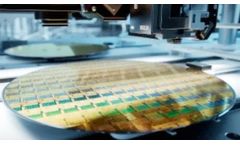
As semiconductor devices shrink to meet the demands of advanced electronics, the precision of material removal during fabrication becomes increasingly important. Processes like ion beam etching must stop precisely at targeted etch depths to preserve layer integrity and device function. In multi-layered device architectures, even minor deviations in etch depth can compromise performance or yield. ...
In the era of nanotechnology and semiconductor advancement, photomasks serve as a cornerstone in the microfabrication process. These precision-engineered optical templates are crucial to lithography-based patterning, which defines the microstructures in integrated circuits, MEMS, and other micro-scale devices. Understanding photomasks and their role provides insight into how precision and ...
In high-tech industries from consumer electronics to semiconductors and medical devices, advanced manufacturing is critically reliant on precise dimensional measurements to ensure superior product quality and optimize process efficiency. As manufacturers increasingly depend on the accuracy offered by metrology solutions providers, it is imperative that the industry establishes traceability ...
Laser metrology is a subfield of optical metrology that utilizes the unique properties of laser light—coherence, monochromaticity, and low divergence—for precise distance, angle, and dimensional measurements. Instead of physical probing, lasers capture measurements safely and quickly—especially useful for intricate or lightweight items. At its core, laser metrology is about ...
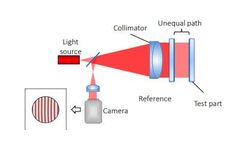
Generally, the measurement cavity is illuminated with a stationary, on-axis, point-like source of coherent light situated at the interferometer source plane. We describe how to enable a variety of useful functions to aid interferometric metrology applications by dynamically moving the source point during a phase-shifting measurement using steering mirror technology. ...

The optical system can be much less complex than a traditional zoom and because there are no moving lenses, the image does not drift on the detector and there is no focal shift as the magnification changes. Keywords: Phase-shifting interferometer, optical ...
Measurement accuracy has always been at the heart of technological progress. In the early days of manufacturing, metrology—defined as the science of measurement—was a manual and time-consuming process. As industries scaled up production, the demand for faster, more precise, and automated measurement systems grew. This led to the evolution of high throughput metrology, a field that ...
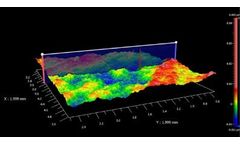
Surface roughness refers to the fine texture of a part's surface. Every manufactured part's surface has three key components—form, waviness, and roughness. Together, they influence how well a part performs. The characteristics of these components are tied to the manufacturing process or processes used to create the part. This could be polishing, grinding, cutting, or edging to name a ...

The use of advanced metrology tools such as laser interferometers and 3D optical profilers facilitates a comprehensive understanding of the optical surfaces' characteristics, enabling precise control over the manufacturing process. ...

The evaluation of binding activity of antibody drugs (such as monoclonal antibodies) is a key step in ensuring their efficacy and safety in the drug development and quality control process. Binding activity refers to the ability of an antibody to bind to its specific antigen. Here are some commonly used methods for evaluating the binding activity of antibody drugs:1. Enzyme-Linked Immunosorbent ...
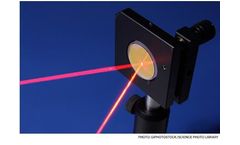
Power Spectral Density (PSD) is a very useful concept when it comes to specifying many types of optics and has been proven to be a valuable metric in extreme application spaces such as laser fusion. This specification method can also be applied to demanding applications, high energy laser optics, particularly because it helps in understanding and managing the quality of optical surfaces in a ...
Optical metrology is a specialized field where we use various light-based methods to measure the physical features of objects with amazing accuracy. Unlike traditional methods that might require physical contact with the object, the optical metrologyemploys principles of optics to gather detailed information without altering the object being ...
Non-contact measurement refers to the process of determining the dimensions, geometry, or other physical properties of an object without physically touching it. This technique leverages various advanced technologies to capture precise data while ensuring that the object’s integrity remains unaltered. Non-contact measurement is crucial in situations where physical contact could damage the ...
What is Dimensional Metrology? Dimensional metrology is the science of calibrating and using measurement equipment to quantify the physical size and shape of objects. This field encompasses a wide range of techniques and tools designed to measure dimensions such as length, width, height, and geometric features like angles and radii. Accurate dimensional measurements are crucial for ensuring ...