
Refine by
Irrigation Infrastructure Articles & Analysis
30 articles found
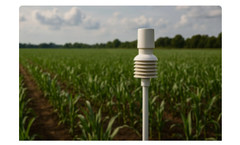
Humidity sensors measure atmospheric water vapor concentration to forecast crop water loss and optimize irrigation timing. As relative humidity declines, vapor pressure deficit rises, increasing crop transpiration and irrigation requirements. ...

Abstract Agricultural irrigation systems represent complex physicochemical environments capable of supporting persistent microbial populations. These microbial communities establish on wetted infrastructure surfaces and contribute to long-term system instability, including emitter flow restriction, biofilm formation, and infrastructure ...
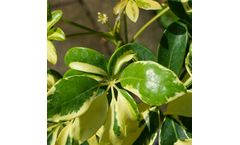
Irrigation infrastructure, particularly drip irrigation systems, provides anenvironment conducive to microbial colonization and biofilm formation. ...

Introduction Dams are one of the most crucial infrastructures for water storage, irrigation, flood control, and power generation. ...
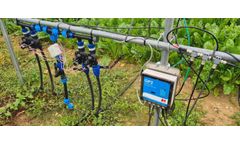
Data from British Sugar* shows that yield losses due to water deficit average 10% annually, rising to 25% in the driest years – furthermore, as climate projections predict increasingly warmer** and drier summers, drought-related yield losses are likely to become more frequent . Irrigation is often not a viable option for many sugar beet growers due to limited access to ...

Farmers, landscapers, and property managers often struggle to maintain adequate water pressure in irrigation systems. Without consistent pressure, water distribution becomes uneven, leading to poor crop health, inefficient resource usage, and potential damage to the irrigation infrastructure. ...

Dams and Reservoirs: Building dams and reservoirs to store water for various purposes, including drinking water supply, irrigation, hydropower generation, and flood control. Wastewater Treatment Plants: Establishing facilities for treating sewage and industrial wastewater before discharging it back into the environment or reusing it for non-potable purposes. ...
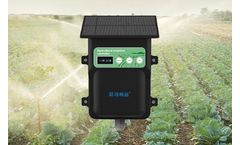
The V3 Irrigation Controller offers a cutting-edge solution that simplifies and optimizes irrigation processes. ...
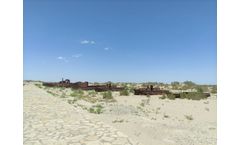
The shrinking of the Aral Sea is the visible result of the destructive mismanagement of water resources in Central Asia. The Aral Sea was once the fourth largest lake in the world at 68,000 square kilometers, but has now shrunk to 10% of that size. It has fragmented into several water bodies, the largest of which are the North Aral Sea, which only receives water from the Syrdarya River, and the ...

Between April 2002 and Dec 2011 the company successfully completed ninety building construction projects, comprising of commercial, residential, public, institutional and corporate buildings, mass housing projects and related infrastructure and facilities such as hospital and schools. Ramky has progressed at a consistent pace to become one of India’s leading players in the ...
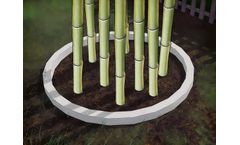
The result is severe damage, such as the uprooting of sidewalks and driveways, and other elements that can damage hardscape infrastructures, such as irrigation, septic tanks, and lighting! Also, elevated sidewalks and driveways may cause a serious trip hazard, which can become an accident problem. ...

All of this is to say, if you’re a farmer looking to buy a new tractor or install irrigation infrastructure, it is going to be expensive. In this challenging landscape, in order to stay competitive, a farmer has to think creatively about her options, and agtech is a big part of the puzzle. ...
ByArable

The circular economy opens up new ways to mitigate risks. Infrastructure and Technology Opportunities When it comes to transforming linear water systems into circular ones, the first step is to improve the technology used in the current systems. That includes installing water-saving irrigation systems in agricultural areas, and wastewater treatment and ...

The use of reclaimed water for agricultural irrigation is practiced worldwide and will increase in the future. The definition of water quality limits is a useful instrument for the assessment of water quality regarding its suitability for irrigation purposes and the performance of wastewater treatment steps. ...

The government is investing on the order of AU$12 billion to buy water entitlements from willing sellers and to invest in irrigation efficiency and infrastructure improvements. By reducing water allocations by a volume equivalent to 12 percent of the Murray River’s historic flow, the basin’s water authority is boosting the productivity and value of ...
ByEnsia
A survey of 241 farmers (irrigators and non-irrigators) in the Guadalquivir River Basin and in the Mediterranean (Almanzora) Basin in southern Spain is used as a basis to construct the irrigation water supply and demand curves for both basins. ...
The Steinbecks’ sole source of irrigation is groundwater. However, groundwater and surface water — rivers, lakes, streams — are part of the same hydrological system. ...
ByEnsia
The paper begins by describing four cycles of challenge and response in the basin: the first period (1830–1900) witnessed the state-level development of irrigation and navigation in the basin; the second period (1900–1982) encompassed the construction of the basin's major engineering projects and irrigation infrastructure; ...

Information about the current state of water institutional frameworks, water infrastructure and water management policies in Libya enable the identification and evaluation of a range of options for improving water use efficiency in agriculture and the potential role of water pricing in achieving sustainability of water sources. ...
Rainwater harvesting to irrigate small-scale gardens enhances food self-sufficiency to overcome rural poverty. ...