
Refine by
Iso 14644 Articles & Analysis
58 articles found
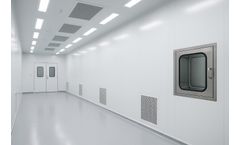
ISO 14644-1 classifies cleanrooms by the maximum allowable airborne particle concentrations per cubic meter of air, covering ISO classes 1 through 9. ...
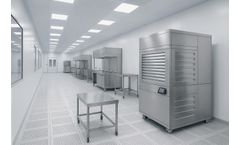
ISO cleanroom classifications are defined in ISO 14644-1 and categorize environments by airborne particle concentration per cubic meter for defined particle sizes. The scale runs from ISO 1 (the cleanest) to ISO 9 (closest to standard indoor air). The lower the ISO class number, the tighter the ...
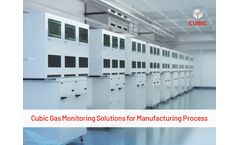
The environmental air quality monitoring systems are commonly designed in alignment with international standards such as ISO, enabling consistent assessment of controlled environments across different manufacturing sites. ...
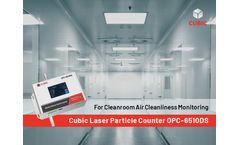
Featuring a built-in laser particle counter module, a consistent RPM fan, and an ultrasonic flow sensor, the OPC-6510DS delivers a stable sampling flow rate of 28.3 L/min, in compliance with ISO 14644-1 cleanroom classification requirements. The instrument supports simultaneous output across five particle size channels (>0.3 μm, >0.5 μm, >1.0 ...
Smoke studies are one of the best tools you have for deciding where your particle probes actually need to go. The problem is, after the fog clears and the videos get filed, translating what you saw into permanent probe placements can feel like guesswork. It doesn’t have to ...

Microrite, Inc. utilizes the Tracer Particle Injection Method as defined in ISO ...
ABSTRACT Airflow Visualization studies (AKA Smoke Studies) are used to evaluate air patterns in medical product cleanrooms and barrier systems (RABS, Isolators, pass-throughs and airlocks) that support aseptically produced, terminally sterilized and low bioburden product manufacturing.) These studies should be considered as more than a definitive pass/fail test. ...
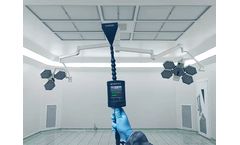
At Lighthouse Worldwide Solutions®, we don’t just build products: we build partnerships with the people who rely on them every day. That’s why the newest version of the ScanAir Pro is more than just an upgrade; it’s a direct response to the challenges faced by cleanroom professionals around the world. ...

Airborne particle monitoring plays a central role in ensuring cleanroom environments meet strict regulatory requirements like EU GMP Annex 1: 2022 and ISO 14644. One of the most effective tools for achieving continuous, reliable oversight is remote sampling. ...

When it comes to maintaining the integrity of cleanroom environments, human contamination remains the single greatest threat. In a recent webinar featuring Patricia Sitek, a leading biotechnologist and cleanroom consultant, and Jason Kelly, Director of Applications at Lighthouse, industry professionals gathered to discuss the critical role of personal hygiene and behavior in contamination ...

ISO 14644-1:2015 is a widely adopted standard in pharmaceutical and electronics cleanroom environments, ensuring controlled air quality for sensitive processes. ...
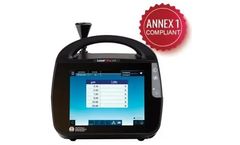
Download Your Free Clean Room Compliance Cards Here In pharmaceutical manufacturing, cleanroom compliance is critical—but keeping up with evolving global regulations can be overwhelming. From EU GMP Annex 1 to ISO 14644-1, the standards governing cleanroom classification and contamination control are complex and constantly updated. ...
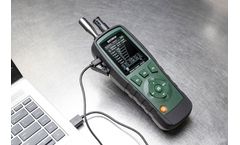
When selecting a particle counter for monitoring air quality, it is essential to determine the specific variables you need to measure. Key factors include air temperature, humidity, particle size, and concentration. If your application requires measuring particle sizes in micrometers (µm) and quantifying particle concentration, particularly for cleanroom classification, an Optical Particle ...

Particle monitoring is like having a super-sensitive detective on your team, keeping an eye on invisible contaminants that could disrupt quality, safety, or efficiency. As industries evolve and regulations tighten, the need for precise particle monitoring systems has never been greater. Let’s explore why particle monitoring matters and how different industries rely on this essential ...

In 2024 our knowledge center webinar series provided a comprehensive exploration into the latest advancements and best practices in cleanroom monitoring and environmental control. Covering a wide array of topics, from fundamental techniques to cutting-edge technologies, these sessions aimed to equip professionals with the knowledge and tools necessary to maintain compliance and ensure optimal ...
Introduction The Technical Committee (ISO/TC209) responsible for ISO 14644, the set of Standards governing cleanrooms and associated controlled environments, looked at the need for a new document to aid users in the application of airborne particle counters; especially considering the new revision to EU Annex 1 – Manufacture of Sterile ...

In the pharmaceutical industry, maintaining stringent contamination control strategies is not just a regulatory obligation but a fundamental aspect of ensuring product safety and efficacy. The EU GMP Annex 1 outlines the importance of a Contamination Control Strategy (CCS) for sterile drug products, emphasizing the need for a structured approach to manage risks and maintain compliance. We ...

The rapid rise of electric vehicles (EVs) has brought about a surge in demand for high-quality lithium-ion batteries. These batteries are the heart of EVs, providing the power needed to propel these vehicles. However, manufacturing lithium-ion batteries is a complex process that demands meticulous control over various factors, including particle ...
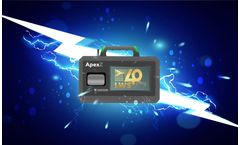
In the meticulous realm of pharmaceuticals and controlled environments, precision is paramount. Particle counters emerge as indispensable tools in maintaining stringent quality standards. This blog elucidates the critical role of particle counters in cleanroom certification, routine monitoring, and HEPA filter testing while adhering to ISO ...
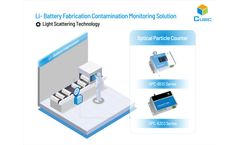
In lithium-ion battery manufacturing, particularly in electrode material preparation and cell assembly processes, controlling airborne particulate contamination is crucial to ensure the performance and reliability of battery products. Regulatory standards such as ISO 14644 establish criteria for classifying air cleanliness in controlled environments. In the ...