
Refine by
Laboratory Data Articles & Analysis
369 articles found

Microcystins and cylindrospermopsin were also monitored under the EPA’s Unregulated Contaminant Monitoring Rule 4 (UCMR 4), which collected nationally representative occurrence data from thousands of public water systems between 2018 and 2020. EPA uses this data to inform future regulatory decisions under the Safe Drinking Water Act. ...
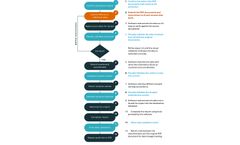
In this article, we will elaborate on how we are implementing the above philosophy to resolve a specific need raised by a section of our ESdat users.A recurring challenge we hear from organizations in our sector is that they have received data for a site of interest, but it is only available as a PDF report and not in a format intended for data ...

But today, good fieldwork is only the beginning.A single environmental project can now produce soil results, groundwater data, field readings, laboratory reports, logger data, GIS layers, photographs, chain-of-custody records, regulatory standards, and compliance tables. ...
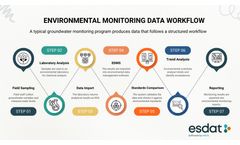
A modern EDMS should help environmental teams: capture field data consistently; receive laboratory data quickly; validate results before reporting; compare data against relevant environmental standards; identify exceedances and trends; create maps, graphs, tables, and reports; preserve audit trails; reduce manual spreadsheet ...

Indicative monitoring uses sensor-based networks to deliver near-real-time air quality data across multiple locations, enabling broader coverage and faster decision-making. ...

Executive brief for Directors, Managers, and Compliance LeadsEnvironmental programs don't fail because dashboards are weak. They fail because field data, lab results, and reporting workflows don't align quickly enough to support decisions.For enterprise teams managing groundwater, soil, surface water, air, or multi-site monitoring, the most leverageable software decision is ...
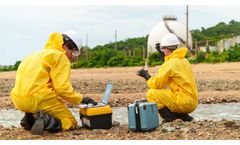
Environmental programs live or die on field execution, yet many organisations still rely on disconnected notes, spreadsheets, and after-the-fact data entry. The result is predictable: slow reporting cycles, preventable QA issues, inconsistent documentation, and limited visibility for managers who need oversight across multiple sites, contractors, and regulators. A modern Environmental Data ...
Introduction Accurate measurement of Soil Organic Carbon (SOC) is essential for agriculture, environmental management and climate change mitigation efforts. Ziltek recently participated in a project aimed to lower the cost of and enhance SOC measurement, reporting, and verification (MRV) processes, particularly in the medium to high rainfall regions of southwest Western Australia. This ...
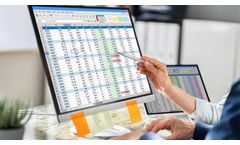
But environmental programs don’t fail because teams can’t “analyze.” They fail when data governance breaks: multiple sites, multiple labs, recurring compliance cycles, and many hands touching the same dataset. ...
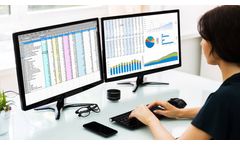
Environmental professionals increasingly face escalating complexity in managing data — from field measurements and laboratory results to compliance reporting and long-term monitoring. ...

Environmental programs today generate more data than ever: groundwater and surface-water monitoring, lab results, emissions testing, borehole logs, and field observations across multiple sites. Many organisations still manage this through spreadsheets, PDFs, and legacy systems — and it’s becoming a serious operational risk. Fragmented data makes compliance reporting slower and more error-prone. ...

Looking for alternatives to reduce rework in quality control? Rework in quality control is a reality faced daily by many food and beverage industries. Each step redone, each analysis repeated, and each batch retained generates extra costs, wasted time, and often delays in deliveries. Digitalizing quality processes can change everything. It’s a smart, effective way to take ...
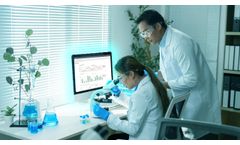
In today’s high-stakes environment, there’s no room for guesswork—laboratories need precision, speed, and control. That’s where quality indicators and visual dashboards come in. These powerful tools are game-changers for industries where accuracy is non-negotiable—whether it’s environmental testing, food safety, or industrial analysis. Integrated into a ...

Digital transformation in laboratories has brought a new challenge to quality control teams: how to organize the large volume of data generated daily? Structuring laboratory data efficiently is no longer a competitive advantage – it is a necessity to ensure agility in responses, reduce rework and make more assertive ...

For decades, Laboratory Information Management Systems (LIMS) have been the digital backbone of quality control, compliance, and traceability in industries such as Water & Environment, Food & Beverage, Chemical and Manufacturing. On-premises platforms have long been trusted for their control and ...
In a bold move to reshape the global Laboratory Information Management System (LIMS) market, Confience has acquired Labsoft, a prominent LIMS provider in Latin America, bringing together two industry leaders with a shared vision, complementary technologies, and a relentless drive to lead. Labsoft brings several advanced product capabilities, and Confience will leverage the technology of both ...
In modern laboratories, efficiency, accuracy, and traceability are non-negotiable. ...

New features make the latest version of the OMNIS analytical data management system more powerful than ever Client/server networks for up to 1000 clients, working offline for 96 hours with automatic synchronization of your data to the server, and the possibility to use the services of Amazon and Microsoft to host OMNIS in the cloud are the most important ...
Environmental professionals rely on accurate, timely data—and ESdat integrates with laboratory systems to deliver exactly that. ...
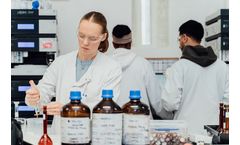
For clients with labs and manufacturing facilities in different countries, LabHQ allows them to access test data and trend their data remotely – particularly helpful during site visits and inspections. "LabHQ helps ensure consistent quality and compliance standards across all our laboratories. We are often inspected by FDA and MHRA ...
ByLabHQ