
Refine by
Laboratory Filtration Articles & Analysis
28 articles found
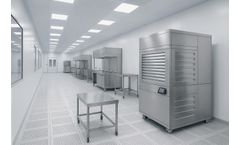
The result is used to guide HVAC design, filtration levels, air change rates, gowning protocols, and cleaning regimens. ...
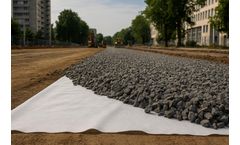
Non woven geotextiles provide filtration, separation, and reinforcement within pavement systems and foundation layers. ...
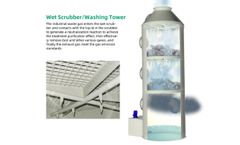
The waste gas treatment process includes high-efficiency filtration, activated carbon adsorption, photocatalytic decomposition, water spray, wet chemistry, combustion method, etc. Considering the inherent characteristics of the laboratory, high-efficiency filtration, wet chemistry, and combustion methods are not suitable, and exhaust gas ...

In the Australian and New Zealand automotive aftermarket, Ryco Filters needs no introduction. This iconic brand, which got its start in 1936, has an impressive reputation of designing and testing innovative filter solutions that are specified by global OEMs. The company wholesales a wide range of products, including automotive oil, air, fuel, cabin, transmission, hydraulic, crankcase, urea and ...

In all four trials, some delamination of the membranes occurred around their perimeters, probably due to the seeding of the membranes in the filtration unit. Some flux variation occurred during the trials because the optimal pressure of each membrane was controlled manually. ...
AS Filtration installed an Aqua-Stream™ side stream filter, utilizing their unique Pathex® antimicrobial filter media, on the 400-ton cooling tower system in operation at the office building. ...

Whether your research has you voyaging the open sea or cruising in coastal waters, Sterlitech is here to stock the ship with all your laboratory filtration needs. We are proud to have our membrane filters take part in the adventure. ...

In the second WWTP, the percentage of cultivable resistant E. coli did not display a considerable change. During laboratory-scale membrane filtration of WWTP effluents using ultrafiltration (UF) and nanofiltration (NF) membranes, all E. coli, including those resistant to antibiotics, were removed completely. ...
Bacterial and fungal consortia were prepared separately in the laboratory. Two-stages (aeration and filtration) laboratory scale model was designed. Rice straw and activated carbon layers were used as filtration media. Results indicated the great ability of both studied bacteria and fungi for removal of organics (biological ...
Sample filtration protects your HPLC column and preserves data quality. Read our tips on filter and solvent selection and the use of tools to save time in HPLC prep, improve lab efficiency, and better your analytical chemistry techniques. Filtering samples prior to high-performance liquid chromatography (HPLC) analysis can help avoid frit clogging while maintaining data quality. Adding a ...
ByCytiva
Membrane filtration is an effective way to remove pollutants and microorganisms from water and wastewater. ...
So, as a filter manufacturer, how would we suggest approaching this challenge? Most laboratory filtration applications involve limited volumes of fluid that are filtered on a batch basis. ...
To compare laboratory and household PointONE™ filter microbiological performance, we enumerated Escherichia coli (E. coli) and total coliforms in source and filtrate water from: (1) one new filter with E. coli-spiked water (107–109 CFU/100 mL) in the laboratory, (2) one new filter with natural Maine and Honduran surface waters, and (3) 50 filters ...

Reproduction and study of applications Field tests Analysis of corrosive atmospheres Analysis of remaining life of used filtration media In addition to standard laboratory equipment, we have specialist equipment for our services: Solids mixer, extruders and a drying oven that allow product formulations to be continuously tested for gas ...
Membrane fouling properties and different physical cleaning methods for forward osmosis (FO) and reverse osmosis (RO) laboratory-scale filtration systems were investigated. The membrane fouling, with respect to flux reduction, was lower in FO than in RO when testing an activated sludge effluent. ...
This can be determined through a patch test, portable or in-line particle counter or laboratory analysis. Conclusion Good filtration practices during any operation are important. ...
In this study, nanoparticle tracking analysis (NTA) was deployed to evaluate the absolute particle size distributions in laboratory scale flocculation and filtration experiments with silver nanoparticles. ...
Treatment of eutrophic lake water was investigated, when alum sludge and/or wood were used as the media for laboratory-scale filtration. Process 1 consisted of Column 1 with wood and Column 2 with alum sludge in series, and Process 2 of Column 3 with alum sludge. The filtration velocity was 0.45 and 0.91 m/d for 49 days each. Both processes ...
Bacterial removal efficiency was tested in the laboratory by filtering artificial water spiked with Escherichia coli through a 0.25 µm nanofibre membrane. The results were compared with those obtained using a commercial microfiltration material (MV020T) with a similar pore size (0.20 µm). Alongside the laboratory experiments, we also determined ...

It is impossible to ensure reliability and longevity of energy systems without controlling the quality of transformer oil. Recent experience shows that approximately 30% of transformer oil, filled in power transformers, has deteriorated to the point when it becomes a risk factor. This is caused both to natural degradation of oil in operation due to thermal oxidation aging, and contamination with ...