
Refine by
Ldar Articles & Analysis
66 articles found
This article outlines the financial logic and key metrics for decision-makers in LDAR programs.Cost and value drivers behind premium OGI camerasThe primary cost driver is a cooled MWIR detector (InSb or SLS) with a Stirling cryocooler reducing sensor temperature to about -196 C. ...
ByOPGAL
The Resolution Disconnect: Legacy OGI vs Modern Orbital EnforcementThe “Blind Spot” of Early OGI When OOOOa was drafted, the imaging requirements were broad and did not specify strict thermal sensitivity benchmarks (NETD). As a result, many LDAR teams deployed first-generation infrared cameras with NETD around 25 mK to 30 mK. ...
ByOPGAL
Financial Protection Under Subpart W and Clean Air Act AuditsEliminating enforcement risks: under Section 114 of the Clean Air Act, penalties escalate for flare-performance violations, including unlit or inefficient operation, with potential multi-ten thousand dollar per day penalties and mandatory capital expenditures to remediate LDAR programs.Mitigating methane waste charges: ...
ByOPGAL
Technologies referenced by the IEA include LDAR systems, vapor recovery systems, flare gas recovery, and ventilation air methane (VAM) oxidation technologies. ...
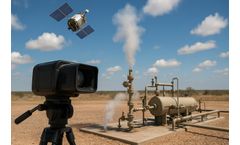
Transitioning from OOOOa to a Space-Aware Strategy LDAR workflows built for earlier regulatory regimes must evolve. Key elements include: Hardware Maturity: Ensure every methane detection camera in the fleet meets NETD under 10 mK to detect small leaks that satellites may aggregate. ...
ByOPGAL
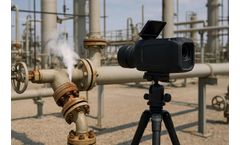
The Digital Evidence Package A professional LDAR program now produces a Digital Evidence Package for every quantified leak. ...
ByOPGAL
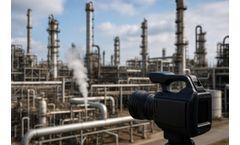
Modern infrared camera leak-detection (OGI) enables multi-spectral detection to identify a broad range of gases, supporting safety, environmental compliance, and product recovery within a single workflow.The Downstream Complexity: More Than Just a Methane ProblemFor years, LDAR programs prioritized methane leaks, driven by regulations such as NSPS OOOOA and OOOOB. ...
ByOPGAL

It targeted affected facilities constructed after September 2015, including well completions, centrifugal compressors, reciprocating compressors, and pneumatic controllers. For LDAR, it mandated semi-annual OGI surveys for well sites and quarterly surveys for compressor stations. Why OOOOa is No Longer Sufficient The Existing Source Loophole: legacy assets built before 2015 ...
ByOPGAL
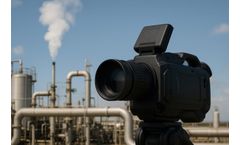
In the high-stakes methane mitigation environment, the effectiveness of LDAR hinges on skilled operators and certified procedures. As regulatory enforcement under EPA Appendix K intensifies, the industry is transitioning from point-and-shoot detection to standardized, high-precision practice. This overview emphasizes OGI certification, CH4 plume science, and camera technology as ...
ByOPGAL
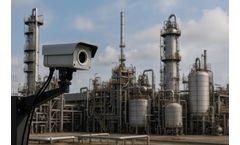
The energy sector faces escalating regulatory scrutiny and mounting operational complexity. Traditional LDAR relies on labor-intensive, periodic manual monitoring, creating gaps in fugitive methane management. ...
ByOPGAL
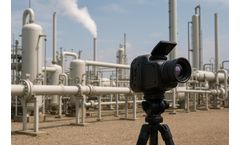
EPA OOOOb/c standards for new sources and OOOOc for existing sources, alongside stringent European methane regulations, drive a shift from voluntary leak detection to mandatory, quantitative LDAR. Operators and field engineers must determine the required level of OGI sensitivity to comply and preserve profitability.The Regulatory Perfect Storm: From OOOOa to the OOOOb/c EraFor ...
ByOPGAL
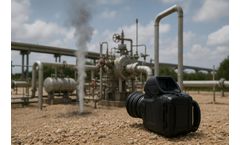
This enforcement model requires operators to deploy high-sensitivity methane detection capabilities in near real time to verify or debunk third-party claims.Appendix K: The Technical Blueprint for OGI ComplianceAppendix K is the definitive technical standard for the LDAR industry, elevating OGI from a best practice to a strictly regulated protocol. ...
ByOPGAL
EPA OOOOb/c standards for new sources and OOOOc for existing sources, alongside stringent European methane regulations, drive a shift from voluntary leak detection to mandatory, quantitative LDAR. Operators and field engineers must determine the required level of OGI sensitivity to comply and preserve profitability.The Regulatory Perfect Storm: From OOOOa to the OOOOb/c EraFor ...
ByOPGAL

The EPA continues to accelerate its methane reduction strategy by tightening performance standards across the petroleum and natural gas sector. Two major components of this regulatory shift are OOOOb and OOOOc, each addressing different stages of industry activity. While operators are becoming familiar with the OOOOb summary that outlines requirements for new, modified, and reconstructed sources, ...
ByOPGAL
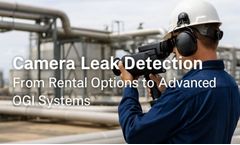
Introduction: Why Camera Leak Detection Matters Gas leaks pose significant safety, environmental, and financial risks. Methane and other volatile compounds are invisible to the naked eye, but even small leaks can lead to catastrophic accidents, regulatory fines, and lost revenue. For decades, industries relied on handheld sensors that could only measure one point at a time. Today, a camera leak ...
ByOPGAL
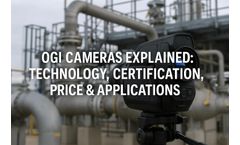
Whether handheld, fixed, or drone-mounted, OGI cameras have become essential tools for LDAR (Leak Detection and Repair) programs, compliance with EPA rules, and corporate ESG commitments. ...
ByOPGAL

On the basis of the EU's regulatory framework including the European Green Deal and the Methane Strategy, the first EU Methane Regulation ((EU) 2024/1787) (“Methane Regulation”) has been already released and entered into force on 4 August 2024, which is targeted to halt the release of methane into the atmosphere from produced and consumed energy, especially the gas flaring and gas ...
Inventory systems Production volumes Gas analysis Emission surveys (LDAR, compressor venting, etc.) Emissions events (blowdowns, etc.) ...
ByValidere
The Three-Pass System for a LDAR Tagging Project Different methods can be used to manage an LDAR SmartFlag Tagging Project: the One-Pass, Two-Pass, and Three-Pass systems. ...
As environmental regulations become increasingly stringent, it’s crucial for industries to stay ahead of the curve by adopting innovative strategies to improve their Leak Detection and Repair (LDAR) programs. An effective LDAR program minimizes harmful emissions and demonstrates a company’s commitment to environmental responsibility and ...