
Refine by
Leaching Procedure Articles & Analysis
35 articles found

References have been made that Blastox® cannot pass certain leach tests. The following information will clarify these issues and provide an easy-to-understand, fact-based response regarding the long term stability of Blastox®.Specifically, the ability of Blastox® to pass certain leach tests has been challenged. The truth is that the EPA requires the ...
Acid sulfate soil guidelines explain the procedures for handling potential acid sulfate soils before disposal and disposal below or above the water table and treatment and disposal of actual acid sulfate soils. Addendum to part 1 provides amendments made to waste classification and include specific contaminant concentration (SCC) values and toxicity characteristics ...
Product Chemistry Blastox 215 is a complex calcium silicate chemistry listed as US EPA Best Demonstrated Available Technologies (BDAT) for stabilizing heavy metal wastes, especially lead and cadmium. Custom chemistries are also available to stabilize chromium and other toxic metals. These soil remediation case studies will explain how Blastox ...
Soil Remediation Case Studies: Metal Stabilization Product Blastox® 215 Product Chemistry Blastox® 215 is a complex calcium silicate chemistry listed as US EPA Best Demonstrated Available Technologies (BDAT) for stabilizing heavy metal wastes, especially lead and cadmium. Custom chemistries are also available to stabilize chromium and other toxic metals. These soil remediation case ...
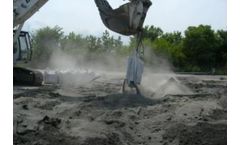
The EPA requires a Toxicity Characteristic Leaching Procedure (TCLP) test to determine if metal contaminated soil needs to be managed as hazardous or non-hazardous waste. ...
What is Lead Soil Contamination? The keys to successful stabilization of lead soil contamination are: using the right reagent, using the right dosage and achieving good mixing of the reagent with the waste. Lead soil contamination involves encapsulation and chemical conversion during remediation projects rendering them non-leachable to allow disposal of a non-hazardous ...
If the contaminated soil exceeds the Toxicity Characteristic Leaching Procedure (TCLP) limits, stakeholders should be aware that remedial applications, such as Blastox 215 exists that can be added directly to the soil to render it non-hazardous. ...
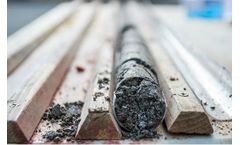
Treatment of Metal Contaminated Soils The EPA requires a Toxicity Characteristic Leaching Procedure (TCLP) test to determine if metal contaminated soils needs to be managed as hazardous or non-hazardous waste. ...
What is a Treatability Study? When done correctly, a treatability study can be an important component of the remedial investigation/feasibility study (RI/FS) and the remedial design/remedial action (RD/RA) process. Engineers use this tool to help identify the full range of remedial options that are available to their client regarding safe & cost-effective remedies in the market. Remedial ...
The EPA requires a Toxicity Characteristic Leaching Procedure (TCLP, EPA Method 1311) test to characterize heavy metals contaminated soils and determine how they should be disposed. Soils exhibiting hazardous characteristics, typically leaching metals at greater than 5.0 mg/L, need to be disposed of at a permitted hazardous waste facility, ...
The EPA requires a Toxicity Characteristic Leaching Procedure (TCLP) test to determine if the heavy metals in soil needs to be managed as hazardous or non-hazardous waste. ...
Firing Range Remediation Design Parameters for Effective Lead Management Managing Lead Environmental Impact at Operating Ranges Site Specific Considerations for Operating and Closed Facilities Recommended Best Practices for Range Remediation Lead Management for Firing Ranges Blastox® 215: Lead Management for Shooting Range Remediation Projects If the contaminated area exceeds ...
USEPA mandates the use of Method 1311, Toxicity Characteristic Leaching Procedure (TCLP) for determining if a waste is hazardous or non-hazardous for disposal purposes. ...
Impacted soil is usually excavated and disposed of soil from which lead leaches at greater than 5 mg/L as measured by the Toxicity Characteristic Leaching Procedure (TCLP) must be disposed of as hazardous. However if leaching can be controlled it can be disposed of as non-hazardous material. ...
What is a Soil Remediation Project? A developer near Detroit, MI had a soil remediation project that involved a redevelop property with an ideal location with ready access to freeways. High levels of lead contamination were identified over a large portion of the site, presumed to be associated with areas that lead-acid batteries were crushed inside cars and were left to drain. ...

The safety of GWA usage in the wastewater treatment process was assessed by toxicity characteristic leaching procedure (TCLP) tests. The equilibrium adsorption data fitted well with the Langmuir isotherm model, and the maximum adsorption capacity of As(III) on GWA was 51.47 mg.g−1. ...

Risk characterisations have to be based on estimations of environmental concentrations of target substances leached from material preservatives. Harmonised test procedures are required to predict environmental impact due to leaching. Seventeen treated articles, mainly paints, but also a textile, sealing tapes and sealing masses were investigated ...
Risk characterisations have to be based on estimations of environmental concentrations of target substances leached from material preservatives. Harmonised test procedures are required to predict environmental impact due to leaching. Seventeen treated articles, mainly paints, but also a textile, sealing tapes and sealing masses were investigated ...

They were: the “Relative Bioavailability Leaching Procedure” (RBALP) at pH 1.5, the same test conducted at pH 2.5, the “Ohio State University In vitro Gastrointestinal” method (OSU IVG), the “Urban Soil Bioaccessible Lead Test”, the modified “Physiologically Based Extraction Test” and the “Waterfowl Physiologically Based Extraction Test.” ...

The oxidized sludge produced will pass all toxicity characteristic leaching procedure tests. The waste brine from the desalination process was disposed of in accordance with local regulations. ...