
Refine by
Leaching Test Articles & Analysis
48 articles found
Most treatment systems are designed to remove the majority of contamination early in the process. Solids are settled. Particles are filtered. Many dissolved metals are reduced along the way. For years, that level of treatment satisfied most discharge permits. Stricter mercury limits change the design challenge. When discharge thresholds fall into the parts-per-trillion range, the remaining ...

Steam curing accelerates pozzolanic reactions in tailings-enhanced concrete, while extended moist curing mitigates early-age shrinkage. Testing should always verify durability parameters like sulfate resistance and chloride penetrability, as residual minerals may affect long-term stability.Environmental and Economic ConsiderationsUsing tailings in concrete aligns with circular ...

References have been made that Blastox® cannot pass certain leach tests. The following information will clarify these issues and provide an easy-to-understand, fact-based response regarding the long term stability of Blastox®.Specifically, the ability of Blastox® to pass certain leach tests has been challenged. The truth is that ...
Product Chemistry Blastox 215 is a complex calcium silicate chemistry listed as US EPA Best Demonstrated Available Technologies (BDAT) for stabilizing heavy metal wastes, especially lead and cadmium. Custom chemistries are also available to stabilize chromium and other toxic metals. These soil remediation case studies will explain how Blastox ...
Soil Remediation Case Studies: Metal Stabilization Product Blastox® 215 Product Chemistry Blastox® 215 is a complex calcium silicate chemistry listed as US EPA Best Demonstrated Available Technologies (BDAT) for stabilizing heavy metal wastes, especially lead and cadmium. Custom chemistries are also available to stabilize chromium and other toxic metals. These soil remediation case ...
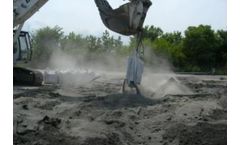
The EPA requires a Toxicity Characteristic Leaching Procedure (TCLP) test to determine if metal contaminated soil needs to be managed as hazardous or non-hazardous waste. ...
If the contaminated soil exceeds the Toxicity Characteristic Leaching Procedure (TCLP) limits, stakeholders should be aware that remedial applications, such as Blastox 215 exists that can be added directly to the soil to render it non-hazardous. ...
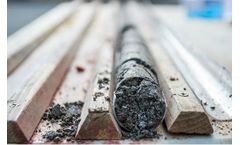
Treatment of Metal Contaminated Soils The EPA requires a Toxicity Characteristic Leaching Procedure (TCLP) test to determine if metal contaminated soils needs to be managed as hazardous or non-hazardous waste. ...
The EPA requires a Toxicity Characteristic Leaching Procedure (TCLP, EPA Method 1311) test to characterize heavy metals contaminated soils and determine how they should be disposed. Soils exhibiting hazardous characteristics, typically leaching metals at greater than 5.0 mg/L, need to be disposed of at a permitted hazardous waste facility, ...

This contribution describes the partial results of an experimental study dealing with the toxicity testing of 2 types of cement, fly ash, and blast furnace slag. Samples of the test materials were solidified and then pulverized by crushing. ...
The EPA requires a Toxicity Characteristic Leaching Procedure (TCLP) test to determine if the heavy metals in soil needs to be managed as hazardous or non-hazardous waste. ...
The exhausted adsorption media is safely disposed of in a permitted land disposal facility, and it does not release arsenic above acceptable levels into the water supply based on standard leaching tests. ...

Soil and rocks: special, non-hazardous waste Type of analysis: Solid Waste Characterization; Thermal treatment; Landfill Leaching Test; Non-Hazardous Waste characterization, simplified ...

Although, this storage can cause an environmental impact largely due to the transfer of trace elements (TEs) to groundwater by leaching. It is therefore important to evaluate the impact linked to the storage in order to limit this transfer. The evaluation is usually performed through leaching tests in columns or reactor. In this work, ...
The safety of GWA usage in the wastewater treatment process was assessed by toxicity characteristic leaching procedure (TCLP) tests. The equilibrium adsorption data fitted well with the Langmuir isotherm model, and the maximum adsorption capacity of As(III) on GWA was 51.47 mg.g−1. ...

Furthermore, UK landfill disposal of APCr currently occurs only within a 3xWaste Acceptance Criteria (WAC) by derogation; this is 3x the accepted European compliance standard. You can think of the leaching test for WAC compliance as an assessment of the environmental mobility of the pollutants within the APCr. ...

Risk characterisations have to be based on estimations of environmental concentrations of target substances leached from material preservatives. Harmonised test procedures are required to predict environmental impact due to leaching. Seventeen treated articles, mainly paints, but also a textile, sealing tapes and sealing masses were investigated ...
Risk characterisations have to be based on estimations of environmental concentrations of target substances leached from material preservatives. Harmonised test procedures are required to predict environmental impact due to leaching. Seventeen treated articles, mainly paints, but also a textile, sealing tapes and sealing masses were investigated ...

Likewise, the washed fly ash exhibited the cementitious property with high quantity of gypsum and ettringite. From the leaching test, the solidified products exhibited release of lesser heavy metals about the untreated parent materials.Keywords: pozzolanic solidification, MSWI fly ash, cementitious materials, Rietveld analysis, mineralogical analysis, municipal ...

The oxidized sludge produced will pass all toxicity characteristic leaching procedure tests. The waste brine from the desalination process was disposed of in accordance with local regulations. ...