
Refine by
Liquid Phase Separation Articles & Analysis
112 articles found

Digital twins based on process simulation models are invaluable for overcoming limitations in the design or operations phases to optimise plant profitability Separation processes play a crucial role in the oil and gas upstream, midstream, and downstream sectors. For example, in refineries, the overhead vessels and the crude distillation and vacuum distillation ...
CADAIR delivers professional treatment and recovery systems specially designed for industrial waste gas containing N-Methylpyrrolidone (NMP). Differing from traditional incineration technology, our solutions adopt physical adsorption solvent recovery routes, featuring high cost-effectiveness and outstanding processing efficiency. With self-developed adsorption and separation technologies, CADAIR ...

Laguna Technopark, a light industrial park near Laguna lake, 18.5 miles south of Metro Manila, upgraded to the Organica Water solution in November 2017. The 6,500 m3/d facility is the first Organica-powered for the Philippines, a country with over 100 million people but less than 30% of wastewater is treated. The newly integrated WWTP, located directly between an industrial area and a ...

Ion chromatography (IC) is an analytical chemistry technique to analyze ions and polar molecules via liquid chromatography. This is a separation technique that uses a liquid mobile phase to separate components of a mixture, based on their interaction with a stationary phase. ...

The insertion electromagnetic flow sensor and electromagnetic flow converter are matched to form an insertion electromagnetic flowmeter, which can be used to measure the volume flow of various conductive liquids in the conveying pipeline. The insertion electromagnetic flowmeter and the pipeline are fixedly installed through the installation base, ball valve, compression nut and ...

In large-scale and remote construction projects, concrete transportation and supply chain inefficiencies often become the primary drivers of cost overruns and project delays. Relying on off-site ready-mix plants introduces logistical bottlenecks, making projects susceptible to traffic congestion, delivery scheduling conflicts, and unexpected supply disruptions. Portable concrete batch plants ...
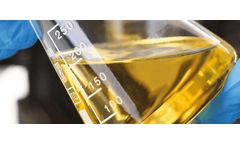
Plastic naphtha is a hydrocarbon-rich liquid derived from the pyrolysis of plastic waste. This valuable byproduct serves as an intermediate in the production of various chemicals, including gasoline and other fuels. ...
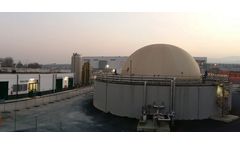
Critical considerations for anaerobic digestion projects In the field of industrial wastewater treatment, anaerobic digestion is a powerful process that transforms waste into valuable by-products. Most notably, it produces renewable energy in the form of biogas, which can be used to fuel operations, cogenerate electricity, or even be sold. Another valuable by-product of the process is digestate, ...

Contained in Waste Water from Parking Lots Problem Waste water of parking lots are not influenced by the dispersing effects of fast turning wheels and wind drift. Due to this, they can exhibit levels of HC concentration 50 to 100 times higher than usual street-bound waste water, considering high amounts of traffic and an asphalt layer. Drip loss from the parking vehicles result in the ...
In the production of biodiesel from rapeseed oil, it occurs that the crude oil as well as the final product gets into the waste water system. One such producer experienced problems with this situation, as the discharged wastewater had to comply with the regulations of the local communal wastewater treatment ...
A company manufactures wheels for trains. After forging, they have to be machined. This is done in large machining centers. Three of these machining centers have a common coolant supply, which is located in the basement under the machine tools. Due to the high demand for coolant from the machines, the coolant system was dimensioned with 16000 ...
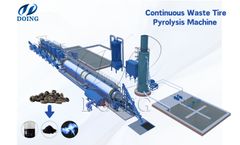
This results in higher yields of liquid and gas. - Larger Particles: Larger tire pieces take longer to heat up and require more time for pyrolysis to occur. ...

The separation principle is based on the interaction between peptides and the stationary phase. ...

The current HPLC method uses TEAB as an ion pair reagent to separate and purify oligonucleotides. This method is also called reverse phase ion pair (IP-RP) chromatography.Characteristics: It has a high degree of automation and saves manpower, and the product purity is high. ...

The electric field and magnetic field of the mass spectrometer separate peptide ions with specific mass-to-charge ratios (i.e., M/Z). ...

These techniques can not only determine the molecular weight of small molecule peptides but also identify the sequence of peptide segments through database search and algorithm analysis.2. High-Performance Liquid Chromatography (HPLC)HPLC is a separation analysis technique that can be used for the purification and identification of small molecule peptides. By ...

The determination of collagen molecular weight is a technique used to determine the molecular weight of collagen, a complex protein. Collagen is one of the richest proteins in animals, mainly found in the skin, bones, tendons and connective tissue. Due to its key role in cell structure and tissue regeneration, accurate determination of the molecular weight of collagen is of great significance to ...

This results in a decrease in the solubility of the polymer with the addition of the third component, causing phase separation between the solvent and the polymer at a specific point. ...

LC-MS pairs the separation power of liquid chromatography with the molecular identification and quantification capabilities of mass spectrometry. ...
Gas chromatography (GC) separates volatile compounds by vaporizing the sample and passing it through a column packed with a stationary phase. ...