
Refine by
Liquid Sampling Articles & Analysis
178 articles found
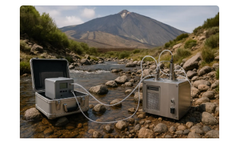
Dissolved gas analysis is a critical component of volcanic groundwater monitoring. By evaluating gas, liquid and soil samples on-site or in the laboratory, operators can identify volatile signatures tied to active systems. ...

Direct measurement of allergens such as Bet v 1 from birch pollen — a major pollen source across Europe — provides a more representative assessment of real exposure.Quality air sampling is critical to enable such analyses. The Application Note discusses the Coriolis+ air sampler, whose liquid-phase collection technology facilitates efficient capture of ...
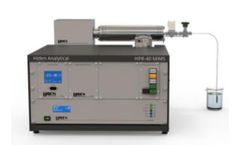
Dissolved gas measurements are often the difference between suspecting what’s happening in a water system and proving it. Whether you’re tracing and dating groundwater, diagnosing denitrification, quantifying methane production, or monitoring trace contaminants, the challenge is the same: gas concentrations can be low, dynamic, and easily altered by sampling. We sat down with ...

Most clinical analyzers essentially operate as "stand-alone laboratories," featuring precise, accurate, and highly reproducible programmatic liquid handling, sample addition, and washing steps. However, aside from cost, the size limitations of these automated analyzers mean they are not suitable for remote applications. ...

Mass Spectrometry (LC-MS/MS): This enriched sample is then analyzed by liquid chromatography-tandem mass spectrometry (LC-MS/MS). ...
Obtaining precise results in X-ray fluorescence (XRF) analysis requires thorough and proper sample preparation. For liquid samples, meticulous preparation ensures high accuracy and reproducibility of measurement outcomes. This article covers essential aspects of liquid sample preparation and handling procedures ...

The error should be ≤ ±2℃. 2. Sample loading Uniform distribution: Liquid samples should be mixed evenly before being poured into the container, while solid samples should be spread evenly at the bottom of the container. ...

Water quality is needed for agriculture, livestock, food-processes, and municipal activities. Otherwise, contaminated waters can cause severe crises to health, significant losses in economics, and even, to some extent, closure from regulations. Rapid microbial testing, thus, was brought into being, offering water safety protocols with fast, reliable, and accurate microbial ...
As a highly efficient sample pretreatment device, the graphite digestion and acid removal instrument has been widely used in the field of chemical analysis due to its advantages, greatly improving experimental efficiency and analytical quality. I. The Key Role of Sample Digestion Chemical analysis often requires transforming complex samples into a form suitable for instrumental detection, and ...
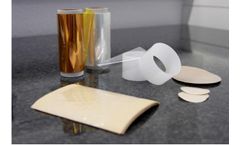
The preparation of liquids using X-ray fluorescence analysis is done by simply pouring the sample into a sample ...

Liquid particle counters are like silent guardians in industries where fluid purity is critical. From pharmaceuticals to water treatment and semiconductor manufacturing, these devices ensure that tiny, often invisible particles don’t compromise product quality, safety, or efficiency. Let’s break down how they work, where they’re used, and what makes them so ...

High-Performance Liquid Chromatography (HPLC)(1) PrincipleHPLC can separate, identify, and quantify various components in complex samples. In amino acid analysis, ion-exchange chromatography and reverse-phase high-performance liquid chromatography are commonly used.(2) OperationThe sample is first properly prepared, such as ...
The extraction process typically begins with selecting fresh or lyophilized plant materials, which are then ground under liquid nitrogen to preserve their integrity. Various solvent extraction methods are employed to isolate plant hormones from these materials. ...
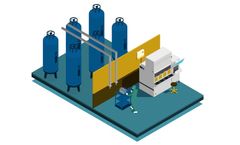
Ultra Pure Water (UPW) is critical in industries where even the smallest impurities can have significant consequences. It is used in semiconductor manufacturing, pharmaceuticals, and high-end laboratories-applications that demand the highest level of purity. Achieving and maintaining this purity requires a complex process and advanced monitoring tools. This blog explores the UPW process and ...

Discover how matched tumor-normal sequencing can help clinical researchers detect the somatic origin of variants with certainty. In the era of precision oncology, it has become increasingly common for patients diagnosed with cancer to undergo tumor sequencing. Identifying the mutations that make up a tumor’s genomic landscape can help guide selection of targeted therapies and inform ...

Plant Growth Regulator Residue Testing Items are listed below: Abscisic acid, ABA Choline Chloride Chlormequat chloride Cloprop Cyclanilide Daminozide Forchlorfenuron Gibberellic acid (GA3) Inabenefide Indole-3-ylacetic (IAA) Mepiquat chloride Paclobutrazol Thidiazuron Trinexapac-ethyl Triapenthenol Uniconazole 1-Naphthaleneacedic (NAA) 2,3,5-Triiodobenzoic acid (TIBA) 4-Chlorophenoxyacetic ...

Dynamic Light Scattering (DLS), also known as photon correlation spectroscopy or quasi-elastic light scattering, is a technique used to measure the size distribution of particles (such as proteins, polymers, nanoparticles, etc.) in a solution. In a DLS experiment, a liquid sample is illuminated by a laser beam, and the particles in the solution cause the laser to ...

This article investigates the effect of temperature on near-infrared (NIR) absorption spectroscopy and why it is crucial to control it – especially when analyzing liquid samples. These insights will help you to understand how to improve the accuracy and repeatability of NIRS measurements. ...
ByB&W Tek

By selecting the appropriate chromatographic column, mobile phase, and detector, the separation and detection of peptide drugs and their impurities can be achieved.Features: high resolution and sensitivity, can be used online with other techniques; however, the sample processing process is cumbersome, the sample consumption is large, and the equipment cost is ...

In the mass spectrometer, the sample goes through four steps: ionization, acceleration, deflection, and detection. ...