
Refine by
Mass Spectrometry Coupling Articles & Analysis
84 articles found

Temperature programmed oxidation (TPO) is a controlled characterisation technique that probes catalyst deactivation by oxidatively removing activity-limiting species. When coupled with mass spectrometry (MS), TPO directly links catalyst deactivation mechanisms to measurable gas-phase products, enabling informed decisions on catalyst design, ...

The workflow typically involves high-resolution mass spectrometry (LC-MS/MS) coupled with sophisticated enrichment strategies. ...

In this study, we follow the pharmacopoeia guidelines and apply microwave digestion for sample preparation, combined with ICP-MS (inductively coupled plasma mass spectrometry) for the determination of heavy and toxic elements in American ginseng. ...
By comprehensively profiling these molecules using advanced analytical platforms – predominantly mass spectrometry (MS) coupled with liquid (LC-MS) or gas chromatography (GC-MS), and nuclear magnetic resonance (NMR) spectroscopy – we gain unprecedented insights. ...
Techniques for Plant Hormone Analysis Advanced analytical techniques are employed to measure and analyze plant hormones: Chromatographic Techniques: High-performance liquid chromatography (HPLC) and gas chromatography (GC) are widely used to separate and quantify hormones due to their specificity and sensitivity. HPLC, often coupled with mass ...
It offers excellent reproducibility and sensitivity. Mass Spectrometry (MS)-Based Methods: Coupled with HPLC, MS provides highly accurate quantification of NAD/NADH levels and enables the identification of related metabolites in a single analysis. ...

These methods allow researchers to monitor pigment distribution in intact plant tissues, offering a non-destructive alternative to traditional techniques. 5. Mass Spectrometry Coupled with chromatographic techniques, mass spectrometry provides detailed information about pigment structures and compositions. ...
This technique focuses on the enzymatic cleavage of proteins into peptide fragments, which are then analyzed using liquid chromatography coupled with mass spectrometry (LC-MS). By comparing the signal intensities of corresponding peptide fragments across different samples, scientists can achieve relative quantification of proteins. ...

A lot can be learned about compounds and molecules by assessing their molecular masses and the make-up of their structures. This knowledge can provide an understanding of a compound’s characteristics, such as its solubility and reactivity, and help enforce quality control, for instance in pharmaceutics, by identifying contaminants and impurities. A technique used to quantify the ...
Anthocyanin analysis methods can be broadly categorized into traditional spectrophotometric techniques, chromatographic methods, advanced analytical techniques such as mass spectrometry and nuclear magnetic resonance spectroscopy, and biological assays. ...
Sample Preparation: This typically involves lipid extraction from biological samples using various solvents like chloroform/methanol or other methods such as liquid-liquid extraction or solid-phase extraction. 2. Mass Spectrometry Analysis: After extraction, the lipid extracts are subjected to mass spectrometry analysis, often ...
GC-MS combines the features of gas chromatography (GC) and mass spectrometry (MS) to identify different substances within a test sample. ...

Not every protein can be quantified. With the development of mass spectrometry technology, mass spectrometry-based protein absolute quantification methods have been widely used in absolute quantification analysis of the proteome. ...
At present, various chromatographic techniques are mainly used, including thin-layer chromatography (TLC), gas chromatography (GC), capillary electrophoresis (CE), supercritical fluid chromatography (SFC), high-performance liquid chromatography (HPLC) and various mass spectrometry (MS) techniques, as well as chromatography-mass ...

Elemental composition The presence of impurities in aluminum adjuvants can be determined using inductively coupled plasma mass spectrometry (ICP-MS). Differences in the type and amount of metal ions have been reported between AH adjuvants obtained from different manufacturers and from different batches, possibly due to differences in the sources ...
Workflow of CXMS The workflow of a typical chemical cross-linking mass spectrometry technique consists of the following steps: cross-linker selection, cross-linking reaction, enzymatic digestion, cross-linked peptide enrichment, and liquid chromatography-mass spectrometry coupling analysis. ...
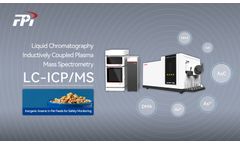
FPI has established an LC-ICP/MS system for the analysis of inorganic arsenic in pet feeds, based on its rich experience in mass spectrometry technology development, to protect pet food safety. ...

ICP-MS, short for Inductively Coupled Plasma Mass Spectrometry, is an analytical technique used for element determination. Combining a high-temperature ICP source, which is for converting the atoms of the elements in the sample to ions, with a mass spectrometer, which then separates and detects the ions. For the scientific ...

As a broad technique, inductively coupled plasma mass spectrometry (ICP-MS) wasn’t widely used until the 1980’s and was around in single collector format, typically using a quadrupole-based technique for mass separation, before multicollector iterations appeared. ...

Method 332.0 is one of the most sensitive methods using suppressed anion chromatography coupled with mass spectrometry. In this study, an IC-MS method was developed using a novel electrolytically regenerated anion suppressor as a part of a modular IC system coupled with a LC-MS 2020 single quadrupole MS to achieve higher ...