
Refine by
Meteorology Data Processing Articles & Analysis
14 articles found

Lakes Environmental Software developed Char View for the U.S. EPA to allow modelers to prepare site data, emissions, inventories, and air models quickly while avoiding common human errors in the ...
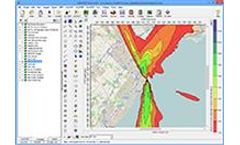
Lakes Software recently announced its acquisition of the CALPUFF modeling system from Exponent. Because Lakes’ CALPUFF View interface is well known throughout the modeling community, some modelers were not aware of the differences between this application and the stand-alone modeling system. This tip will explain the relationship between the modeling system and the CALPUFF View ...

How to benefit from connected devices on your farm A growing number of farmers are using the internet of things (IoT) to save time, increase production and reduce costs. So, what is IoT and how can you benefit from using IoT solutions and connected devices in your ...

Since 2013, the system has been providing valid data, without any gaps for over two years. Background Meteorological data is monitored and processed for the nautical personnel and visualized according to their professional requirements. ...

While most air dispersion modeling is conducted using meteorological data from recent past years and historical or projected emissions data, models can also be used with real-time or short-term forecast meteorological and emissions data to estimate impacts at the present time and in the near future. ...
What is Onsite Meteorological Data and where can you get it? In the air dispersion modeling world, onsite meteorological data usually refers to any data collected outside of the mainline weather stations typically found at airports. ...
Staying on top of changes to meteorological data processing standards Modeling options and regulatory guidelines applicable to meteorological data processing change on a regular basis. The BREEZE Software data team consists of staff meteorologists, environmental engineers, and ...
Abstract For regulatory modeling conducted in the United States using AERMOD, the United StatesEnvironmental Protection Agency (EPA) recommends the use of onsite measurements whereavailable or in the absence of onsite data five years of reliable, quality assured, andrepresentative meteorological data from a nearby National Weather Service (NWS) ...

This model is based on statistical processing of meteorological data and deterministic approach of dispersion process. ...
Many atmospheric transport and dispersion models, based on various approaches and applied to different spatial scales, need 3-D meteorological fields referred to regular grid systems. Data generally available, however, cannot be directly employed because of their irregularities, inconsistencies, insufficient spatial detail or inadequate terrain representation. To ...
This paper presents a brief summary of the work of working group 1 of COST Action 710, harmonisation in the pre-processing of meteorological data for dispersion modelling.Keywords: atmospheric dispersion models, modelling, meteorological data, surface energy balance, air pollution, environmental pollution, ...
Geographical and meteorological data input tools used with the Demokritos atmospheric transport dispersion code system are specifically designed for dispersion computations over complex terrain. ...
The study investigates the sensitivity of the dispersion predictions to the number of years of data used; using hour by hour or statistical data; using different variables (e.g. surface heat flux or the Monin-Obukhov length); using different category boundaries for statistically analysing the data; using different meteorological ...
In the framework of COST-710, working group III aims to recommend formulations of atmospheric vertical profiles of wind, temperature and turbulence. This intermediate report gives a brief overview of existing methods to calculate vertical profiles. A short note on existing datasets for validation purposes is given.Keywords: atmospheric turbulence, turbulence time-, scale, vertical profiles, ...