
Refine by
Microcystins Articles & Analysis
84 articles found
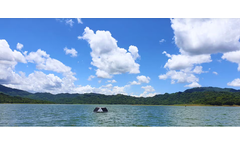
This is a meaningful operational advantage for utilities monitoring finished water for microcystin and cylindrospermopsin compliance. 6) Combining approaches for source water protection These approaches are not mutually exclusive. ...
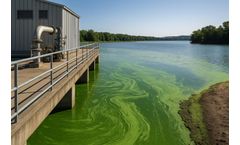
Harmful algal blooms (HABs) in drinking-water reservoirs pose multi-faceted operational risks for utilities, requiring proactive source-water management, robust monitoring, and rapid, non-disruptive response strategies to maintain water quality under regulatory constraints.Impact on Drinking Water UtilitiesHABs present challenges that extend beyond aesthetics, including toxin risks, taste and ...
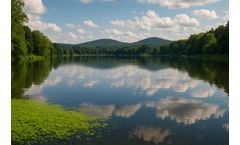
This can exceed WHO limits for microcystin-LR at intake depth. Algal biomass increases filter loading, reducing run times and increasing backwash frequency. ...
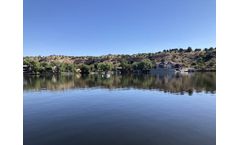
Chemical-free approach controls cyanobacteria, improves water clarity, and supports fisheries in phosphorus-rich lake. Background Lake Tanglewood is a 255-acre reservoir located in the Texas Panhandle, surrounded by a private residential community of about 500 people. This recreational lake constantly receives highly treated wastewater from the city of Amarillo, located in the Texas Panhandle ...

Cyanobacteria, or blue-green algae, is the organism that primarily produces microcystin in a Harmful Algal Bloom (HABs). The reason cyanobacteria produce toxins is still being studied, but nevertheless, is a problem that requires careful consideration to manage and ...

Higher water quality, lower organics in final water Lower levels of disinfection byproducts, THMS, in distribution Customer experience: Reduced levels of taste and odour complaints from customers as a result of reduced toxins such as geosmin, MIB, microcystins, chlorine by-products. Optimizing water treatment works processes with LG Sonic offers water utilities a ...
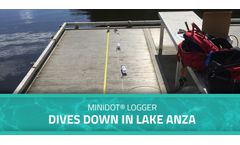
Blue-green algae, or cyanobacteria, is a particularly harmful type of algal bloom as it can produce toxins like microcystin. Microcystin and other cyanobacteria toxins can sicken humans and mammals, even proving fatal in sufficient quantities. ...
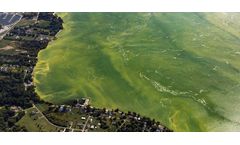
Predictions about algae blooms in Lake Erie made earlier suggested that they wouldn’t be too severe, with a potential severity range of 2.5 to 4 on a scale of 1 to 10. However, a recent report has revealed that the situation is more serious than initially ...
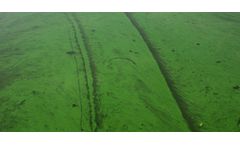
Their research indicates that regions at higher latitudes face a heightened risk of dangerous levels of a common algal toxin called microcystin when the temperature ranges between 20 and 25 degrees Celsius (68 to 77 degrees ...

This scenario became a reality for cities like Toledo, OH in 2014, affecting more than 400,000 residents. The source? Microcystins - toxins produced by cyanobacteria, commonly referred to as blue-green algae. ...

Residents impressed as Ginger Cove lake’s quality and clarity look better than it has in 40 years Located in Valley, Nebraska, Ginger Cove is a premier spring-fed, sand-bottom lake home community founded in 1966. Spanning nearly 100 acres of lake and 40 acres of greenspace, Ginger Cove also tout’s Nebraska’s longest genuine covered bridge. The community boasts 160 residential ...

These VOCs can actually give us insights into the presence of a harmful substance called microcystin. This toxin is produced by specific types of blue-green algae when they experience rapid growth. ...

Lake Erie is hiding something beneath its green, murky surface, and it’s more complex than it seems. Recent findings from The Ohio State University throw light on this phenomenon. They reveal that during the early summer, we might be overestimating the harm of these toxins. But as we enjoy the last days of sun, these toxins might get stronger than we anticipate. ...
Embarking on a journey like never before, a team of scientists turned their eyes to the seemingly tranquil waters of America’s rivers. Started in the summer of 2019, armed with advanced metagenomic sequencing tools, they plunged into the microscopic universe beneath the water’s surface, uncovering an unexpectedly complex and diverse ecosystem. Their main focus? Cyanobacteria – ...
Microcystin is a type of cyanotoxin that is produced by certain species of blue-green algae, also known as cyanobacteria. These toxic substances are of great concern due to their ability to harm humans, animals, and the environment when present in high concentrations. The presence of microcystin in bodies of fresh water, such as lakes, rivers, and ponds, can lead ...
Microcystin is a type of cyanotoxin that is produced by certain species of blue-green algae, also known as cyanobacteria. These toxic substances are of great concern due to their ability to harm humans, animals, and the environment when present in high concentrations. The presence of microcystin in bodies of fresh water, such as lakes, rivers, and ponds, can lead ...
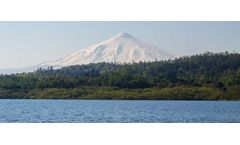
Toxic algae blooms have been a growing concern in Chile in recent years, as they threaten the health of people and animals that come into contact with them. The blooms have been caused by the proliferation of microorganisms known as cyanobacteria, which can produce harmful toxins. One of the most affected areas is Lake Villarrica in the La Araucanía region, where a toxic algae bloom has ...

Other strains contain toxins such as microcystin, which affects the liver, or neurotoxins that affect the nervous system and may cause neurodegenerative diseases such as Alzheimer’s disease, amyotrophic lateral sclerosis (ALS), and Parkinson’s disease. A 2007 national survey conducted by the United States Environmental Protection Agency (EPA) detected ...
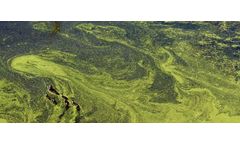
Human activity is warming the climate around the world and polluting the environment Microcystin, the substance that makes algal blooms toxic Krausfeldt’s study unveiled 30 kinds of cyanobacteria that had never before been detected Summer brings hours of sunshine, lazing about with friends and enjoying the warmth of the season, but it also wakes up a sinister ...

As a summer breeze sweeps an assortment of leaves along the banks of Williston Lake, birds gloriously chirp, and the water ripples. However, for a long time, this privately-owned lake, managed by the Girl Scout Council of the Chesapeake Bay (Girl Scouts), was contaminated by toxic blue-green algae blooms. Williston Lake encompasses 56 acres and is shared among 19 residential landowners. The lake ...