
Refine by
Nir Camera Articles & Analysis
18 articles found
PICVISA's AI-powered optical sorters use hyperspectral cameras to identify fiber types, colors, and fabric conditions at high speed without physical contact — solving the critical bottleneck of sorting that prevents circularity. ...
This is where PICVISA's technology plays a critical role — using advanced optical sensors, NIR/SWIR hyperspectral cameras, AI, and robotics to sort textiles by composition and color at industrial scale, enabling true textile circularity. ...
An optical sorter uses high-resolution cameras, near-infrared (NIR) sensors, and image processing algorithms to identify and differentiate materials in a mixed stream on a conveyor belt. ...
PICVISA's PET Recycling Solutions PICVISA's ECOPACK optical sorter automatically classifies and separates plastics by composition (NIR), color (VIS), and shape using deep learning. The ECOFLAKE system enables precise PET flake separation using RGB CMOS cameras with NIR technology. ...
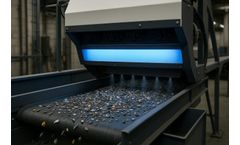
The integration of NIR spectroscopy in the early 2000s transformed sorting capability for polymer streams. ...

A leader in sorting and recycling solutions, PICVISA provides technology for identifying and separating all types of plastics through systems such as ECOPACK and ECOFLAKE.ECOPACK automatically sorts and separates multiple types of materials according to their composition (NIR), colour (VIS) and shape (deep learning). Thanks to its multispectral vision system, it can be configured ...
This makes it possible to automatically classify and separate various types of materials according to their composition (NIR), color (VIS) and shape, through the use of deep learning. ECOFLAKE optical sorting systems, on the other hand, facilitate the separation of different types of material flakes with outstanding accuracy and efficiency. They use high-definition CMOS RGB ...

It automatically classifies and separates various materials based on composition (NIR), colour (VIS), and shape using deep learning. Thanks to its multispectral vision capabilities, it can be quickly adjusted to recognise new materials entering the waste stream. ...

This optical separator makes it possible to automatically sort and separate different types of materials according to their composition (NIR), color (VIS) and shape (deep learning). In addition, thanks to the flexibility offered by its multispectral vision, it can be configured to make rapid changes in the classification of new materials that may appear in the incoming flow to be ...

This optical separator makes it possible to automatically sort and separate different types of materials according to their composition (NIR), color (VIS) and shape (deep learning). In addition, thanks to the flexibility offered by its multispectral vision, it can be configured to make rapid changes in the classification of new materials that may appear in the incoming flow to be ...
It is therefore essential to collect and process all types of plastics correctly in order to keep them in the cycle and away from nature.As a leading company in sorting and recycling solutions, PICVISA has the right product to sort and detect all types of plastics: ECOPACK, an optical separator that automatically sorts and separates different types of materials according to their composition ...

They are equipped with high-resolution RGB cameras, state-of-the-art NIR technology and an innovative belt feed system, allowing for the separation of different types of materials and colours, with exceptional separation ratios and purity rates of over 90%… Thanks to the latest generation LED lighting, we obtain a high colour rendering index CRI90. ...

At a smaller scale, the most common form of sorting is by use of some form of near-infrared spectroscopy (NIR) system which provides a quick and easy method of identifying many plastic types and grades. ...

They are equipped with high-resolution RGB cameras, state-of-the-art NIR technology and an innovative belt feed system, allowing for the separation of different types of materials and colours, with exceptional separation ratios and purity rates of over 90%… Thanks to the latest generation LED lighting, we obtain a high colour rendering index CRI90. ...

Using high-definition RGB CMOS cameras along with NIR technology, ECOFLAKE achieves detailed classification by color, transparency and composition of materials. ...
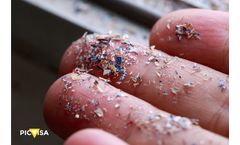
This advanced technology uses machine vision, with RGB and NIR cameras, to sort the flakes. In doing so, it ensures that only contaminant-free, properly sorted flakes advance to the next step in the process. ...
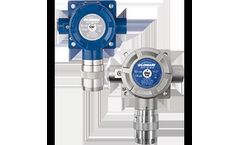
Hydrogen will be at the heart of the world's energy transition away from natural gas. However, while there are many ways to produce and use hydrogen, there is a common denominator: all require monitoring for safety-Today, Teledyne Gas and Flame Detection has a complete product offer for hydrogen that not only encompasses end-to-end gas, flame and fire detectors, but also a complementary range of ...
The purpose of paper recycling is to produce high quality recycled paper, responding to the high-quality specifications required by paper consumers either from the graphic, hygiene or packaging sectors. In consequence, any collection scheme shall be designed in a way to provide grades of paper for recycling adapted to the requirements of a high value recycling, according to the EN 643 to the ...