
Refine by
Optical Gas Imaging Camera Articles & Analysis
66 articles found
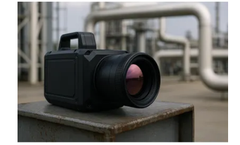
Executive summary: A premium cooled OGI camera's higher upfront cost is offset by rapid leak detection ROI through product recovery, tax mitigation, and uptime. This article outlines the financial logic and key metrics for decision-makers in LDAR programs.Cost and value drivers behind premium OGI camerasThe primary cost driver is a cooled MWIR detector (InSb or SLS) with a Stirling cryocooler ...
ByOPGAL
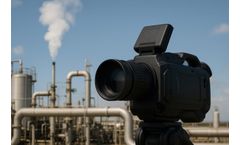
In the high-stakes methane mitigation environment, the effectiveness of LDAR hinges on skilled operators and certified procedures. As regulatory enforcement under EPA Appendix K intensifies, the industry is transitioning from point-and-shoot detection to standardized, high-precision practice. This overview emphasizes OGI certification, CH4 plume science, and camera technology as core enablers of ...
ByOPGAL
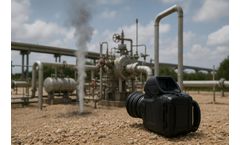
With EPA OOOOb and OOOOc finalized and EU methane regulations advancing, operators must rely on Optical Gas Imaging to meet compliance obligations and demonstrate verifiable emissions data.The Regulatory Shift: From NSPS OOOOa to the OOOOb/c EraFor nearly a decade NSPS OOOOa served as the primary framework for the oil and natural ...
ByOPGAL
In a facility with thousands of components, a full survey can take weeks, poses safety risks, and can yield false negatives when leaks are not encountered by the probe.Optical gas imaging (OGI) cameras visualize infrared absorption to provide a real-time, top-down view of plumes. ...
ByOPGAL
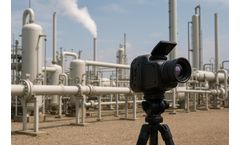
In a facility with thousands of components, a full survey can take weeks, poses safety risks, and can yield false negatives when leaks are not encountered by the probe.Optical gas imaging (OGI) cameras visualize infrared absorption to provide a real-time, top-down view of plumes. ...
ByOPGAL
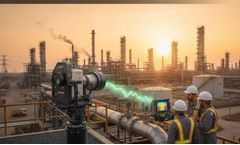
OGI, short for Optical Gas Imaging, has become one of the most influential technologies in industrial gas detection. ...
ByOPGAL
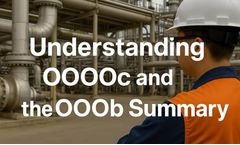
The EPA continues to accelerate its methane reduction strategy by tightening performance standards across the petroleum and natural gas sector. Two major components of this regulatory shift are OOOOb and OOOOc, each addressing different stages of industry activity. While operators are becoming familiar with the OOOOb summary that outlines requirements for new, modified, and reconstructed sources, ...
ByOPGAL
The regulatory landscape for methane and industrial greenhouse gas emissions is shifting rapidly. The United States Environmental Protection Agency is strengthening requirements under the Subpart W proposed rule, part of the Greenhouse Gas Reporting Program. The new expectations focus on more accurate quantification, verified measurement methods, and continuous or near continuous detection of ...
ByOPGAL
Optical gas imaging continues to evolve as industries demand higher sensitivity, greater reliability, and stronger field performance for methane and VOC detection. Among the technologies contributing to these advancements is Sierra Optical, a class of high precision optical components engineered for superior infrared transmission, stability, and spectral accuracy. As OGI systems grow more ...
ByOPGAL
In these environments, detection equipment must perform flawlessly – because the risks of failure can be catastrophic. This is precisely why optical gas imaging (OGI) technology has become an essential tool in modern industrial safety. An OGI camera is not just a visual device; it is a highly engineered ...
ByOPGAL
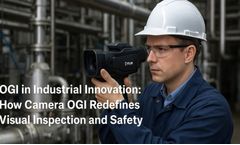
Introduction: From Leak Detection to Industrial Transformation Optical Gas Imaging (OGI) has long been associated with gas leak detection, especially in the oil and gas sector. But over the past decade, OGI technology has quietly evolved into something much broader — a cornerstone of industrial innovation. ...
ByOPGAL
Introduction: OOOOc - The Next Step in Methane Regulation As global attention on methane intensifies, the U.S. Environmental Protection Agency (EPA) continues to roll out new standards aimed at reducing emissions from the oil and gas sector. Following the introduction of OOOOb, the agency is now advancing OOOOc, a complementary rule targeting existing oil and gas sources rather than new ...
ByOPGAL
Introduction: The Evolving Landscape of Methane Regulation Methane has long been a focal point in global climate policy — and in 2025, the U.S. Environmental Protection Agency (EPA) continues to sharpen its focus through updates to its Greenhouse Gas Reporting Program (GHGRP). One of the most significant developments is the Subpart W Proposed Rule, which updates the framework for reporting ...
ByOPGAL
Introduction: Why Camera Leak Detection Matters Gas leaks pose significant safety, environmental, and financial risks. Methane and other volatile compounds are invisible to the naked eye, but even small leaks can lead to catastrophic accidents, regulatory fines, and lost revenue. For decades, industries relied on handheld sensors that could only measure one point at a time. Today, a camera leak ...
ByOPGAL
Introduction: Why Methane Regulations Are Evolving Methane emissions have become one of the most pressing challenges in environmental regulation. Although methane accounts for a smaller percentage of greenhouse gases compared to carbon dioxide, its warming potential is over 80 times greater in the short term. This makes methane a critical target for climate action, particularly in the oil and ...
ByOPGAL
Introduction: The Growing Need for Gas Imaging Leaks of methane, VOCs, and other hazardous gases are one of the biggest challenges for industries such as oil & gas, chemical processing, and power generation. Detecting these emissions early prevents costly downtime, protects workers, and ensures compliance with strict environmental regulations. In recent years, gas imaging has become the gold ...
ByOPGAL
Introduction: Why Leaks Are a Hidden Threat Leaks, whether from gas pipelines, industrial equipment, or fluid systems, represent a significant risk for businesses worldwide. They can threaten worker safety, damage equipment, harm the environment, and cause millions of dollars in financial losses. The challenge is that most leaks are invisible to the naked eye and extremely difficult to detect ...
ByOPGAL
Introduction: What Is an OGI Camera? Optical Gas Imaging (OGI) has transformed how industries detect and manage gas leaks. A camera OGI makes the invisible visible by capturing emissions such as methane, VOCs, and refrigerants that cannot be detected by the naked eye. ...
ByOPGAL
Introduction: Regulation Meets Innovation Methane emissions are one of the most pressing challenges in today’s energy and industrial landscape. Invisible to the naked eye, these leaks not only waste valuable product but also drive significant greenhouse gas emissions with major climate impacts. For years, reporting programs relied heavily on emission factors and engineering calculations, ...
ByOPGAL
Introduction: The Human Eye Can’t See Thermal or Gas Anomalies Gas leaks and thermal anomalies are among the most dangerous and costly issues in modern industry. The problem is simple: the human eye cannot detect them. Invisible leaks in pipelines, valves, or storage tanks can go unnoticed for weeks, sometimes months, until they cause catastrophic accidents, production downtime, or ...
ByOPGAL