
Optical Separation Articles & Analysis
74 articles found

As a critical production process in industries such as printing and packaging, new energy batteries, and electronic materials, coating technology is widely used in the manufacturing of release paper, protective films, optical films, lithium battery separators, and other products. During the coating process, large quantities of organic solvents—such as ethyl ...

PICVISA's Optical Sorting Products PICVISA's ECOGLASS separates glass from contaminants by color and composition, operating at the Loeches plant in Madrid and UTE Explotación Onda in Castellón. The ECOPACK optical sorter separates polymers, paper/cardboard, and lightweight packaging — with seven installed at ...
The PET Mechanical Recycling Process PET plastic recycling involves: selective collection and sorting by color, compacting into bales, grinding into small PET plastic flakes, washing with hot water and caustic soda, optical sorting of flakes by color and clarity, and conversion into sheets or new packaging. ...
PICVISA offers the key technologies that make PLA recycling efficient and scalable through advanced optical sorting solutions. What Is PLA Plastic? PLA is a thermoplastic polyester made from natural products like corn, sugar cane, or cassava. ...
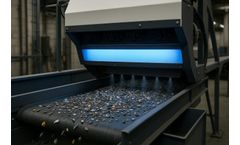
NIR illumination of a material surface excites molecular overtone and combination bond vibrations, producing a reflected spectrum that acts as a molecular fingerprint unique to each polymer type. NIR optical sorters resolve polypropylene (PP) battery casings from polyethylene (PE) separator films and PVC jacketing with classification accuracies exceeding 98% in ...
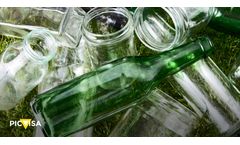
Both materials can be manufactured and recycled, but always separately. As we will see, crystal contains lead oxide that can damage glass recycling furnaces. ...

Stage 3: processing techniques at the recycling centers At MRFs, plastic is separated by type (PET, HDPE, PP…) using optical sorters. And if the MRF has a PET bottle recycling plant, two processes will take place. ...

Moisture is removed through pressing and drying, followed by optical sorting to separate coloured flakes from clear ones. The clear flakes are then used to produce plastic sheets, which can later be turned into new packaging. ...

This integrated waste disposal system promotes source separation, composting, and energy recovery, always supported by regulations that foster a circular economy and shared responsibility among governments, citizens, and businesses. ...

At both events, PICVISA aims to make a strong impression on the U.S. market with two of its most advanced technological solutions:ECOSORT: Thanks to its advanced fiber-sorting technology, this optical sorter enables the automatic separation of textile garments by composition (NIR), color (VIS), and/or shape. Due to its flexible multispectral vision system, ...

To face these problems, it is crucial to resort to the most innovative technologies, such as the ECOPACK optical separator or the ECOFLAKE optical sorting system, both from PICVISA. ...

Among them it is worth mentioning ECOPACK. This optical separator makes it possible to automatically sort and separate different types of materials according to their composition (NIR), color (VIS) and shape (deep learning). In addition, thanks to the flexibility offered by its multispectral vision, it can be configured to make rapid changes in ...

Among them it is worth mentioningECOPACK. This optical separator makes it possible to automatically sort and separate different types of materials according to their composition (NIR), color (VIS) and shape (deep learning). In addition, thanks to the flexibility offered by its multispectral vision, it can be configured to make rapid changes in ...

Improved collection and recycling would also be encouraged: for example, 90% of single-use plastic and metal drinks containers up to 3 litres will have to be collected separately from 2029.The proposal negotiated in Brussels maintains the packaging reduction targets: 5% by 2030, 10% by 2035 and 15% by 2040, and calls on countries to also reduce packaging waste. ...
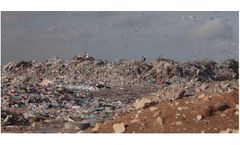
Industrial waste is the waste produced by industrial activity which includes any material that is rendered useless during a manufacturing process such as that of factories, mills, and mining operations. Types of industrial waste include dirt and gravel, masonry and concrete, scrap metal, oil, solvents, chemicals, scrap lumber, etc. Industrial waste may be solid, semi-solid or liquid in form. It ...

Magnets and other sorting equipment separate ferrous and non-ferrous metals from the waste stream. Secondary Crushing and Screening: After primary processing, the crushed materials are further processed through secondary crushing and screening stages. This step further reduces the size of the materials and ensures uniformity in particle size. Screens and classifiers ...

Additionally, innovating advanced sorting at materials recovery facilities simplifies separation and directs greater volumes of plastics to proper reclamation channels. Equipment like optical sorters, ballistic separators, infrared spectroscopy and float-sink tanks leverage physical and chemical properties to isolate target plastics from waste ...
ByAntecs
In this field, PICVISA offers solutions such as ECOSORT and ECOPICK, designed specifically to address the complex specificities of waste generated by an industry as important to the economy as textiles. PICVISA’s automated separation technology uses techniques such as optical sensors and artificial intelligence-based robotics to sort and recycle textile ...
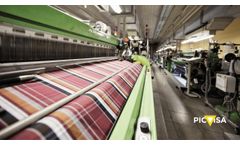
The new waste law for 2025 requires separate collection of textile waste in all municipalities and the participation of fashion brands in collecting used garments. ...
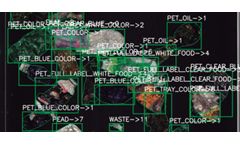
Using cameras and sensors, the technology can automatically recognize and classify different types of materials, allowing for greater accuracy in separating materials and a more efficient recycling process. It enables customization of the recycling process and obtaining higher quality materials. ...