
Refine by
Oxidizing Biocide Articles & Analysis
22 articles found
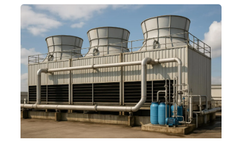
Chemical treatment programs Conventional approaches use corrosion inhibitors to protect metal piping, oxidizing biocides to control microbial growth, and pH control to maintain chemistry. ...
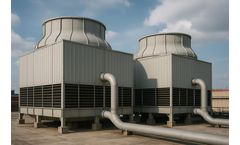
This enables a targeted approach to problem areas.Water Treatment ProgramOxidizing biocides for rapid disinfectionNon-oxidizing biocides for long-lasting controlAnti-scalants to prevent mineral buildupMonitoring and TestingMeasuring biocide levelsMonitoring pH and conductivityTesting for Legionella presenceCleaning and ...
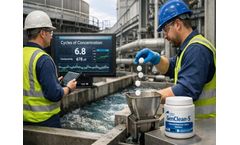
Industrial facilities operating cooling towers face a persistent challenge: balancing water conservation with system reliability. The answer lies in maximizing cycles of concentration (COC), but achieving this without compromising equipment integrity requires sophisticated chemistry and monitoring protocols. Genclean-S tablet technology represents a breakthrough approach that enables facilities ...

These surface-associated microbial communities form a complex extracellular polymeric substance (EPS) matrix that can retain up to 95% water, protect embedded microorganisms from oxidizing biocides, and serve as a breeding substrate for invertebrate pests such as filter flies (Psychodidae). ...

These surface-associated microbial communities form a complex extracellular polymeric substance (EPS) matrix that can retain up to 95% water, protect embedded microorganisms from oxidizing biocides, and serve as a breeding substrate for invertebrate pests such as filter flies (Psychodidae). ...

The commercial/industrial cooling tower landscape has evolved dramatically over recent years, yet many water and wastewater treatment professionals are still applying yesterday’s solutions to today’s complex operational challenges. With stricter environmental regulations, rising water costs, and increasing demand for operational efficiency, cooling tower management requires a more ...

Preventative maintenance helps to maximize equipment lifetime and return on initial investment while close compliance monitoring circumvents preventable expenditures in municipal fines.Microbiological Control The final component of Operators Unlimited’s treatment plan incorporated alternating oxidizing and non-oxidizing biocide. This alternating ...

Dosing BCP™ 2430 along with some periodic treatment of oxidizing or non-oxidizing biocide will keep cooling water systems clean. ...
Application of BCP 1015 (Classic DTEA II) on a monthly dosage at 70 ppm (product based) and dosing with oxidizing biocide ( 100 ppm product) effectively controlled Legionella bacteria in this cooling water system. ...

Summary of Study: Beginning in October 2016, AS Filtration, LLC conducted a year-long study to document the effectiveness of a non-oxidizing biocide within a side stream filter on the cooling tower system of a four-story office building in Chattanooga, Tennessee. ...
Summary of Study: Beginning in October 2016, AS Filtration, LLC conducted a year-long study to document the effectiveness of a non-oxidizing biocide within a side stream filter on the cooling tower system of a four-story office building in Chattanooga, Tennessee. ...

Learn more about Kurita´s developed and patented Dilurit® CaR-System - the innovative improvement in deposit control: https://www.slideshare.net/KuritaGlobal/dilurit-carsystem-improvement-in-deposit-control Dilurit® CaR-System is a mild oxidizing biocide in combination with a booster agent. A broad spectrum of efficacy, a long-lasting success and a ...
Clean cooling water surfaces are important because they foster: Less potential for microbially influenced corrosion (MIC) Better performance from corrosion and scale inhibitors Decreased opportunity for biofilm to harbor pathogens such as Legionella Pneumophila More efficient heat transfer on exchanger surfaces Cooling systems that run closer to design and more efficiently. ...
Killing microbes in the bulk water using standard oxidizing and non-oxidizing biocides is relatively easy, but killing sessile, surface-bound biofilm microbes with biocides alone is much more difficult. ...
Legionella bacteria grow in biofilms in building water systems, where they are protected from the disinfecting action of oxidizing and non-oxidizing biocides. The importance of biofilm control is highlighted in the following excerpt from “Biofilms: The Stronghold of Legionella Pneumophila“. ...

In this study, the opportunity of producing sorbents with biocidal properties based on non-oxidizing biocides and anion exchange resins (AERs) was investigated. A wide range of different type of AERs were tested for the ability to sorb biocides (dibromonitrilopropionamide (DBNPA) and polyhexamethyleneguanidine (PHMG)) and to ...

So ozone can’t be stored; it must be generated on-site. Ozone is an oxidizing biocide, which means it kills all microbes, such as bacteria, viruses, spores and algae. An important difference between ozone and traditional chemicals is that ozone kills by oxidation (burning) rather than poisoning, which is how chemicals work, so no organism ...

Other additional functions include: chemical reaction with the embedded material, especially an oxidation reaction, using, say, potassium permanganate; biocidal action, using a silver coating on the medium; and catalytic action, causing reaction between two impurities or between an impurity and the carrier fluid. ...
It is a cheap and efficient preservative, but its tendency to oxidize easily has several drawbacks. The use of a non-oxidizing biocide instead could solve some of the issues currently seen with the SMBS, but little has been reported about membrane compatibility and preservation efficiency in the long-term mode. Long-term membrane preservation ...

Provides continually updated analyses and forecasts for 11 product categories including activated carbon, chelates corrosion inhibitors, defoamers, ion exchange resins, inorganic flocculants, organic flocculants, oxidizers and biocides, pH adjustors, and scale inhibitors in 80 ...