
Refine by
Particle Sizing Articles & Analysis
1,494 articles found
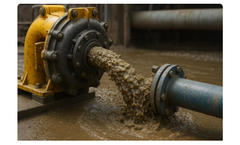
To maintain transport and prevent settling, the system must sustain sufficient velocity for abrasive particles. As solids concentration and slurry density rise, resistance and internal loading increase, elevating wear and energy demand.Abrasive wear: Hard minerals such as sand, ore, rock fragments, or tailings erode impellers, liners, casings, seals, and suction regions, with ...
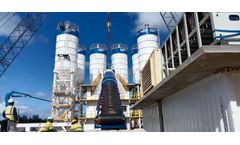
Negative pressure ventilation within the enclosed structure, directing all internal air through centralized filtration before discharge, ensures that the enclosure itself does not become a pressurized dust source through leakage at access points.Cement and Cementitious Material Handling Enclosure Cement and supplementary cementitious materials — fly ash, ground granulated blast-furnace slag, ...

The relatively low melting point of LDPE can facilitate easier pre-processing, though uniform particle size is necessary to prevent agglomeration during thermal treatment. ...
Modern continuous biochar production systems often achieve better process stability and higher overall efficiency than traditional batch systems. 7. Particle Size of Biomass Feedstock particle size also plays an important role in determining biochar yield. ...
Ideally, feedstock should undergo mechanical desiccation to reduce moisture levels below fifteen percent before entry.Granulometric Uniformity Particle size distribution also alters the internal heat transfer rate. ...
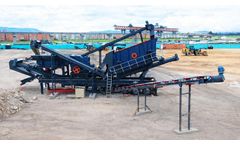
Each group interacts differently with the crushing chambers, requiring distinct combinations of compressive force or impact velocity to achieve efficient particle size reduction.Sourcing Equipment for Soft to Medium Minerals For non-abrasive materials such as limestone, gypsum, and phosphate rock, the main goal is maximizing volumetric throughput while ...
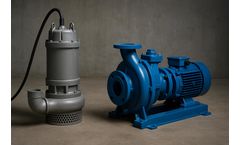
In slurry service, variations in density and particle size affect suction efficiency and increase wear. Suction conditions remain a critical system design parameter. ...
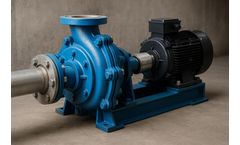
TDH is one of the primary inputs that defines the required pump operating point.Slurry PropertiesSlurry behavior has a direct impact on pump sizing. Key inputs include solids concentration by weight or volume, particle size and distribution, specific gravity of the slurry, and viscosity and flow characteristics. ...

Multi-stage Crushing: Utilizing equipment such as shredders and pulverizers, the LFP batteries undergo physical crushing to transform them into smaller-sized materials with uniform particle distribution. Fine Sorting: This is a critical stage in the recycling process. ...

Introduction Welding fumes consist of submicron particulate matter, metal oxides, and gaseous byproducts that are difficult to remove without properly engineered filtration systems. While capture at the source is critical, the effectiveness of a welding fume extraction system ultimately depends on how efficiently these contaminants are filtered before the air is discharged or recirculated. ...
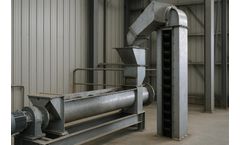
GME designs are material-specific rather than one-size-fits-all.Corrosive and Abrasive Materials. Vertical transport in battery recycling faces simultaneous corrosive and abrasive wear. Sulfuric acid residues—even below 1% by weight—attack carbon steel, necessitating stainless steel construction or protective coatings. Lead oxide paste particles cause three-body ...
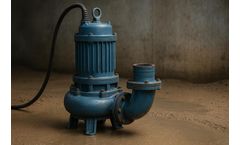
As solids concentration increases, the mixture becomes heavier and more viscous, reducing flow rates and increasing power demand to maintain discharge. Particle size and specific gravity also influence internal flow, wear, and achievable head. ...

Our machinery focuses on utilizing advanced mechanical crushing, fine grinding, and efficient sorting technologies to help clients safely and environmentally responsibly transform scrap lithium-ion batteries into black mass characterized by high purity and uniform particle size. Our equipment offers the following advantages: High Processing Efficiency: An ...
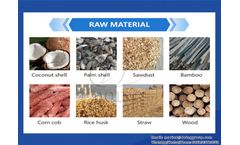
Our charcoal carbonization equipment configurations consider raw material characteristics to provide process solutions, controlling biomass feedstocks moisture content, optimizing particle size, and rationally controlling the heating rate. DOING's modern charcoal making machines boast excellent sealing and high thermal efficiency, increasing charcoal yield by ...

ISO 14644-1 classifies cleanrooms by the maximum allowable airborne particle concentrations per cubic meter of air, covering ISO classes 1 through 9. The classifications rely on particle size measurements, most commonly 0.1 µm, 0.2 µm, 0.3 µm, 0.5 µm, and 5.0 µm. ...

ISO cleanroom classifications are defined in ISO 14644-1 and categorize environments by airborne particle concentration per cubic meter for defined particle sizes. The scale runs from ISO 1 (the cleanest) to ISO 9 (closest to standard indoor air). The lower the ISO class number, the tighter the particle limits and the more ...

A well-calibrated, well-serviced particle counter enables manufacturers to:Differentiate intrinsic product particles from extrinsic contaminationDefend monitoring strategies during auditsEstablish reliable baselines and recovery timesAvoid false alarms that erode trust in the dataWhen instruments are neglected, even the strongest contamination control strategy ...
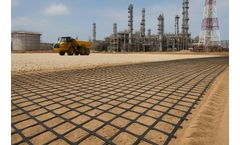
Aggregate placement: Well-graded granular fill (25–50 mm nominal size) spread to specified thickness, enabling aperture interlock with geogrid. ...

Orange juice with pulp is a functional beverage produced from concentrated orange juice (or NFC) containing natural orange pulp particles sized 2–6 mm, with a typical pulp content of 5%–15%. Relative to clarified juice, it provides a richer mouthfeel, enhanced sensory experience, and a stronger market premium.Formulation involves blending concentrated orange ...
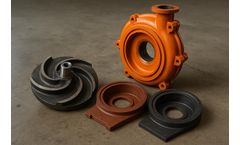
Impact and Turbulence: higher flow and head increase particle energy, concentrating damage near high-impact zones such as the impeller eye and leading edges; poor operation increases erosion wear. How Particle Size, Slurry Concentration, and Flow Rate Accelerate Wear Wear follows patterns tied to operating conditions: Particle ...