
Refine by
Petroleum Testing Articles & Analysis
17 articles found

With tap water, the city or local government regularly tests for contaminants like petroleum, heavy metals and other pollutants. However, private water well testing is left up to the ...
It’s a complex situation but there is a cost-effective solution that can remediate the petroleum-impacted soil and prevent it from causing more harm to human health and the environment of Oahu, HI. ...
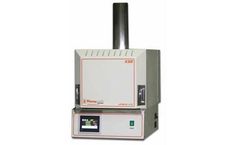
Ashing is the process of expelling organic material from a sample before it is analyzed. For ashing to take place, complete combustion of the sample is critical to yield accurate results, and this requires the use of an ashing furnace. However, because there are many different applications of ashing, there is no standard model for ashing furnaces and they often have to be ...

The goal of bioaugmentation is to improve the rate of contaminant removal by adding a high population of beneficial microbes to the contaminated media. The additional microbes should provide short-term benefit as the microbes begin metabolizing the contaminants immediately upon injection. But what benefit does bioaugmentation provide in the long term? And how much benefit does bioaugmentation ...

Abstract : Ten bioassays were used for the evaluation of acute, (sub)chronic toxicity and genotoxicity of an unknown soil from a military base and six model soils that were contaminated at former military bases with the major pollutants : kerosene, petroleum and used motor oil. The test species represented algae and higher plants, invertebrates and bacteria. The ...
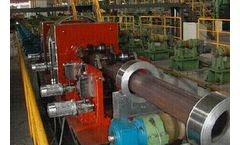
Specifications: diameter Φ73 / Φ89 mm, length 9.6m or so Detection speed: 6-20 m / min Acceptance criteria: American Petroleum Institute API testing standards The main detection principle of the MFI magnetic flux leakage pipeline inspection method is that the workpiece is magnetized (close to saturation) to have a certain magnetic flux density to generate ...

Overview The subject site is a former waste oil refinery located in a mixed use industrial, commercial, and residential area of Chia-Yi, Taiwan. Petroleum hydrocarbon impacts are present in a fine silty sand layer from approximately 5 to 5.8 meters below ground surface (m bgs). This target treatment zone is overlain by a silty clay layer extending to near ground surface. A STAR Pre-Design ...
BySAVRON

The industrial grade touch screen has been extensively tested for chemical and physical resistance ensuring it can withstand solvents and other corrosive substances common in the testing environment. ...

An Interview with Fred Walas, P.E., Fuels Technology Manager, Marathon Petroleum Company Marathon Petroleum’s Fred Walas talks about today’s energy developments, sustainability at his company’s refineries and the crucial role of standards in fuel production and quality control. ...
A researcher investigates a new asphalt additive and tests with a standard from Committee C09 on Concrete and Concrete Aggregates. ...

However, there are situations where a rapid on-site test can be invaluable and even save money and time. On the industrial side, operators of a pretreatment system can test how their oil separators work under different loading conditions. ...

Challenge: Approximately 2,800 m3 of hydrocarbon impacted soil was stockpiled at the rear of Marchbanks Recycling Depot in Dundee. WAC testing and speciated petroleum analyses indicated that there was a mild to moderate contamination from heavier fraction hydrocarbons. ...

Flashpoint testing is one of the oldest methods of the ASTM D02 Committee on Petroleum Products and Lubricants, which was formed in 1904. ...
Introduction LTE was contracted by Shell Oil Products US (Shell) to conduct a pilot test program at a petroleum hydrocarbon impacted retail facility north of Denver, Colorado. ...

Separating the oil from the sand is difficult and costly, and getting the most petroleum at the least cost is a key challenge. Once the petroleum is recovered from the oil sands, a sand waste by-product is generated. ...

In Brazil, the growth of the petroleum industry has resulted in an increasing amount of toxic oily wastes that have a high environmental impact. ...

Until recenthy, replacement parts could only be tested at ambient or room temperature. Now, however, the capability to test materials at elevated temperatures up to 1000°F (543°C) is possibhe. With this new capability, parts in service can be tested during plant operation. This form of testing is referred to as retrospective ...