
Refine by
Plastic Recycling Articles & Analysis
651 articles found

For entrepreneurs and investors in waste tyre and plastic recycling, scaling up from batch to continuous systems is often the gateway to industrial-level profitability. Continuous pyrolysis reactors can transform what was once a small, niche operation into a sustainable, high-margin business capable of meeting global demand for recycled oil and ...

A plastic recycling facility in Jalisco, Mexico struggled with low PET bottle throughput, frequent breakdowns, and high storage & logistics costs. ...

Key Advantages of Hyperspectral Imaging HSI offers remote, non-destructive sensing; identification of invisible substances; high-precision real-time analysis; and easy integration into existing production lines. In recycling, this means more accurate separation of plastics by polymer type, identification of contaminants in glass streams, and detection of textile ...
As waste volumes continue to rise globally, optical sorting machines are becoming essential technology for modern recycling facilities. PICVISA, a renowned optical sorting machine manufacturer based in Barcelona, Spain, offers a comprehensive range of optical sorting solutions including ECOGLASS, ECOPACK, and EcoFlow systems for glass, plastics, textiles, and ...
PET (polyethylene terephthalate) is among the most recyclable plastics globally, found in beverage bottles, food containers, textiles, and industrial applications. The world produces over 430 million tonnes of plastic annually, making PET recycling crucial. PICVISA provides benchmark technologies for the PET ...
PICVISA, a Barcelona-based pioneer in machine vision and recycling automation, offers a comprehensive range of AI recycling solutions that are transforming the industry. ...
PICVISA, a leading AI and machine vision recycling company, provides the technologies that help recycling facilities worldwide handle this challenge efficiently. ...
As global awareness of plastic pollution grows, PLA (Polylactic Acid) has emerged as a promising biodegradable alternative to conventional plastics. ...
Glass recycling is a growing global priority, yet the total global recycling rate stands at only around 21% of glass produced. ...
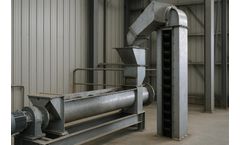
Screw conveyor and bucket elevator systems in battery recycling present distinct engineering challenges. Materials range from dense lead paste to light plastic fragments, with corrosion from residual sulfuric acid and abrasive wear from lead oxide dust reducing component life. ...
For years, the plastic recycling industry has been stuck in a frustrating cycle. We crushed bottles, washed containers, and melted down jugs. But what about the other plastics? The films, the multi-layers, the dirty trays? Mechanical recycling has always hit a wall with these "difficult" materials. ...
Each year, millions of tons of plastic waste are generated, yet only a small percentage is effectively recycled. ...
The Hard Truth About Plastic Recycling Globally, less than 10% of all plastic ever produced has been recycled. ...
While these measures are essential for environmental protection, they also present a significant challenge: managing the massive volume of existing plastic waste. This is where plastic pyrolysis recycling technology emerges as an indispensable solution. ...
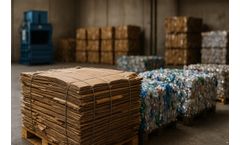
Waste is often treated as a cost center, but for many facilities recyclable materials such as OCC, plastics, and aluminum represent a potential revenue stream. ...
Traditional mechanical recycling—which involves physically shredding, melting, and remolding plastics—has been widely adopted, but it comes with a major limitation: plastic quality degrades with each cycle. ...
The global plastic waste crisis is worsening at an alarming rate—each year, over 360 million tons of plastic is produced worldwide, yet only 9% is effectively recycled, according to recent statistics. A staggering 79% ends up in landfills, oceans, or natural environments, polluting ecosystems and threatening sustainable development. ...

Used for industrial and agricultural seepage control, including wastewater ponds, reservoirs, irrigation canals, ponds, and artificial lake liners.Composite Geomembranes: Utilize a primary impermeable plastic film bonded to a non-woven fabric (eg, PET-based or polyester fibers). ...
The European Union’s Plastic Packaging and Packaging Waste Regulation (PPWR), coming into effect in 2026, sets stricter requirements on recycled content, recyclability, and environmental impact of plastic packaging. ...
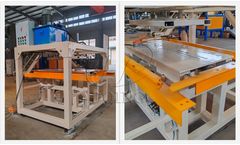
Mechanical Crushing and Separation Technology In the PV panels recycling process, solar panel modules are first crushed, and then techniques such as airflow separation and electrostatic separation are used to separate glass, metal particles, and plastic components. ...