
Refine by
Polyelectrolyte Articles & Analysis
37 articles found
These are reactive high-molecular organic compounds with polyelectrolytic character, which are capable of participating in a number of chemical reactions including: ionic exchange, forming complexes with metals, oxide reduction and other. ...

Polymer-based nanocomposites in combination with oppositely charged polyelectrolytes, such as chitosan/α-lactalbumin and bovine serum albumin/kappa-carrageenan, have been successfully used in the fabrication of edible nanotubes to achieve efficient drug delivery. l Applications of Hydrocolloids in 3D Food Printing The new 3D printing technology has been widely used in many ...
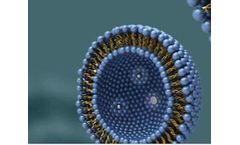
At the same time, due to the cationic properties of its surface, it can also form polyelectrolyte complexes with polyelectrolytes with anions on the surface. ...
UF was first described at the end of the 19th century, but the practical start of ultrafiltration as a separation process came in 1963, coming on the heels of the discovery of the asymmetric cellulose acetate reverse osmosis membrane in the 1950s, and MIT’s discovery of polyelectrolyte complex hydrogels at the beginning of the 1960s. Modern membrane technology started in ...

Inorganic coagulants: Aluminum salts, such as ACH (aluminum chlorohydrate), PAC (polyaluminum chloride) Iron salts such as ferric chloride or ferric sulphate Organic coagulants (cationic polyelectrolytes): Polyamines, including chitosan PolyDADMACs Blends (inorganic coagulant + cationic polyelectrolytes) NOTE! ...

Many people are unaware of how their water is treated to remove contaminants. But when we consider how important clean water is to our health and well-being - and to the condition of the planet - we may want to learn more about the processes of wastewater treatment. The following discusses several types of standalone wastewater treatment systems. ...
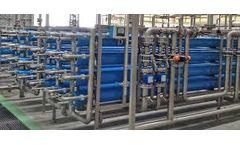
Analysis should be performed on the industrial water or wastewater sources to determine the exact components that would be of concern for an industrial reverse osmosis system.FoulingColloids: clays, flocs (turbidity and suspended solids) Biological: microorganisms, bacteria, viruses, protozoa Organics: oils, polyelectrolytes, humics, biopolymers, tannins ScalingMinerals: ...

Alum and other “sticky” additives known as polyelectrolytes aid the settling process by flocculation, or sticking particles together into ...

In this space, visitors can watch and check the operation of Anaconda FRC-10 Dissolved Air Flotation unit, Defender Rotary Screen 40/25 and an Automatic Polyelectrolyte Plant PAP-500 3C with three divided chambers manufactured in stainless ...

The formic acid could be neutralized with caustic soda and the rest of the contamination was flocculated by adding a polyelectrolyte. The biggest challenge was the long reaction time of the formic acid and caustic soda. ...

Also, ECH-based polymer pipes are widely employed in the production of drinking water as well as syntheses of cationic polyelectrolytes, which are used in surface water and wastewater clarification.1 Due to the presence of chlorine and an epoxy bridge, ECH (Figure 1) is a highly reactive molecule. ...

Natural-based polyelectrolytes (PELs), with all the advantages coming from being produced from renewable and biodegradable sources, are a potential solution for the removal of dyes from wastewater. ...

Pre-chlorination: This step is designed for the algae control and detaining of biological enlargement in the water body Aeration: Aeration together with pre-chlorination is intended for removing the dissolved iron and manganese Coagulation: Coagulation is used for flocculation or the filtration of slow-sand Polyelectrolyte: Polyelectrolyte or Coagulant aids is ...
This study used computational fluid dynamics to model the current conditions of two full-scale sedimentation tanks of different lengths at a large drinking water treatment plant in South Africa, using the shear stress transport turbulence model. The flow dynamics and the polyelectrolyte flocculated particle settling efficiency between the short tank and the long tank were ...
Chemical reduction was firstly employed to treat synthetic wastewaters of various compositions prepared to simulate the retentate stream of polyelectrolyte enhanced ultrafiltration (PEUF). With fixed Cu:polyethylenimine (PEI) monomer:dithionite molar ratio, increasing copper concentration increases copper removal efficiency. ...
Chemical reduction was firstly employed to treat synthetic wastewaters of various compositions prepared to simulate the retentate stream of polyelectrolyte enhanced ultrafiltration (PEUF). With fixed Cu:polyethylenimine (PEI) monomer:dithionite molar ratio, increasing copper concentration increases copper removal efficiency. ...

The first step is to recover 100% of the waters used and to eliminate the concentration of sludge, thus Baioni's solutions aim at offering a full sludge treatment system that include last generation thickeners, polyelectrolyte dosing system, high performance horizontal centrifuges, filter presses, Pod systems. ...
Chitosan effectiveness was compared with synthetic cationic polyelectrolyte Sedipur CF802 (Sed CF802) and ferric chloride (FeCl3). In this context, raw sludge samples from Beni-Messous wastewater treatment plant (WWTP) were tested. ...
To address the fouling problem, we developed novel fouling-resistant surface coatings via polyelectrolyte [poly(allylamine hydrochloride)/poly(styrene sulfonate)] layer-by-layer self-assembly, functionalized with patterned antimicrobial and antifouling/fouling-release polymer brushes. ...
Polymer addition resulted in statistically (α = 0.05) lower reject liquid TP, suggesting the cationic polyelectrolyte contributed to P binding. The WEP of the dewatered cake (∼20% solids) dropped from 2.36 g kg−1 (biosolids only) to ∼0.14 g kg−1 for BR = 1.5, meaning the P in land-applied co-processed cake is less ...