
Refine by
Radiometer Articles & Analysis
28 articles found
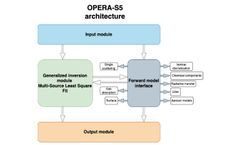
OPERA-S5 (OPEn platform for the Retrieval of Aerosol and CO2 from S5) includes two main objectives: the development of Open-Source Community Full-Physics XCO2 Retrieval Algorithm for Sentinel 5, and the demonstration of the developed algorithm by investigating the uncertainty characterization of CO2 and CH4 retrievals in the context of the challenging CO2M requirements using the proxy combination ...

The 3DREAMS project presents the concept of a 3D radiative Digital Twin Earth (DTE) and how it can be used to understand the effects of surface heterogeneities on aerosol retrieval from multi-angular observations. A series of realistic scenes will be generated and used by the Eradiate radiative transfer (RT) model for the simulation of satellite observations. The impact of various types of ...
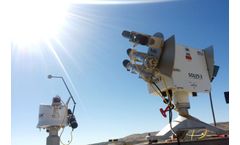
A complete measurement of solar irradiance includes global (GHI), direct (DNI), and diffuse (DHI or DIF) radiation. To accomplish this, a high-quality solar monitoring station typically comprises an automatic sun tracker fitted with instruments to measure these components individually. Depending on the application, long-wave radiation and reflected short-wave radiation may be added to provide the ...

Excess alkynylated peptides were coupled with [18F]azides, and a carrier modified with an azide ligand was introduced to remove unconjugated peptides, thereby increasing the purity and molar activity of the radionuclide conjugate. Beyond 18F, radiometal ions can be conjugated to radionuclides using a click-to-chelate strategy after CuAAC. ...

PAR Sensor Photosynthetically active radiometer, also known as photon number, is mainly used to measure the photosynthetic active radiation of natural light in the wavelength range of 400-700nm. ...
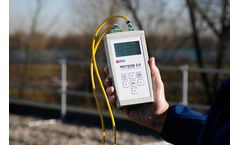
METEON 2.0 connects with and powers up to five of our Smart radiometers (not just pyranometers). It also enables you to easily set up the Modbus® address and communication parameters of the sensor on the spot - without using a computer and software. ...
In late 2018, the ISO 9060 standard for solar radiometers underwent a remarkable update that brought significant changes on the classification of solar radiation measurement quality. At first glance, ISO 9060:2018 appears to be mainly a renaming of radiometer classification launched in the original version from 1990. But, as often, the devil is in the details and ...

Ground-based observations by radiometers during the summers of the U.S. Mid-Atlantic region revealed that cloud events withsmallcidroplcts<< 7 pm) occurred more frequently in the polluted years than in the clean years (Li ct al.,2017b) Ebmeicr et a) (2014) also found a strong anti-correlation between the aerosol optical depth (AOD) and r,i» of the local clouds ...

UNL and Nature Conservancy partner with Arable to establish a network of sensors for better access to local weather data. Fifty miles is a long way to drive to check a rain bucket on a center pivot. That's the challenge Chase Johnson dealt with whenever he wanted to know exactly how much rain fell on one of his ...
ByArable

Studying Mercury's surface in order to understand its formation history is a major goal of the mission. The Mercury Radiometer and Thermal Infrared Spectrometer (MERTIS) will be instrumental in mapping surface mineralogy, analyzing surface composition, and studying thermal effects on Mercury's surface. ...
Studying Mercury's surface in order to understand its formation history is a major goal of the planned mission. The Mercury Radiometer and Thermal Infrared Spectrometer (MERTIS) will be instrumental in mapping surface mineralogy, analyzing surface composition, and studying thermal effects on Mercury's surface. ...
For example, an in-depth study in north Beijing deployed multiple instruments, including horizontal scanning LiDAR sensors, vertical profiling LiDAR sensors — Mini Micro Pulse LiDAR (MiniMPL), weather cameras, weather stations, radiometers and other in situ instruments, to observe how haze is transported across the city and how it mixes with the local atmosphere repeatedly ...
MPL and MiniMPL sensors are often co-located with other types of sensors, such as sun photometers and radiometers. The incorporation of compatible data from multiple sources creates a more accurate and complete picture of the atmosphere. ...

What is the difference between a pyranometer, net radiometer and pyrheliometer? These are different solar radiation sensors. A net radiometer measures incoming and outgoing short-wave radiation using two thermopile pyranometers, and it measures incoming and outgoing long-wave radiation using two pyrgeometers. ...

Building surface temperature is being measured with Apogee SI-111 Infrared Radiometers, temperature probes, and infra-red cameras. Data collected from the temperature probe and the SI-111 at the same site are being compared and analyzed. ...

Infrared Detectors and Digital Radiometers Radiometers are typically used to measure non-visible light outside of the visible spectrum, which includes ultraviolet and infrared. Such tools measure wavelength ranges, as well as the peak wavelength ranges of the light source. IR radiometers are mostly utilized for measuring thermal energies. ...

The only practicable way to control the disinfection capability of a UV disinfection plant for drinking water all the time is to use a UV radiometer. According to the Austrian Standard M5873, this plant radiometer is a standardized part of each plant. The standard defines a so-called reference radiometer (RRM) as well. This is necessary ...
In this study, a shifting pattern of irrigation practices has been detected during pre- and post-Water Act using high temporal passive microwave radiometer (Advanced Microwave Scanning Radiometer – Earth Observing System, AMSR-E) and optical data. ...
Three methods with different representations of water supply dynamics are compared: (1) ETLook, wherein E and T are estimated using Advanced Microwave Scanning Radiometer – Earth Observing System (AMSR-E) derived soil moisture data; (2) a simple evaporation transpiration scheme (SETS) that has a similar vaporization representation as ETLook but with soil moisture accounting based ...
The Leaf Area Index (LAI) was derived from the Normalised Difference Vegetation Index (NDVI) obtained from Advanced Very High Resolution Radiometer (AVHRR) data for the years 1982–2004. The NDVI-derived LAI showed a very good agreement (correlation coefficient r up to 0.96) with MODIS LAI. ...