
Refine by
Recovery Membrane Articles & Analysis
59 articles found
Biological nutrient removal systems, membrane bioreactors (MBR), and anaerobic digestion can be combined to stabilize wastewater, reduce nitrogen and phosphorus loading, and generate usable by-products. In practice, this can translate to generating biogas for energy, reclaiming treated water for reuse, or capturing nutrient-rich streams for agricultural use.The broader beverage ...

Data centers consume significant water resources through evaporative cooling systems, with cooling tower blowdown representing one of the largest sources of water waste in these facilities. As water scarcity intensifies and discharge regulations tighten, recovering and reusing blowdown water has shifted from an optional sustainability initiative to an operational necessity. This article examines ...
The main purpose of stainless steel security filter housing for desalination plant: Ensure the safe and long-term operation of high-pressure pumps, energy recovery devices, and reverse osmosis membrane elements. Our company can provide and custom-produce stainless steel security filter housing for Desalination Plants. ...
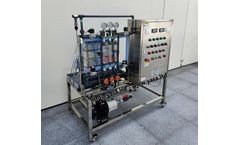
. ----- WHAT IS ELECTRODIALYSIS (ED)? Electrodialysis (ED) is a membrane-based process involving transport of ions through semipermeable membranes using an applied electric field. ...
ByYASA ET

According to an article in African Business, the long-term outlook for desalination as a cost-effective strategy for Africa’s water security has improved in recent years as renewable energy has become more efficient. New desalination pumps, membranes, and energy-recovery technology have dropped power requirements to a quarter of what they were in the 1980s. ...

To avoid excessive concentration polarization at the membrane surface, the recovery rate per membrane should not exceed 18%. However, it is common engineering practice to design brackish RO systems in a way that the average membrane recovery is about 9%. Reverse osmosis systems operate best when permeate and ...

The only two things a watermaker really needs are a pump and membranes. These items also account for a large percentage of the system’s cost. You can cut corners by selecting a pump that’s too small (high recovery) or by using too few membranes (high flux). When such decisions are made, the cost savings realized on the purchase price ...
ByH2O Inc.
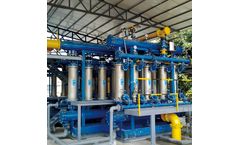
Membrane technology in the chemical industry is applied to brine filtration, natural rubber, polysolicon cutting fluid recovery and lithium recovery from salt lake brines. ...
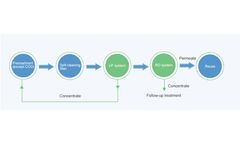
SIZING SOLUTION RECOVERY Printing and dyeing sizing wastewater alkali reuse technology patent is the use of ceramic ultrafiltration membrane technology to concentrate sizing wastewater, which permeates directly backs to the sizing process, water and caustic soda are reused fully after treatment resulting in zero discharge. ...

Membrane technology in the chemical industry is applied to brine filtration, natural rubber, polysolicon cutting fluid recovery and lithium recovery from salt lake brines. ...
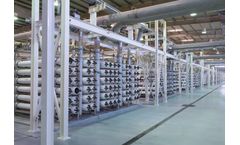
These processes allows for optimization of membrane recovery rates and membrane flux rates to provide a cost efficient process generating a quality effuent water. ...
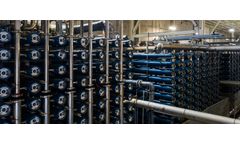
Our beach well intake systems utilize deep well drilling methodology.Next, our pretreatment systems are custom designed to remove any contaminants that are harmful to RO membranes based on influent seawater analysis.Other desalination systems use thermal processes to evaporate the water into steam to separate it from the salts. ...

This paper reviews best practice on reverse osmosis (RO) membrane cleaning. It challenges preconceptions and describes novel approaches for the removal of foulants and scale deposits from membrane surfaces. Abstract: Over the last ten years there have been significant developments in new devices for energy recovery, new membrane ...
The only two things a watermaker really needs are a pump and membranes. These items also account for a large percentage of the system’s cost. You can cut corners by selecting a pump that’s too small (high recovery) or by using too few membranes (high flux). When such decisions are made, the cost savings realized on the purchase price ...
ByH2O Inc.

Tannic acid was used as a model organic foulant for natural organic matter analysis since the main characteristics are similar, and calcium ions were added at different concentrations to explore the anti-pollution capability of FO membranes. The initial permeate flux and calcium ions strength were varied in different operating conditions to describe membrane ...
Conventional methods for removing dissolved pollutants include chemical precipitation, chemical oxidation or reduction, filtration, ion-exchange, electrochemical treatment, application of membrane technology, evaporation recovery and biological treatment. Although all the pollutant treatment techniques can be employed, they have their inherent advantages and ...
The functionalization of membranes improved hydrophilicity property of membranes as compared to neat PES membrane. However, the lowest flux was obtained by functionalized membranes with GO-TiO2. The results showed that functionalized membranes demonstrated better self-cleaning property than neat PES ...
This article aims to evaluate membrane contactors capability to remove and recover ammonia from landfill leachate (LFL). A hydrophobic hollow fiber membrane module was used to achieve such purpose. A sulfuric acid diluted solution was used as extraction solution to speed up ammonia content removal. ...
Membrane processes often experience a decline in the permeate flux or an increase in the operating pressure from membrane fouling. ...
The scanning electron microscopy images indicated remarkable changes in morphology due to higher thermodynamic instability after surfactant addition. The membranes are more porous with more macro-voids in the sub-layer. Plus, the membranes become more hydrophilic. Water flux increases for the modified membranes by nearly two times and the ability ...