
Refine by
Regulatory Reporting Articles & Analysis
210 articles found

Deploying humidity sensors on farms or via agri-tech providers enables reductions in irrigation water use by 20–35% without compromising yields, while meeting evolving regulatory requirements. Why Predicting Crop Moisture Needs Is Getting Harder Monsoon unpredictability: The monsoon rains have become less predictable in timing and spatial distribution, with the southwest ...

Key Regulations Driving Fenceline Monitoring Compliance Regulatory requirements vary by region but share a common objective: provide auditable, comprehensive emission data beyond internal reports. ...

But today, good fieldwork is only the beginning.A single environmental project can now produce soil results, groundwater data, field readings, laboratory reports, logger data, GIS layers, photographs, chain-of-custody records, regulatory standards, and compliance tables. ...

Key Regulations Driving Fenceline Monitoring Compliance Regulatory requirements vary by region but share a common objective: provide auditable, comprehensive emission data beyond internal reports. ...
Key Regulations Driving Fenceline Monitoring Compliance Regulatory requirements vary by region but share a common objective: provide auditable, comprehensive emission data beyond internal reports. ...

Our data better informs resource allocation through access to live data. Our clients unlock more effective site prioritization by highlighting risk in realtime and insitu remediation system success with only six sensors per site to deliver results to allow our clients to move onto other priority ...
ByLiORA

This case study highlights our ability to effectively assess complex hydrocarbon plumes with 50-foot groundwater fluctuations at a multi-plume industrial site using 20 sensors and LiORA Insights to monitor and assess 3 distinct ...
ByLiORA
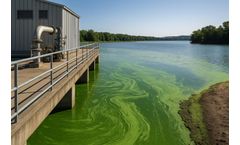
Harmful algal blooms (HABs) in drinking-water reservoirs pose multi-faceted operational risks for utilities, requiring proactive source-water management, robust monitoring, and rapid, non-disruptive response strategies to maintain water quality under regulatory constraints.Impact on Drinking Water UtilitiesHABs present challenges that extend beyond aesthetics, including toxin ...
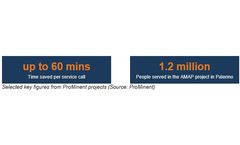
This is complemented by alarm functions that report deviations at an early stage and enable targeted intervention. ...
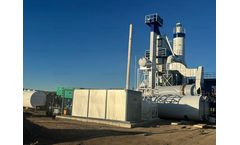
Combined Environmental Performance and Regulatory Risk Management The combined noise and dust suppression profile delivered by vacuum-sealed enclosures and pulse-jet baghouse filtration in a premium asphalt batch plant provides engineering consultants with a regulatory risk management tool that standard hot mix plant specifications cannot replicate in sensitive ...
ByMacroad

Projects still require certified lab assays for resource calculations and regulatory reporting. Use XRF for real-time exploration decisions and send selected samples to labs for verification and compliance. ...

The energy sector faces regulatory upheaval that expands methane monitoring and mandates high-precision quantification. ...
ByOPGAL

The energy sector faces regulatory upheaval that expands methane monitoring and mandates high-precision quantification. ...
ByOPGAL
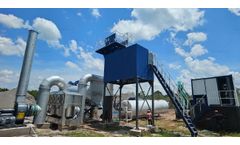
High-quality environmental support reduces approval delays, lowers compliance costs, and limits operational interruptions from regulatory actions. This article focuses strictly on how supplier-delivered environmental measures and paperwork influence both initial permitting and the plant’s sustained, lawful operation. ...
ByMacroad

Early trend detection supports maintenance planning, filter replacement timing, and calibration improvements, reducing peak emissions and long-term costs.Practical applications include:Optimizing ventilation and air distribution based on particulate trendsEnhancing filtration in high-emission zonesImproving combustion efficiency in boilers and furnacesAdjusting workflows to minimize peak ...

Artificial intelligence is rapidly transforming modern quality management – reducing errors, improving reliability, increasing efficiency and productivity, and accelerating regulatory compliance. Industry reports estimate that up to 95% of manufacturers plan to invest in AI or machine learning within the next five years. ...

Why this distinction matters for modern projects Large projects no longer succeed on structural safety alone. Regulatory approvals, ESG reporting, contamination liability, and sustainability obligations now carry equal weight. ...
How Artificial Intelligence Is Reshaping Emissions Monitoring and Reporting Introduction: Why EPA AI Is Becoming a Regulatory Turning Point The integration of EPA AI into environmental regulation marks a significant shift in how methane emissions are monitored, analyzed, and reported across the energy and industrial sectors. ...
ByOPGAL

Environmental professionals increasingly face escalating complexity in managing data — from field measurements and laboratory results to compliance reporting and long-term monitoring. While spreadsheets like Excel have long been used for basic data capture and initial analysis, they struggle when multiple users, quality controls, regulatory requirements, ...
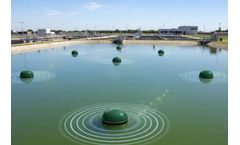
Algae causes many problems in wastewater systems. They clog screens and reduce oxygen. They raise operating costs. Often, conventional fixes use heavy chemicals. Those chemicals harm aquatic life and add expense. A newer option uses sound to fight algae. This method offers chemical-free algae removal and saves money. It also fits industrial algae treatment needs. Below is a clear guide for ...