
Refine by
Safety Regulations Articles & Analysis
1,450 articles found

“Regulations are starting to reflect what crews need in the first minutes,” says Johan Olofsson, Key Account Manager at Consilium Safety Group and formerly a seafarer with safety responsibilities. ...
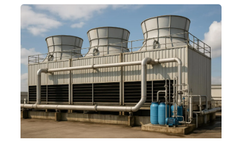
Industrial cooling towers require reliable water treatment to maintain operation and energy efficiency. Effective management of cooling tower water reduces unplanned downtime and supports maximum production throughput. Temperature and system performance Summer heat increases thermal and mechanical loads within facilities. Heat absorbed by process water is circulated to cooling towers, where ...

Propane (C3H8) is an efficient and versatile fuel used in heating systems, industrial applications, and residential energy solutions. But despite its usefulness, propane is also highly flammable and heavier than air, meaning even a small leak can create a dangerous accumulation near the ground. That’s why choosing the best propane sensor is not just a technical decision — it’s ...
Underground mining remains a high-risk industrial activity, where methane (CH4) is one of the primary safety hazards. This colorless and odorless gas can accumulate unnoticed and form an explosive atmosphere at relatively low concentrations, making continuous monitoring essential for safe operation. Modern methane detection systems are a core element of mine safety infrastructure. They are used ...
Propane (C3H8) is widely used in industrial facilities as a fuel and process gas, particularly in LPG storage, manufacturing, and chemical operations. Due to its flammability and tendency to accumulate near the ground, uncontrolled propane leaks represent a serious explosion and fire hazard. Industrial propane gas sensors are therefore an essential element of safety systems in hazardous areas. ...
Sources of VOCs Emissions in Oil & Gas Operations VOCs emissions in oil and gas field scenarios primarily originate from upstream and midstream processes: extraction, gathering, transportation, storage, and on-site wastewater treatment. Pollutants are released both as organized stack discharges and fugitive leaks across facility boundaries.Hydrocarbons make up the core pollutant profile, and ...
UL 508A industrial control panel standards define the safety, construction, and performance requirements for industrial control panels used in industrial environments. These standards ensure that industrial electrical control panels are designed, assembled, and tested to minimize risks such as electrical shock, fire hazards, and system failures. Compliance with UL 508A is critical for industrial ...

Date: June 4, 2026. Successful acne management now relies on layered laser and light based therapies that address active breakouts, inflammation and redness, post inflammatory discoloration, and acne scars, supporting clearer, healthier looking skin.Can laser treatment help active acne and acne scars?Board-certified dermatologist Dr. Patrick Bitter Jr., MD, notes that clear skin remains a top ...
Standards and regulations such as China's GB 16297, U.S. EPA requirements and European environmental directives have encouraged furniture manufacturers to adopt more efficient VOC treatment technologies. ...
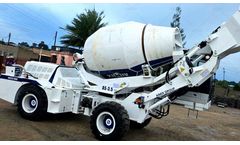
Construction sites require a steady supply of fresh concrete to stay on schedule. Delivering ready-mix concrete to remote locations often presents significant transport challenges. Therefore, investing in on-site mixing equipment has become a standard industry practice. This comprehensive guide details the practical benefits of mobile mixing technology. We will help you select the most profitable ...
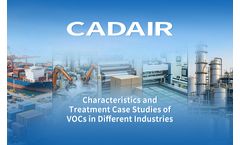
Main Pollutants Acetone Isopropanol PGME PGMEA NMP This industry requires extremely high standards for cleanliness, safety, and operational reliability. CADAIR Semiconductor Industry Case A wafer manufacturing company in Wuxi, Jiangsu Province generated significant VOC emissions during cleaning and photolithography processes, with large concentration fluctuations requiring ...
CADAIR provides customized solutions designed to meet national regulations, local standards, and industry-specific environmental requirements. Typical Compliance Performance Aerospace Manufacturing Projects Emission concentration ≤ 20 mg/m³ Chemical Industry / RTO Projects Emission concentration < 60 mg/m³ Shipbuilding Industry Benzene < 1 mg/m³ ...

OSHA violations frequently center on the facility environment beyond visible safety gear. With tightening requirements for heat stress and indoor air quality, proactive monitoring has moved from a best practice to a compliance imperative. The following five environmental risk factors warrant ongoing attention to protect personnel and the operation's resilience.1. Rising Heat Stress ...
Stringent emission standards: Environmental regulations in China continue to tighten. Some regions require non-methane hydrocarbon concentrations below 20 mg/m³, far stricter than national baseline standards. High energy consumption pressure: The industry commonly operates under high-airflow conditions, resulting in substantial energy costs for VOC treatment systems and ...
Industry Pain Points & Market Demand Hazardous waste exhaust treatment faces six core challenges: complex compositions and drastic concentration fluctuations; equipment vulnerability to high temperatures and strong corrosion; blockages caused by tar and dust; stringent explosion-proof safety requirements; high operating energy and maintenance costs; and significant technical integration ...
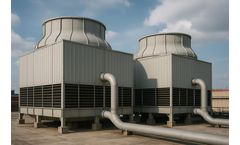
An integrated risk management program is required to maintain safety, reliability, and regulatory compliance, combining design assessment, water treatment, monitoring, maintenance, automation, and training.Understanding Legionella in Cooling TowersLegionella bacteria cause Legionnaires’ disease, a severe form of pneumonia, and infection occurs through inhalation of contaminated ...
Aerospace and defense manufacturers work under some of the strictest environmental and safety regulations in industry. Processes such as plating, anodizing, and chemical cleaning create wastewater that must be managed carefully. ...
In the steel pipe industry, selecting the correct wall thickness is just as critical as choosing the material grade. Whether you are sourcing high-pressure oil lines or structural mechanical parts, you will inevitably encounter the terms SCH 40, SCH 80, and SCH 40S. But what do these numbers actually mean for your project? In this guide, we will break down the technical differences between these ...
Carrot and parsnip processing might appear relatively straightforward on the surface, but across global markets, it is becoming increasingly complex. Processors today are balancing higher expectations around quality, food safety, and traceability with growing pressure on labour, water, and operational costs. While carrots dominate global volumes and often dictate how lines are designed, parsnips ...
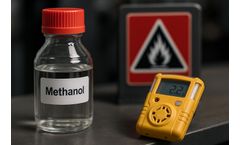
Methanol is increasingly attractive as a maritime fuel, offering significant reductions in NOx, SOx, and particulate emissions. With established infrastructure and ease of handling, it provides a practical pathway toward cleaner shipping.However, methanol introduces safety considerations. It is a highly flammable liquid with toxic properties, and its vapours can accumulate to create hazardous ...