
Refine by
Semiconductor Cleanroom Articles & Analysis
19 articles found

Typical applications include: Advanced nanotechnology research Quantum computing component development Specialized semiconductor processes ISO 2 Cleanrooms ISO 2 supports near-zero contamination risk, with design considerations for vibration control, material off-gassing, and micro-contamination control in addition to particle control. Typical ...
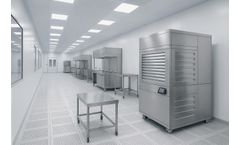
Typical tasks include advanced nanotechnology research, quantum computing component development, and specialized semiconductor processes. ISO 2 Cleanrooms ISO 2 supports processes with near-zero contamination risk. ...
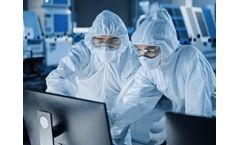
In complex industries—from pharmaceutical cleanrooms to semiconductor facilities—monitoring systems are mission-critical. ...
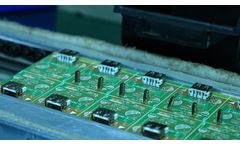
In industries such as semiconductor manufacturing, pharmaceutical production, and biotechnology, maintaining the highest levels of cleanliness and purity in fluid transport systems is essential. Even trace levels of contamination can lead to costly downtime, defective products, or regulatory compliance issues. This is where high-purity fluid systems play a critical role. ...
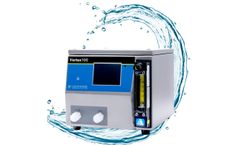
In the world of pharmaceutical manufacturing, biotechnology, semiconductor fabrication, and cleanroom environments; precision monitoring is key to ensuring the effectiveness and safety of quality products. ...
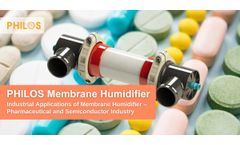
Maintaining precise humidity levels in industrial environments is critical for ensuring product quality, operational efficiency, and equipment longevity. Humidifier membranes provide advanced solutions tailored to the specific needs of various industries. In this edition of PHILOS Newsletter "Industrial Applications of Membrane Humidifier - Pharmaceutical and Semiconductor Industry", we explore ...
Semiconductor foundries or “fabs” are expensive to build and can take several weeks or months to produce finished chips for use in devices. Due to the costly materials, specialized equipment, and cleanroom environments required, most fabs operate with very small profit margins. ...
In the realm of industrial applications, the selection of tubing materials is a critical decision that directly impacts operational efficiency, safety, and cost-effectiveness. Among the myriad options available, fluoropolymer tubing stands out for its exceptional chemical resistance, temperature tolerance, and inertness. In this blog post, we'll explore three industrial use cases and compare the ...

These technical aspects are essential for industries that require precise environmental monitoring, such as pharmaceuticals, semiconductors, and cleanroom operations. This article dives into the impact of counting efficiency on particle distribution data, elucidating its significance and implications for data ...

Deciding between a clean room vs. a controlled environment requires a thorough understanding of your application and facility requirements. Some operations even use both, reserving a cleanroom for certain quality controls and more sensitive tasks. Read on to learn what controlled and cleanroom environments are, and what types of applications each is best suited ...
PP sheet and PE sheet are both chemical polymers, PP SHEET, also known as polypropylene (PP) sheet (PP pure sheet, modified PP sheet, reinforced PP sheet), is a semi-crystalline material. It is harder and has a higher melting point than PE. Since homopolymer PP is very brittle at temperatures above 0 °C, many commercial PP materials are random copolymers with 1 to 4% ethylene added or pinched ...
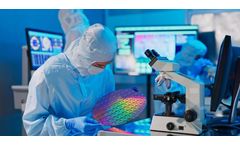
Semiconductors are in almost every electronic device, from everyday items like smartphones and coffee makers to complex automobiles, defense equipment, and spaceships. Manufacturers make semiconductors in special semiconductor cleanrooms because the wafers are extremely sensitive to environmental contaminants. ...

Polypropylene sheet is a semi-crystalline material. It is stronger and has a higher melting point than PE. Because homopolymer PP is very brittle when the temperature is higher than 0 °C, many commercial PP materials are random copolymers with 1 to 4% ethylene or pincer copolymers with higher ethylene content. The copolymer-type PP material has a lower heat distortion temperature (100 ° C), low ...

Other applications include monitoring beverage gases for impurities or detecting airborne impurities in semiconductor cleanroom applications.1 Trace gas analyzers are also essential equipment in laboratory and field research. ...
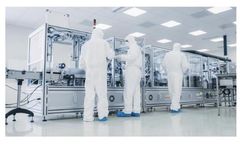
Customer Wafer production facility (United States) Background The project was done for one of the largest semiconductor foundry companies in the world. In cleanrooms an ultra clean air is required, essentially treated through HEPA or ULPA filters and other methods for air ...
Abstract Many current standards define airborne particle monitoring in units of particles-per-cubic-meter (particles/m3). Often, these standards require sampling an entire cubic meter (1 m3) to provide an accurate measurement of airborne particulate levels. Using a conventional aerosol particle counter that samples 1-cubic-foot per minute (1 CFM) requires more than 35 minutes to sample 1 m3. ...
To most casual observers, a cleanroom is a contaminant-free environment calling to mind spotless surfaces, ultra-filtered air and workers in polypropylene coveralls and gloves who leave nary a hair or a fingerprint behind. To a semiconductor manufacturer, though, a “cleanroom” is anything but. ...

The other deals with purifying air for semiconductor cleanrooms. A tester using a high efficiency (HEPA) filter inserted in the stack and remaining clean will pronounce the air as clean as the most pure ambient air on earth. ...
Over time, the contamination control requirements in the semiconductor industry have become more stringent. Employees now must spend more time adhering to cleaning protocols to preserve the sanitary nature of the environment and comply with regulations. The front-end unified pod (or FOUP) began appearing in semiconductors in the 1990s, serving as a transportation ...