
Refine by
Sniffer Articles & Analysis
37 articles found
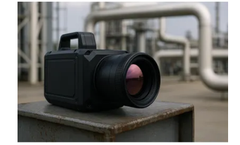
Executive summary: A premium cooled OGI camera's higher upfront cost is offset by rapid leak detection ROI through product recovery, tax mitigation, and uptime. This article outlines the financial logic and key metrics for decision-makers in LDAR programs.Cost and value drivers behind premium OGI camerasThe primary cost driver is a cooled MWIR detector (InSb or SLS) with a Stirling cryocooler ...
ByOPGAL
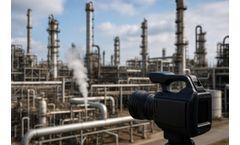
Methane may appear as a byproduct or fuel; CH4 connections are often located in hard-to-reach areas. Legacy method 21 sniffers are slow and hazardous to operate in such locations. Camera leak detection enables safe-distance scanning from ground level, with zoom and high-resolution sensors identifying leaks at tens of meters.Visualizing the Invisible DangerMany VOCs are toxic or ...
ByOPGAL

For EPA Appendix K compliance, higher sensitivity is essential to ensure comprehensive detection.From Qualitative to Quantitative: The QOGI RevolutionQuantitative Optical Gas Imaging (QOGI) enables real-time mass flow estimation of leaks, reducing reliance on post-process sniffers. Under MERP, the cost of methane emissions is rising from $900 per metric ton in 2024 to $1,500 per ...
ByOPGAL
The Efficiency Trap Manual OGI surveys, while more efficient than legacy sniffers, still require substantial organizational resources. Accessing hard-to-reach connectors often demands permits, scaffolding, or shutdown workflows, slowing inspection velocity and increasing the Man-Hours per Survey (MHPS). ...
ByOPGAL
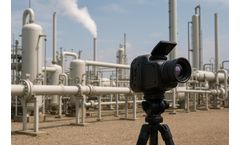
For EPA Appendix K compliance, higher sensitivity is essential to ensure comprehensive detection.From Qualitative to Quantitative: The QOGI RevolutionQuantitative Optical Gas Imaging (QOGI) enables real-time mass flow estimation of leaks, reducing reliance on post-process sniffers. Under MERP, the cost of methane emissions is rising from $900 per metric ton in 2024 to $1,500 per ...
ByOPGAL
In the evolving landscape of environmental regulation, staying ahead of new standards is essential for any company operating in the oil and gas sector. Among the most important updates issued by the Environmental Protection Agency (EPA) in recent years are the NSPS Subparts OOOOa, OOOOb, and OOOOc — each building upon the last to increase stringency in emissions monitoring and leak ...
ByOPGAL
OGI - short for Optical Gas Imaging - has rapidly become a cornerstone of modern emission monitoring and leak detection strategies. As regulatory pressures increase and industrial operations seek better tools to manage fugitive emissions, OGI stands out for its precision, efficiency, and visual clarity. For over a decade, OPGAL has been at the forefront of OGI technology, delivering ...
ByOPGAL
Whether for oil and gas operators, chemical processing facilities, or energy producers, the ability to accurately identify fugitive emissions is critical. Traditional tools like gas sniffers or pressure testing often fall short in sensitivity, efficiency, or practicality. ...
ByOPGAL
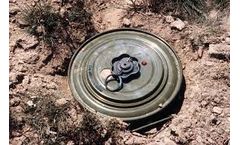
It is important to note that georadar, infrared, and hyperspectral equipment can be used from a safe distance, including on aerial platforms. • Use of sniffer dogs and metal detectors: Dogs are very effective, but their performance is affected by weather and vegetation, and they can become entangled in a densely mined area. ...

Gradko Forensics sells Scentlogix Bed Bug Detection Training aids for training Sniffer Dogs on the scent of Bed Bugs. Sources: (1) BBC News, 10/10/23 – Bed Bugs: Luton Council deals with 86 bedbug incidents in a year (2) Pfiester et al, Ability of Bed Bug-Detecting Canines to Locate Live Bed Bugs and Viable Bed Bug Eggs, Journal of Economic Entomology, Volume 101, Issue ...

Energy executives must understand the application of LDAR in monitoring fugitive emissions to ensure a safe and sustainable refinery. In truth, there are actually multiple ways that LDAR equipment and methods help reduce gas leaks in facilities. Read on to learn the different LDAR techniques for monitoring unwanted emissions. ...

Synopsis: RetroFITT®-ee systems are ideal for small lots and usage of alternative energy sources, such as solar. Application: —[Featuring RetroFITT®-ee 0.15 & d-Rain ...

Ranking cows’ methane emissions under commercial conditions with sniffers versus respiration chambers. Acta Agriculturae Scandinavica A: Animal Sciences, 68(1), 25–32. https://doi.org/10.1080/09064702.2019.1572784 Grainger, C., Clarke, T., McGinn, S. ...
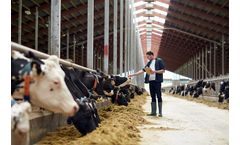
Ranking cows’ methane emissions under commercial conditions with sniffers versus respiration chambers. Acta Agriculturae Scandinavica A: Animal Sciences, 68(1), 25–32. https://doi.org/10.1080/09064702.2019.1572784 Grainger, C., Clarke, T., McGinn, S. ...
Compared to gas detectors or “sniffers,” OGI cameras aim to significantly reduce methane and VOC emissions by detecting and visualizing the leak quickly and more effectively, ensuring a fast response to any leak. ...
ByOPGAL
StomaCloak’s fabric traps and changes odor molecules, significantly reducing waste odor (as demonstrated in a recent scientific study involving sniffer dogs). StomaCloak also wicks moisture to keep skin healthy and provides the first defense against leaks. ...
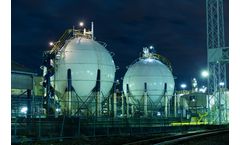
One of the major regulatory impediments for fully accepting the OGI technology as an alternative and superior LDAR practice, is the lack of rigorous understating of the technology’s envelope of sensitivity performance, compared to the volumetric concentrations provided by the traditional PID/FID-based “sniffers”. This extended abstract summarizes the tested ...
ByOPGAL
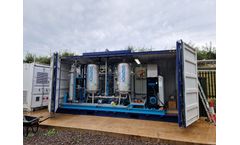
This cycle is fully automatic, a H2S sniffer constantly checks the saturation point (1-3 ppmV H2S) and will warn when the tower needs to be replaced. ...
US state and federal regulatory frameworks are transitioning from conventional methods, e.g., sniffers, to visualizing and detecting leaks using OGI cameras for Leak Detection and Repair (LDAR) applications1. ...
ByOPGAL
Before StomaCloak fabric was introduced in the study, sniffer dogs were able to detect the urine of prostate cancer patients “with a sensitivity and specificity of ...