
Refine by
Subsurface Groundwater Articles & Analysis
37 articles found
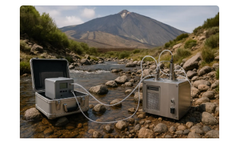
Elevated low-background gas concentrations in aquifers can indicate dissolution of volcanic gases into groundwater and reveal subsurface connectivity. The Tenerife case illustrates the approach, drawing on INVOLCAN data from two groundwater galleries, Fuente del Valle and San Fernando, where time-series measurements show how dissolved gas ...

Introduction: Why Chloride Plumes Behave Differently Chloride contamination presents a unique challenge in groundwater systems. Unlike many organic contaminants, chloride does not degrade, volatilize, or readily bind to soil. Once introduced into the subsurface, it moves with groundwater, often persisting for decades. ...
ByLiORA

As a result: Engineers need environmental context to make informed design decisions Environmental teams need subsurface and groundwater data to model risk pathways Compliance teams need traceable, auditable data flows Managers need integrated reporting instead of fragmented spreadsheets This shift is accelerating adoption of modern EDMS alternatives that move ...

Obtained through a bankruptcy, Owner wished to remediate subsurface soil/ groundwater conditions to allow redevelopment/re-occupancy. ...
Past characterization activity documented adverse impacts to subsurface soils and groundwater. Previous remedial efforts proved ineffective and costly. ...

Contaminants on-site include petroleum hydrocarbons, benzene and ethylbenzene, and PAHs naphthalene and 2-methylnapthalene. Most contaminants are in subsurface and groundwater, with the exception of PAHs that extend from the surface to ...

A historical spill of the chlorinated VOCs behind the warehouse building resulted in the contamination of soil in the immediate area and shallow groundwater leading from the spill area. Subsurface soil and groundwater sampling have defined the extent of contamination. Soil contamination was limited to a small area on-site, while ...
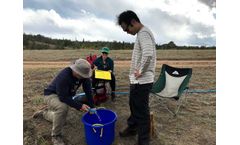
Overview In recent years, an intrepid team of University of Wyoming researchers conducted a multi-site project to explore subsurface hydrology in and around the Laramie Range and expand our understanding of this critical water source for the western U.S. ...

A uranium mill in the western United States uses sulfuric acid in the extraction process. The remaining byproduct is then stored in a tailings disposal cell. The liquids are acidic with a pH between 1 and 2. Project Details Uranium Mill Tailings Disposal Location Ores Processed in Utah, Colorado & Arizona Products Used Bentomat ST Challenge: The liner system for the project ...
ByCETCO

” EPA’s Interpretive Statement states that it “sets forth [its] interpretation of the [CWA NPDES] permit program’s applicability to releases of pollutants from a point source to groundwater that subsequently migrate or are conveyed by groundwater to jurisdictional surface waters” and “EPA concludes that the [CWA] is best read ...

How the technique works The Willowstick method provides industry-changing accuracy and value. The technique energizes the groundwater of interest directly with an alternating electric current. Groundwater tends to be far more electrically conductive than the surrounding rock or earthen materials. This causes the electric current to gather in and flow through ...
During its construction in 2003, Walsh Construction contracted AdEdge to develop a treatment system for shallow groundwater collected by subsurface drainage. High levels of manganese, iron and arsenic in the groundwater needed to be treated before being discharged into the Potomac River. ...

Approximately 10,189 gallons of the leaked product was recovered, leaving 5,458 gallons to contaminate the farmland surface and subsurface soil, surface waters, groundwater and ambient air. The site contamination problem was exacerbated due to heavy rainfall and associated stormwater runoff which caused the unrecovered product to migrate from the spill site. ...
Approximately 10,189 gallons of the leaked product was recovered, leaving 5,458 gallons to contaminate the farmland surface and subsurface soil, surface waters, groundwater and ambient air. The site contamination problem was exacerbated due to heavy rainfall and associated stormwater runoff which caused the unrecovered product to migrate from the spill site. ...
In 2003, AdEdge Water Technologies began working closely with EarthTech , the assigned engineering firm responsible for specifying and selecting the various water treatment systems serving the new National World War II Monument in Washington, DC. Stormwater and groundwater control and treatment are essential aspects of this project given the location of the site on the Mall ...

Geological Survey is collaborating on a National Science Framework project to produce the Digital Crust, a framework that will enable more accurate and robust understanding of subsurface processes in the Earth, such as groundwater balance and the health of aquifer systems. “We’ll be able to run scientific calculations that show the level of ...
ByEnsia

Due to hydrologic detention of subsurface soil moisture, shallow groundwater and perhaps reservoir storage, a 2-month timescale of SPEI is found to be more appropriate for river discharge monitoring, especially for those rivers with similar drainage area, climate and geographical conditions as in this study region. ...

This USGS map indicates how vast brackish groundwater is in the United States. Note that the white areas do not indicate an absence of brackish groundwater; rather, they indicate that those areas have not yet been measured and mapped. As plentiful and available as brackish groundwater is, it has obvious obstacles, most notably the presence of ...

GEO’s patented GTR™ system was used for In Situ Thermal Remediation (ISTR) to significantly accelerate PCE mass removal by heating affected soils and/or groundwater to target temperatures of 100°C. The C3 Technology refrigerated vapor condensation process was utilized to compress, refrigerate, and condense >99.9% of the PCE and TCE from the vapor stream. The ...

GEO’s patented GTR© system was used for In-Situ Thermal Remediation (ISTR) to significantly accelerate PCE mass removal by heating affected soils and/or groundwater to target temperatures of 100°C. C3 Technology refrigerated vapor condensation process was utilized to compress, refridgerate, and condense >99.9% of the PCE and TCE from the vapor stream. The ...