
Refine by
Surface Characterization Articles & Analysis
93 articles found
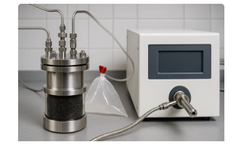
The catalyst was synthesized by the wet impregnation method and characterized for surface morphology, surface functional groups, and surface area properties. ...

Radiator cores that face unfiltered desert airflow accumulate dust and fine particulate on their fin surfaces at rates that can halve effective cooling capacity within a single operating shift if pre-filtration is absent. ...

What is Wafer Metrology? Wafer metrology refers to the precise measurement and analysis of semiconductor wafers used in the manufacturing of integrated circuits (ICs) and other electronic devices. It involves assessing various characteristics of wafers, such as dimensions, surface morphology, and material properties, using specialized techniques and instruments. Importance of Wafer Metrology ...

Materials often owe their performance to subtle differences between surface sites, yet these variations are not always easy to distinguish experimentally. As temperature changes, molecules bound to a surface respond in ways that reflect how and where they are attached. Temperature programmed desorption uses controlled heating to trigger such responses in a systematic way. When evolved gas ...
The stability and lifetime of lithium-ion batteries hinges on deciphering the reactive processes that occur where the cathode meets the electrolyte. During cycling, electrolyte components oxidise at the cathode-electrolyte interface and form a thin, reactive interphase. This layer is commonly known as the solid electrolyte interphase (SEI), or more specifically as the cathode-electrolyte ...
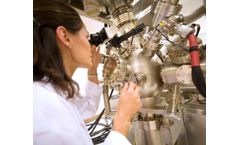
Traditional X-ray Photoelectron Spectroscopy (XPS) is a cornerstone technique for investigating the surface chemistry of materials. However, conventional XPS systems operate under ultra-high vacuum (UHV) conditions — a controlled environment necessary for accurate measurements, but far removed from the pressures and reactive conditions most materials experience in real-world ...
The chemistry of a material’s outermost nanometres often determines its functional performance, making accurate surface characterisation vital for modern materials research. Yet, analysing these nanometre-scale layers is inherently challenging, as many surface-sensitive chemistry techniques, like AES, can modify the material or disturb its native chemical composition and techniques like EDX ...

They typically present a distinct colony structure characterized by tightly packed cells with a large nucleus-to-cytoplasm ratio and prominent nucleoli. ...
Semiconductor metrology is a specialized branch of measurement science that ensures the accuracy and precision of semiconductor manufacturing processes. The evolution of semiconductor technology, from early microprocessors to today’s highly advanced integrated circuits (ICs), has been driven by the demand for smaller, faster, and more efficient electronic devices. As semiconductor ...
Additionally, hMSCs exhibit a unique surface marker profile, characterized by the expression of specific cluster of differentiation (CD) markers including CD73, CD90, and CD105, while lacking the expression of hematopoietic markers such as CD34 and CD45. ...

l Surface Morphology: Investigating surface features like roughness and patterns. ...
ByMatexcel

OPERA-S5 (OPEn platform for the Retrieval of Aerosol and CO2 from S5) includes two main objectives: the development of Open-Source Community Full-Physics XCO2 Retrieval Algorithm for Sentinel 5, and the demonstration of the developed algorithm by investigating the uncertainty characterization of CO2 and CH4 retrievals in the context of the challenging CO2M requirements using the ...

The capability of Sentinel-5p foraerosol monitoringis currently not used to its full potential. However, satellite observations in the spectral range from approximately 340 to 400 nm are known to have unique sensitivity to elevation and absorption of tropospheric aerosols. Traditionally, this sensitivity is used in many ozone monitoring instruments such as TOMS, GOME-1, SCIAMACHY, OMI and GOME-2 ...
Reflectance of the Earth surface is one of the major natural components affecting climate. Surface interaction with incoming solar radiation and the atmosphere has a substantial impact on the Earth’s energy budget. Moreover, the accurate description of the surface reflection is crucial for different atmospheric studies including aerosol and ...
The current project intends to use the heritage of the CAWA project as well as the recent advancements realized within the GRASP-Open software package to establish and extend the concept for generating synergy MERIS+AATSR ...
The 3DREAMS project presents the concept of a 3D radiative Digital Twin Earth (DTE) and how it can be used to understand the effects of surface heterogeneities on aerosol retrieval from multi-angular observations. A series of realistic scenes will be generated and used by the Eradiate radiative transfer (RT) model for the simulation of satellite observations. The impact of various types of ...
Atmospheric aerosol is one of the main drivers of climate changes. Importance of accurate global aerosol characterization for climate studies and air pollution monitoring is a well recognized problem (e.g., see IPCC AR5 by Boucher et al.2013). In addition to the traditional spectral Aerosol Optical Depth (AOD) such characterization should also include such extended aerosol information asaerosol ...

Biomedical etchants enable the selective removal of material or the creation of desired surface structures, ensuring the proper integration of these devices with the patient's body or tissue. Etchants for energy applications Etchants play a crucial role in energy applications as they are used for materials preparation, surface modification, and ...

The surface chemistry, topography, and functionalization of a biomaterial can greatly influence its interactions with cells, proteins, and other biological entities. Recognizing this, researchers are increasingly incorporating AI into the development of advanced surface modification and functionalization strategies. AI algorithms can be trained on extensive ...
The imaging powers of chemical microscopy have helped to uncover the smallest worlds that we previously never could see. Uncovering different aspects of particles, such as their shapes and sizes, is only one of its uses. In fact, chemical microscopy can be used in biology to learn about proteins and how DNA reacts to drugs. It can also analyze the most minute formations within various types of ...