
Refine by
Temperature Profiling Articles & Analysis
149 articles found

Tracking chlorophyll-a (total algal biomass), phycocyanin (cyanobacteria specifically), dissolved oxygen, temperature, and pH in real time allows operators to observe changing conditions as they develop. ...
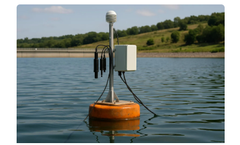
Water Column Profiling: The Vertical Profiler descends through the water column to collect depth-resolved data for temperature, DO, chlorophyll-a, and phycocyanin, revealing stratification patterns and bottom-layer conditions. ...
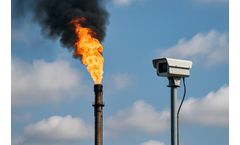
Imbalances in steam-to-fuel ratio or crosswinds displacing the flame produce detectable temperature changes and visible hydrocarbon plumes, providing a robust empirical indicator of performance suitable for CAM verification.3. Bridging the Gap: Overcoming Legacy Instrumentation Failure ModesThermocouple burnout and maintenance friction: sensors mounted at or near the flare tip ...
ByOPGAL

Processing PP in plastic pyrolysis equipment often requires precise temperature control, as uneven heating can lead to increased formation of waxy residues or light hydrocarbons. ...
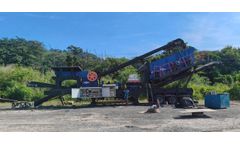
Diesel engines operating in 45°C ambient temperatures are already working against a significantly compressed thermal margin before crushing loads are applied. ...
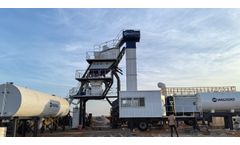
Low-NOx Burner Design and Combustion Emission Compliance NOx emission compliance for urban green-zone portable asphalt plant for sale operation requires burner combustion architecture designed for low-temperature flame profiles that minimize thermal NOx formation — the dominant NOx generation mechanism in high-temperature asphalt plant ...
ByMacroad
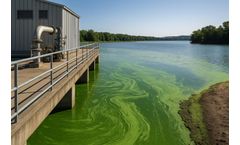
Essential parameters include chlorophyll-a (total algae), phycocyanin fluorescence (cyanobacteria-specific), dissolved oxygen profiles, temperature stratification, and nutrient concentrations. Chlorophyll-a above 10 µg/L and phycocyanin above 5 µg/L indicate elevated risk; dissolved oxygen below 2 mg/L signals potential internal phosphorus release; ...
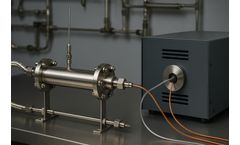
Measuring Spatiotemporal Concentration and Temperature Profiles in a Tubular Fixed-Bed Reactor for CO2 Methanation. ...

Eutrophication at a glance: Trigger: Phosphorus + warm temperature + stable stratification; Mechanism: Algal growth ? oxygen depletion ? ...
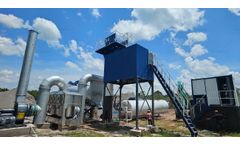
The central point is that when evaluating asphalt plant manufacturers you should require measurable drum heat‑management evidence showing the burner’s flame does not cause “blue smoke” or premature bitumen hardening during prolonged high‑temperature runs. Demand documented burner placement, internal flow geometry, thermal barrier strategies, real operating ...
ByMacroad
This forces operators to significantly increase the external heating temperature to maintain the target reaction temperature inside, leading to:Skyrocketing Energy Costs: More fuel is consumed for the same output.Material Stress & Failure Risk: Overheating the reactor shell accelerates metal fatigue and creep, increasing the risk of leaks or catastrophic ...
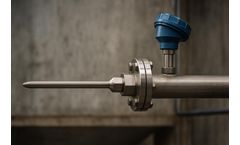
Accurate temperature measurement in process systems relies on correctly sized thermowells, which protect sensors from the process stream, enabling safe replacement and shielding against flow-induced forces and corrosion. ...

Temperature Programmed Reduction (TPR) with quadrupole mass spectrometry (MS) addresses a long-standing challenge in catalyst characterisation: the inability to distinguish between hydrogen consumption mechanisms during reduction. Conventional temperature programmed reduction reveals when a material responds to hydrogen, but rarely explains how or why that response occurs. If quadrupole MS is ...

Thermal runaway occurs when exothermic reactions within a battery accelerate uncontrollably, producing rapid temperature rise, gas release, and potential fire or explosion hazards. ...
ByMatexcel

Introduction When a lake or reservoir turns bright green, the issue is rarely “just algae.” Blooms can signal a shift in water quality that affects aquatic life, recreation, and the reliability of a community’s water supply. This guide explains the basics of freshwater blooms and the practical steps used to stop water contamination before impacts reach drinking ...
Catalyst deactivation studies are central to maintaining efficiency in industrial chemical processes, including petroleum refining, petrochemical production, syngas and hydrogen manufacture, environmental catalysis for emissions control, and large-scale chemical synthesis such as ammonia and methanol production. Over time, catalysts lose activity due to carbon deposition, sulfur poisoning, and ...
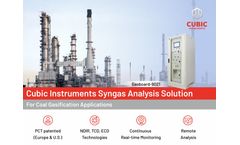
Fluctuation in oxygen input can alter temperature profiles and shift reaction equilibria, leading to rapid changes in syngas composition. For instance, reduced-temperature regions can develop within the gasification zone when heat release declines, and under reduced-temperature conditions methanation (C + 2H2 → CH4) becomes ...
This study rigorously investigated the effect of charge-enhanced dry impregnation (CEDI) method on the physicochemical properties and catalytic performance of a ceria-supported nickel-based catalyst. The primary objective of the CEDI method was to augment the electrostatic adsorption of the nickel precursor onto the ceria support surface during the dry impregnation (DI) process. For a ...
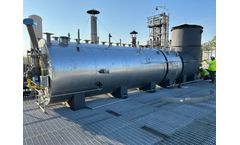
The Challenge Many industrial furnaces operate in oxygen depleted conditions, emitting high levels of ammonia, NOx, and other nitrogen-bearing compounds. This presents a significant challenge for manufacturers striving to meet air quality regulations and limit carbon output. Emission streams that contain nitrogen bearing hazardous air pollutants (HAPs) cannot be thermally treated in a ...

Finally, being an ABP Category 3 site, any change to the process must not have a negative impact on the temperature profile of the ...