
Refine by
Thermal Camera Articles & Analysis
50 articles found
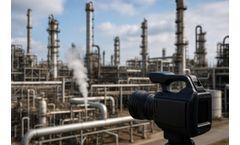
Leaks at high-pressure connections create hazardous zones. An infrared camera’s real-time visual plume depiction provides dispersion information that numerical sniffers cannot supply, enhancing safety planning and intervention accuracy.Moving Beyond Compliance: The Economic Case for VOC RecoveryBeyond regulatory avoidance, camera-based leak detection drives ...
ByOPGAL
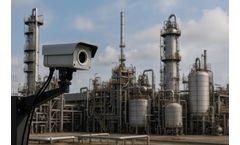
For decades, LDAR operated on campaign-based surveys using handheld OGI or thermal imaging, typically quarterly or annually. This snapshot approach is reactive and increasingly outpaced by regulatory expansion, including EPA OOOOb/c guidelines and Subpart W reporting by 2026. ...
ByOPGAL
Manhole inspection cameras are indispensable tools for municipalities, contractors, and industrial operators, enabling the efficient inspection of underground infrastructure without the need for direct human entry. These devices are subject to some of the harshest conditions imaginable, including extreme temperatures, water submersion, corrosive environments, and physical shocks. To withstand ...
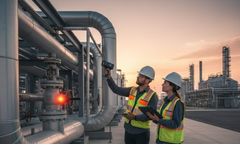
Most mature inspection programs are built around layered detection strategies, where different tools support one another depending on the type of leak, operating conditions, and inspection goals. Within this framework, thermal imaging to detect leaks is widely used as a complementary method. Rather than replacing specialized gas detection technologies, thermal ...
ByOPGAL
Electrical rooms and vaults house some of the most crucial components of a building’s electrical infrastructure, including switchgear, transformers, distribution panels, and more. Regular inspections are essential to ensure the safety, functionality, and compliance of these systems. As technology advances, innovative equipment is increasingly used to enhance the accuracy, efficiency, and ...
Remote inspection cameras have revolutionized the way industries conduct visual inspections, offering a safe, efficient, and cost-effective method to examine hard-to-reach areas. These cameras come in various types, each designed for specific applications across industries such as infrastructure, manufacturing, utilities, and ...
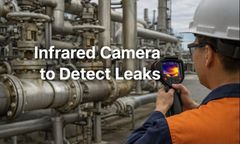
Traditional inspection methods often rely on point sensors, manual checks, or pressure testing, which may miss hidden or intermittent issues. An infrared camera to detect leaks offers a fundamentally different approach. Instead of measuring gas or fluid concentration at a single point, infrared imaging visualizes temperature and emission anomalies across entire systems. When ...
ByOPGAL

Traditional monitoring methods often struggle to detect leaks early, especially when they occur inside insulated pipes, behind equipment, or within high-temperature environments. This is where thermal imaging leak detection becomes a game-changing solution. By using a thermal camera to find leaks, operators can visualize temperature anomalies, ...
ByOPGAL
This gap created a strong demand for more reliable and proactive solutions. This is where the thermal camera to find leaks comes in. Unlike standard inspection tools, thermal cameras make the invisible visible by detecting changes in temperature and capturing infrared radiation that cannot be seen by human eyes. ...
ByOPGAL
Inspecting industrial equipment in high-heat environments is a challenge. Standard cameras and inspection tools often fail when exposed to furnaces, engines, turbines, or other extreme conditions. That’s why a camera that can withstand high temperatures is essential for professionals who need accurate, reliable inspections without risking equipment ...
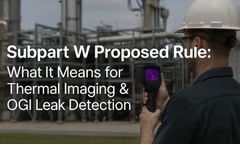
Introduction: Regulation Meets Innovation Methane emissions are one of the most pressing challenges in today’s energy and industrial landscape. Invisible to the naked eye, these leaks not only waste valuable product but also drive significant greenhouse gas emissions with major climate impacts. For years, reporting programs relied heavily on emission factors and engineering calculations, ...
ByOPGAL
Introduction: The Human Eye Can’t See Thermal or Gas Anomalies Gas leaks and thermal anomalies are among the most dangerous and costly issues in modern industry. The problem is simple: the human eye cannot detect them. Invisible leaks in pipelines, valves, or storage tanks can go unnoticed for weeks, sometimes months, until they cause catastrophic accidents, production downtime, or ...
ByOPGAL
Traditional tools like gas sniffers or pressure testing often fall short in sensitivity, efficiency, or practicality. That’s where thermal imaging leak detection reshapes the landscape – offering a safer, faster, and more reliable way to see what the eye cannot. ...
ByOPGAL
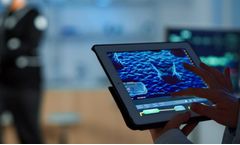
Thermal and infrared leak detection cameras are transforming industrial safety. ...
ByOPGAL
Optical Gas Imaging (OGI) has become the leading method for detecting fugitive emissions in industrial settings. This guide explores how the technology works, what drives ogi camera price and certification, and why Opgal’s EyeCGas systems are trusted globally for their performance, safety, and ...
ByOPGAL
Humidity and moisture content significantly impact various industries, from construction to agriculture. Measuring moisture in materials is essential to maintain quality, ensure safety, and enhance durability. In this blog post, we will explore the importance of moisture measurement, methods to detect moisture, and the potential consequences of neglecting moisture levels. ...
What is OGI? Optical Gas imaging is thermal cameras, also known as infrared cameras which can visualize gas leaks. ...
ByOPGAL

For most people, entering or exiting a building is not an issue. For a person with physical challenges, entering or exiting a building could be next to impossible! Modern buildings are required to be constructed within the requirements of the Americans With Disabilities Act (ADA Act). This includes installing wheelchair ramps or wheelchair lifts. In older buildings, accessibility for people with ...
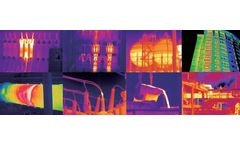
The spatial distribution of the object's surface temperature is processed by the photoelectric infrared detector to form a thermal image and converted into a video image, forming a thermal image corresponding to the thermal distribution of the object surface, that is, an infrared thermal image. Infrared thermal ...
Thermal imaging has become an essential tool for law enforcement agencies around the world in the detection and tracking of drones. With the increasing use of drones for illicit activities such as smuggling, terrorism, and trespassing, it is essential for police to have reliable and accurate methods for identifying and monitoring these unmanned aerial vehicles (UAVs). Thermal imaging technology ...
ByOPGAL