
Toxic Sensor Articles & Analysis
19 articles found
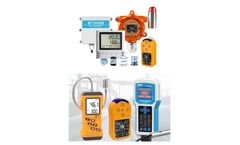
Types of Gas Sensors Gas sensors come in various types, each designed to detect specific pollutants or contaminants in the air. ...

There are sensors that measure non-toxic gases such as oxygen and carbon dioxide, and sensors that detect toxic gases such as carbon monoxide, TVOC, and ammonia. Multi Gas sensors are often used in flammable, explosive and toxic places to protect workers. ...
Semiconductor gas detector: This detector mainly uses semiconductor sensor, can detect toxic gas, flammable gas and so on. Optical gas detector: This detector mainly uses optical sensors, can detect toxic gas, combustible gas, oxygen and so on. Adsorbent type gas detector: This detector mainly uses adsorbent type ...
They are commonly used on oil rigs and in chemical plants and manufacturing facilities where toxic fluids and gases are being stored and processed. How Do harmful Gas Detectors Work? ...
Gas detectors use sensors to measure the concentration of various gases in the atmosphere. ...
Product quality is similar all over the world. 4) Electrochemical gas sensor It has electrochemical activity for quite a part of flammable, toxic and harmful gases, and can be electrochemical oxidation or reduction. ...
PureAire Monitors PureAire Monitoring Systems’ Universal Gas Detectors use “smart” sensor cell technology to continuously track levels of ammonia, bromine, hydrogen, hydrogen chloride, and other toxic gases, including hydrogen peroxide. The sensor cell is programmed to monitor for a specific gas and measurement range, as ...

PureAire Monitors PureAire Monitoring Systems’ universal gas detectors use “smart” sensor cells technology to continuously track levels of ammonia, bromine, hydrogen, hydrogen chloride, and other toxic gases, including chlorine. The sensor cell is programmed to monitor for a specific gas and measurement range, as required by the ...

The MFCs’ fast response to commanded setpoint changes enhanced the data needed for quantitative sensor analysis. The automated test station now could allow up to eight toxic gas sensors to be characterized at once. The sensor chamber was designed to allow test substrates to be quickly loaded and unloaded. A ...

A bump test does not measure the accuracy of the sensors or its state of calibration. Electrochemical toxic gas sensors tend to output “0” in clean air and “0” when they have expired so it is important to bump test a sensor for critical applications to ensure the sensor has not expired. ...
OC-F08 fixed gas monitor with the original imported sensor used to detect the Oxygen gas, combustible gas, toxic gas, CO2, etc. With the different working principle, Electrochemical sensor for O2 and toxic gas, Catalytic combustion sensor for combustible gas, PID sensor for the VOC, Infrared ...

This leads to the question of whether fixed or portable gas detection is the most appropriate for your needs – here is a comparison.The Difference – Fixed A fixed detection system typically consists of one or more electrochemical cell (EC), metal oxide semiconductor (MOS), catalytic-bead (CB) or infrared (IR) sensors placed in key locations around the workplace. When a ...

A continuously operating gas detection system ensures 24 hour per day monitoring of ambient air quality. By placing the sensors close to the toxic gas source of automobiles and trucks throughout the facility, the owner can be confident of breathable air at all times, in all areas. 2. ...

Echem sensors are able to read a specific gas even when it is mixed in a background of other gases. Echem sensors are typically used to read very low PPM concentrations of toxic gases. ...

In an area in which there is potential for toxic gases to be released into atmosphere there should be a specific sensor to monitor that gas and should alarm before the concentration exceeds the exposure limit. COMMON MISUNDERSTANDING is to use an oxygen sensor to monitor toxic gases on the assumption that it will alarm when ...
Bya1-cbiss

To this end, flammable gas detectors are scaled in the ‘%LEL’ range (100%LEL equating to the concentration at which as may become ignitable), toxic gas sensors are scaled in the ‘ppm’ range (parts per million), and oxygen sensors measure form 0-25% volume (with 20.9% representing the normal oxygen concentration in air). ...
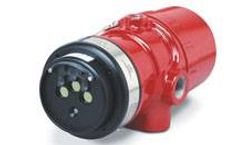
Flame detection technologies The technologies widely used today are based on UV and IR sensors, and combinations of UV and IR sensors. CCTV is an emerging technology being used in some flame or smoke detection applications. ...

Many industrial processes involve dangerous gases and vapors: flammable, toxic, or both. With the different sensing technologies available, and the wide range of industrial applications that exist, selecting the best sensor and locating them properly for the job at hand can be a challenge. ...
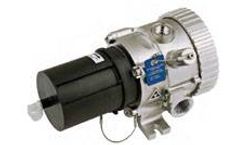
Broadly defined, the categories are toxic gases, combustible gases, and gases that are both toxic and combustible. The risks of toxic gas leaks include death by asphyxiation or poisoning of the body. ...