
Refine by
Utility Management Articles & Analysis
361 articles found

This guide covers why source water quality directly affects treatment operations, what the main protection approaches are, the regulatory framework utilities need to manage, and how integrated monitoring and control work in practice. ...
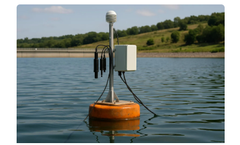
The Digital Twin unifies data from all levels into a single predictive model, ingesting surface sensor data, depth profiles, satellite imagery, and weather forecasts to predict chlorophyll-a 7 to 14 days into the future. Utilities using this approach shift from reactive monitoring to predictive management, intervening before blooms establish. ...

Carbon Management and Methane Reduction Projects Methane mitigation projects are increasingly being evaluated within international carbon management frameworks due to their greenhouse gas reduction potential.Because ultra-low concentration methane has historically been difficult to utilize and may otherwise be released into the atmosphere, ...

Industrial waste management has become one of the defining environmental challenges of modern manufacturing economies. ...
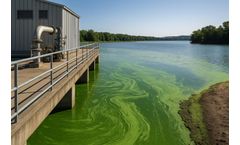
Harmful algal blooms (HABs) in drinking-water reservoirs pose multi-faceted operational risks for utilities, requiring proactive source-water management, robust monitoring, and rapid, non-disruptive response strategies to maintain water quality under regulatory constraints.Impact on Drinking Water UtilitiesHABs present challenges that extend beyond aesthetics, ...

Benefits included reduced hardware count and costs, simplified installation, minimized wiring and labor, a small LoRaWAN footprint, and easy expansion from single-utility to dual-utility deployment without network redesign.System Architecture BenefitsEach installed meter maps directly to a revenue-generating apartment, enabling accurate unit-level consumption and ...
The ability to process diverse feedstocks also helps address the growing global waste management crisis. By utilizing waste materials, biochar production equipment provides a sustainable solution for diverting waste from landfills while simultaneously producing valuable resources like biochar and biofuels. ...

The analysis here is oriented toward water quality managers, utilities, and lake operators, and focuses on monitoring, thresholds, and intervention strategies that can be deployed before operations are affected. ...

BinMaster fulfills a critical role as companies commit to Industry 4.0 investments and the establishment of smart factories. BinMaster provides sensors and inventory management software to measure and monitor bulk liquids and solids stored in tanks, bins, and ...
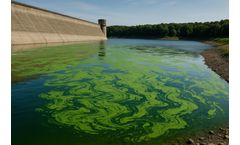
Seasonal planning and reactive treatment are no longer sufficient; utilities managing reservoirs and large surface water systems must confront risks that have built up over years. ...

The Tetra Tech High Performance Buildings Group’s white paper, “Computational Fluid Dynamics (CFD) as a Strategic Enabler for AI-Driven Data Centers” examines the application of CFD as an operational and planning tool to understand airflow, heat transfer, and cooling system behavior in modern data centers. ...
After a volatile year for supply chains and bulk pricing fluctuations across industries—from milling to plastics to aggregate—the state of industrial markets in 2026 remains uncertain. With the total cost of inventory distortion projected at $1.7 trillion in 2024 [IHL], it is clear that plant operators and worksite supervisors need better visibility into their bulk inventory levels ...

Fairly or unfairly, the water sector gets a rough ride when it comes to a reputation for running with new ideas. It’s regularly highlighted for slowness to adopt advanced technologies. The industry has only given rise to two tech unicorns (a startup valued at over $1bn), compared to more than 380 in the finance sector. I recently wrote how differences in structure and governance create ...

One is smallish and wettish with 14 heavily regulated water utilities, a pioneering history of leak management, and a stubborn leakage rate of 19%. The other is a huge landmass of climatic extremes, with thousands of differently-resourced utilities, inconsistent regulation and similar national leakage of around 20%. ...
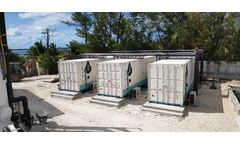
There has recently been a global shift in the way water infrastructure is delivered and managed. Governments, utilities, and industries are moving away from traditional, capital-heavy projects toward performance-based contracts, a model that focuses on guaranteed outcomes rather than asset ...

In line with the principles of “resource reduction, harmless treatment, and reuse,” the project integrates advanced equipment and smart management systems to minimize environmental impact and maximize the value of waste materials. The facility serves as a crucial part of the region’s circular economy strategy. The project is capable of processing up to 600 tons of renovation ...

For venue managers and sports complex operators, maintaining a dust-free environment is a paramount requirement for competitive integrity, athlete safety, and public health. Airborne dust particles erode playing surfaces and pose significant health risks to participants and spectators. Effective, long-term arena dust control requires advanced soil stabilization that addresses the root cause of ...
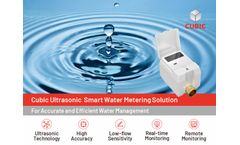
By 2030, global water demand is projected to exceed supply by 40%1, underscoring the urgency for utilities to manage resources more efficiently and minimize avoidable losses. ...

Families are relocating in search of affordable living, developers are investing in new housing to meet the growing demand, and seasonal tourist numbers are climbing. For city managers, engineers, and utilities, this kind of growth is exciting and can be great for boosting tax revenue, but it adds pressure. ...

Sometimes, these firms are tempted to try to utilize the ERP to perform their trading and risk management activities as well. Over the last twenty or so years, commodity traders, merchants, financial firms and others have utilized Commodity Trading and Risk Managements solutions (CTRM solutions) to help them ...