
Refine by
Waste Facility Articles & Analysis
719 articles found

The rapid accumulation of plastic waste has become one of the most pressing environmental challenges facing modern society. ...
The small pyrolysis plant is particularly suitable for facilities with moderate waste volumes. Instead of transporting residues to centralized processing centers, industries can establish decentralized treatment systems that improve operational efficiency while lowering disposal expenses. ...

As global waste-to-energy (WTE) and refuse-derived fuel (RDF) standards tighten in 2026, the economic viability of a solid waste processing plant no longer depends solely on throughput. ...
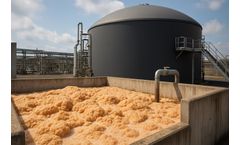
Rather than sending this waste to landfill, facilities can leverage biological treatment to recover value by converting organics into renewable energy, enabling a move toward a sustainable, resource-recovery approach for high-strength wastewater streams.Why DAF Sludge Has ValueDAF systems concentrate fats, oils, grease, proteins, and suspended solids into a ...
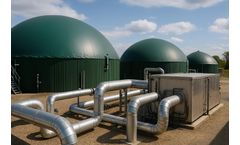
Bcm/yrUnited Kingdom: c. 6.1 bcm/yrRealizing these figures also requires securing sustainable feedstock production and sourcing, including use or restoration of marginal and contaminated land, to reduce Europe's exposure to fossil fuel shocks and to support long-term resilience of biogas supply chains.HRS Heat Exchangers provides heat-transfer solutions for the anaerobic digestion and biogas ...
llenges of Flue Gas Treatment in Waste-to-Energy Facilities Municipal Solid Waste (MSW) incineration with power generation is one of the most effective methods for waste reduction, resource recovery, and environmentally sound disposal. ...
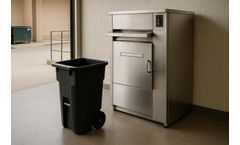
In healthcare and hospitality environments, visible waste handling can affect patient, guest, or customer perceptions. Why More Facilities Are Compacting Waste At The Source Waste compaction at the source reduces the volume of waste at the point of generation rather than transporting loose waste ...
Why Multi-Bed RTO Is the Preferred Solution for Hazardous Waste Exhaust Treatment A multi-bed Regenerative Thermal Oxidizer (RTO) is widely recognized as one of the most effective technologies for treating high-concentration CO and VOC emissions from hazardous waste incineration.Key advantages include:CO removal efficiency above 99% VOC destruction efficiency ...
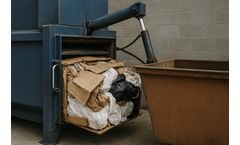
Confusion persists around the terms waste crusher and trash compactor. The phrase waste crusher describes a goal—size reduction of certain materials—but it is not a standard industry classification. For most facilities, effective waste handling depends on containment and volume reduction achieved through compaction rather than ...
A plastic recycling facility in Jalisco, Mexico struggled with low PET bottle throughput, frequent breakdowns, and high storage & logistics costs. ...
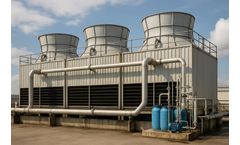
Temperature and system performance Summer heat increases thermal and mechanical loads within facilities. Heat absorbed by process water is circulated to cooling towers, where open-air cooling reduces the water temperature before returning it to service. ...
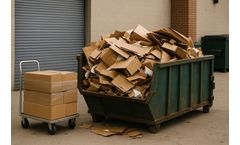
Two facilities can have identical hauling schedules and still operate with different cost structures because one manages the system efficiently while the other does not. ...

A Practical Scientific Review of 3C FlyCuard 9620 for Buyers, Operators, and Decision-Makers Introduction Across agriculture, food processing, waste management, wastewater operations, and industrial facilities, persistent fly pressure is still too often treated as a minor nuisance rather than the operational issue it truly represents. ...
Seasonal increases in fly activity align with rising temperatures and accelerated environmental activity, particularly in industrial, agricultural, municipal, and waste-management facilities. Recurring fly pressure often stems from broader environmental conditions within facility systems—moisture retention, organic accumulation, sanitation ...

"What cannot be measured cannot be managed efficiently." This principle drives modern waste management facilities to adopt advanced data analytics solutions. ...
PICVISA markets the ECOPACK optical separator with NIR technology, along with the ECOPICK solution — both are key to efficient PLA recycling in modern waste management facilities. Visit picvisa.com to discover PICVISA's full range of sustainable recycling ...
PICVISA, a leading machine vision systems company based in Barcelona, Spain, offers advanced glass recycling machine solutions that are transforming how the industry approaches glass waste management. A glass recycling machine is designed to crush, compact, and process waste glass such as jars and bottles, reducing volume by up to 20 times. By converting ...
Automated waste sorting systems are revolutionizing recycling facilities worldwide, achieving up to 85% greater accuracy than manual sorting methods. PICVISA, a leader in machine vision and AI-based recycling solutions based in Barcelona, Spain, offers cutting-edge automated waste sorting systems that transform Materials Recovery ...
The evolution of continuous pyrolysis technology represents a substantial advancement in industrial waste treatment methodology. By integrating automated operation, thermal efficiency optimization, and resource recovery systems, modern pyrolysis facilities are redefining how waste tires are processed within the circular economy framework. ...
This article presents a system-level framework in which biosurfactant technology (FlyGuard JC-9620) and stabilized oxidative chemistry (JC-9465) are integrated to modify conditions at their source by addressing both the physical structure of contamination and the microbial dynamics within water and waste systems. By addressing environmental drivers, this approach supports ...