
Refine by
advanced-oxidation books
13 books found
Advanced oxidation technologies (AOTs) oxidize a broad range of contaminants, including those that are not readily removed with other advanced technologies. ...
Advanced Oxidation Processes (AOPs)that rely on the efficient generation of reactive radical species increasingly attract greater interest with respect to their application to water remediation from a wide variety of organic micropollutants concerning human health or the environment. Advanced Oxidation Processes for Water ...
Innovative and Integrated Technologies for the Treatment of Industrial Wastewater deals with advanced technological solutions for the treatment of industrial wastewater such as aerobic granular biomass based systems, advanced oxidation processes integrated with biological treatments, membrane contactors and membrane chemical reactors. ...
Photochemical reactions play a major role in the environment including a wide range of reactions in the atmosphere, natural waters, soil and living organisms. This new volume on Environmental Photochemistry up-dates the previous edition with chapters on basic aspects including concepts of photochemical transformations and mechanistic photochemical processes in the atmosphere and water. In ...
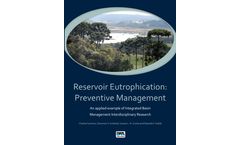
The overall objective of Reservoir Eutrophication: Preventive Management is to present the environmental and anthropogenic factors associated with the process of eutrophication and algal blooms in the Rio Verde reservoir and propose lake use and management technologies in order to minimize the problem. Eutrophication process in Rio Verde reservoir with the occurrence of intense algal blooms is a ...

An engineering design classic, Water Treatment Plant Design is your total reference on water treatment plant upgrades or new construction. ...

An essential resource containing the latest breakthroughs in the characterization, treatment and removal of Natural Organic Matter (NOM) from drinking water, Natural Organic Matter in Waters: Characterization and Treatment Methods focuses on advance filtration and treatment options, and processes for reducing disinfection by-products. Based on the author's years of research and field ...

Even though ozone has been applied for a long time for disinfection and oxidation in water treatment, there is lack of critical information related to transformation of organic compounds. This has become more important in recent years, because there is considerable concern about the formation of potentially harmful degradation products as well as oxidation products from the reaction with the ...
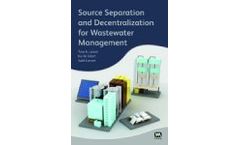
Is sewer-based wastewater treatment really the optimal technical solution in urban water management? This paradigm is increasingly being questioned. Growing water scarcity and the insight that water will be an important limiting factor for the quality of urban life are main drivers for new approaches in wastewater management. Source Separation and Decentralization for Wastewater Management ...
Features Covers emerging applications of nanotechnology for wastewater treatment Includes integrated cost-based design methodologies Focuses on the design of main treatment units Includes auxiliary units such as primary settler, final settler, sludge digester, and thickener Provides tables, equations, figures, and graphs Includes case studies and examples Emphasizing new technologies that ...
The adoption of the Urban Waste Water Treatment Directive requires sewage sludge to be subsequently treated and the Sewage Sludge Directive regulates the uses and properties of stabilised sludge for being either recycled or disposed. Both directives drive specific actions in two complementary ways. Reduction, Modification and Valorisation of Sludge aims at developing strategies for the disposal ...
The group of non-regulated contaminants termed “emerging contaminants” mainly comprises products used in large quantities in everyday life, such as human and veterinary pharmaceuticals, personal care products, surfactants and surfactant residues, plasticizers and various industrial additives. The occurrence of “emerging contaminants” in wastewaters, and their behavior during wastewater treatment ...
The group of non-regulated contaminants termed "emerging contaminants" mainly comprises products used in large quantities in everyday life, such as human and veterinary pharmaceuticals, personal care products, surfactants and surfactant residues, plasticizers and various industrial additives. The occurrence of "emerging contaminants" in wastewaters, and their behavior during wastewater treatment ...