
Refine by
carcinogen books
20 books found
Due to the toxicity, mutagenicity and carcinogenicity of azo dyes and their breakdown products, their removal from industrial wastewaters has been an urgent challenge. ...
N‐nitrosodimethylamine (NDMA) is a nitrogen‐containing organic compound that has known carcinogenic properties. NDMA has been a health concern for some industries for a number of years as it is used in rubber formulations, as a fire retardant, antioxidant, additive for lubricants and softener of copolymers; it is also a degradation product of dimethylhydrazine, an additive to ...
Dealing with the common gaseous and particulate air pollutants, including chemical carcinogens, it reviews the epidemiological and exposure chamber study research as well as considering mechanistic ...

Dose Response Relationships for Mutagenic and Carcinogenic Action of Genotoxic Agents: Measurement of Mutation Spectra as a Molecular Dosimeter; W.G. ...
Huge and growing quantities of waste are discarded every year and this waste contains toxic and carcinogenic compounds which can pose a risk to the environment. However, if handled ...
Safety and environmental health professionals, including industrial hygienists, safety managers, environmental specialists, safety engineers, toxicologists, chemical manufacturers and distributors, safety equipment manufacturers, waste disposal specialists, health care professionals including nurses and physicians, and first-response personnel including police, paramedics and firefighters will ...
The book includes a comprehensive updated analysis of cancer risk assessment procedures, with particular attention to biologically-based modelling. The presented arguments include the basic assumptions of cancer risk assessment methods, their biological basis and theoretical background, the relevant data sources, the multistage models (including the two-stage and clonal expansion models and ...
The ever-increasing release of harmful agents due to human activities has led in some areas of the world to heavy pollution. In order to protect human health and the environment, environmental standards that shall limit the release and the concentration of those toxic agents in the environment and hence the exposure to it have to be established. The related assessment and decision-making ...
Natural Organics Removal Using Membranes: Principles, Performance, and Cost provides a unique combination of important new data and operational parameters on the role of membranes in removing natural organic materials during water treatment. It examines and compares the three pressure-driven membrane processes of choice-ultrafiltration, microfiltration, and nanofiltration-in removing natural ...
Transport causes a wide range of damage to human health, ecosytems and materials which are not reflected in the prices for transport. Thus, the damage caused by cars, planes, ships and trains should be known and transformed into monetary values, so called external costs. Within this book, a method to estimate the external costs stemming from the emissions of atmospheric pollutants of transport, ...
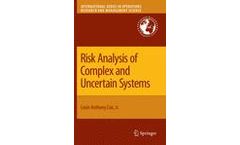
In Risk Analysis of Complex and Uncertain Systems acknowledged risk authority Tony Cox shows all risk practitioners how Quantitative Risk Assessment (QRA) can be used to improve risk management decisions and policies. It develops and illustrates QRA methods for complex and uncertain biological, engineering, and social systems – systems that have behaviors that are just too complex to be modeled ...

This book is about protection of materials and products against colonization and subsequent degradation of their properties. The book contains 11 chapters each devoted to essential aspects related to biodegradation and biostabilization. The introductory chapter gives historical note on chronological developments in the field, presents classification of biocidal products, and defines essential ...
In 2000 OpdenKamp Registration & Notification organized a two-day symposium in The Hague, The Netherlands, on 'The Practical Applicability of Toxicokinetic Models in the Risk Assessment of Chemicals'. Several speakers from Europe and the United States were invited to present the different aspects. A vast range of areas was discussed in relation to toxicological modeling and risk assessment, such ...
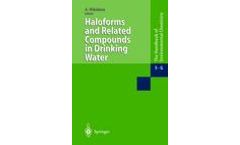
Drinking water quality has been a matter of concern for several decades. Disinfection of drinking water improves its microbiological quality and prevents disease outbreaks. However, continuously increasing scientific research concerns the presence of organic and inorganic contaminants in water. Many of these compounds, named haloforms, originate from the procedure of disinfection, being formed ...
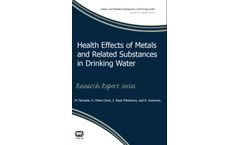
Metals are inorganic substances that occur naturally in geological formations. Naturally occurring metals are dissolved in water when it comes into contact with rock or soil material. Some metals are essential for life and are naturally available in our food and water. Trace amounts of metals are common in water, and these are normally not harmful to your health. In fact, some metals are ...
A detailed overview of innovative ways to combat the pollution of the environment. 17 peer-reviewed papers have been divided into five primary categories: Bioremediation Feasibility and Applicability--Four papers address a number of issues including how bioremediation technology compares favorably with other technologies from a cost standpoint, and the role of screening strategies in the ...
RMT Global is at the forefront of chemical risk management, offering innovative solutions that empower businesses to manage chemical safety proactively. learning, and real-time regulatory updates to deliver comprehensive risk compliance management. By leveraging ChemAlert, companies can make informed decisions, mitigate hazards early, and ensure regulatory compliance across global ...
Databook of nucleating agents contains data on the most important products in use today. Two groups of data are included: data for chemical compounds used for the manufacture of nucleating agents (data included come from many available sources and contain extensive reference) and commercial products (data from a single supplier of material). The information on each nucleating agent included in ...

Evaluates the risks to human health and the environment posed by exposure to vinyl chloride, a colourless, flammable gas manufactured almost exclusively for use in the production of polyvinyl chloride (PVC). PVC is used to produce plastic materials having wide applications in the building sector, packaging, electrical appliances, medical care, agriculture, the automotive industry, and toys. ...
Polymers selected for this edition of the Handbook of Polymers include all major polymeric materials used by the plastics and other branches of the chemical industry as well as specialty polymers used in the electronics, pharmaceutical, medical, and space fields. Extensive information is included on biopolymers. The data included in the Handbook of Polymers come from open literature (published ...