
Refine by
Carcinogen Articles & Analysis
712 news found
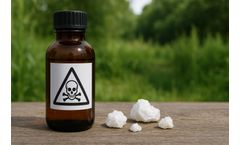
The Department for Environment, Food & Rural Affairs has published a policy paper detailing the government’s new approach to the UK REACH candidate list of substances of very high concern (SVHCs).When UK REACH came into force, all substances on the EU REACH candidate list were carried over onto the UK REACH candidate list, and UK REACH applies to Great Britain.UK REACH identifies SVHCs, including ...

“By reducing exposure to known and suspected carcinogens in homes, schools, workplaces, and industrial facilities, we can make a measurable impact on public health. ...
In the thermal breakdown procedure, PET often results in waxy residues and toxic vapors like benzene—a recognized carcinogen that poses severe risks to human well-being. This stems largely from PET's chemical makeup, featuring ester linkages that exhibit high reactivity. ...

This method is highly sensitive to most genotoxic carcinogens. As a primary screening tool, the Ames test can assess the mutagenic potential of novel chemicals and pharmaceuticals. ...
BySTEMart
These compounds are: Bioaccumulative: They build up in the food chain (e.g., in soil, water, and animal fat) and remain in the environment for decades. Carcinogenic/Mutagenic: Linked to lung cancer, reproductive harm, and immune system damage in humans, even at extremely low exposure levels. 2. ...

A factsheet about the health risks of secondhand smoke and aerosols from vaping was recently published by the U.S. Environmental Protection Agency (EPA). In it, the agency warns that smoking tobacco or marijuana, and vaping with e-cigarettes or other devices, can release harmful chemicals into the air in homes and buildings. People around the smoker or vaper are also exposed to these chemicals ...

However, some PFASs have been identified as harmful, such as carcinogenic or affecting children's growth, so water quality and manufacturing regulations concerning PFAS have been implemented in recent years, particularly in Europe and the United States. ...
“The National Toxicology Program (NTP) reports that cadmium and cadmium compounds are known to be human carcinogens. OSHA cautions that exposure to this metal is known to cause cancer and targets the body's cardiovascular, renal, gastrointestinal, neurological, reproductive, and respiratory ...
In 1995, the International Agency for Research on Cancer (IARC) classified wood dust as carcinogenic to humans. California’s Office of Environmental Health Hazard Assessment (OEHHA) added wood dust to the list of substances known to the state to cause cancer for purposes of Proposition 65 in 2009. ...

General toxicology studies add to these analyses with acute, sub-chronic and chronic toxicity, as well as carcinogenicity. Toxicity analyses like these are a necessity for determining potential adverse effects across multiple organ systems. ...
Plymovent doesn't think so! “Complying with welding fume regulations doesn’t guarantee a safe working environment,” says Michel Ligthart, Product and International Sales Manager at Plymovent. He identifies three trends to raise awareness about the dangers of welding fumes among welders. “The current legislation is far from perfect.” “When presenting to ...

Exposure to airborne carcinogens can be an occupational hazard for countless workers if the proper health and safety regulations are not being followed. Some of these same carcinogens could even be an exposure risk for anyone entering a building or worksite. ...

According to NHMRC CEO Steve Wesselingh, the difference is that in the U.S., if a chemical is deemed carcinogenic, its allowable limit must be reduced to nearly zero.Australia’s approach focuses on setting a threshold where the health risk is considered minimal, taking into account potential impacts such as thyroid issues, bone marrow problems, or cancer.What’s Next? ...
Unpleasant odors may merely be a nuisance, or malodors could absolutely be a telltale sign of your exposure to pollutants that are toxic, flammable, carcinogenic, etc. How can you tell the difference? Requesting an indoor air quality or IAQ assessment by a qualified professional is often the next step. ...

The International Agency for Research on Cancer (IARC) classified wood dust as carcinogenic to humans back in 1995. In the workplace, the Occupational Safety and Health Administration (OSHA) reports that wood dust becomes a potential health problem when wood particles from processes, such as sanding and cutting, become airborne. ...

The International Agency for Research on Cancer (IARC) classified wood dust as carcinogenic to humans in 1995. California’s Office of Environmental Health Hazard Assessment added wood dust to the list of substances known to the state to cause cancer in 2009, and the New York State Department of Labor warns that cancer, allergies, asthma, and other related problems can occur ...

Cancer is the leading cause of work-related deaths in the EU with over 100,000 cancer deaths each year. The Roadmap on Carcinogens was launched in 2016 in an effort to tackle this scandal, leading to the introduction of safer exposure limits on dozens of dangerous substances commonly found in workplaces. ...
Pollution from Denka’s plant–in particular, the carcinogen chloroprene–has been linked to extraordinarily high cancer rates in nearby Louisiana communities. ...
“The International Agency for Research on Cancer (IARC) classified wood dust as carcinogenic to humans back in 1995,” said Paul Cochrane, President of Cochrane & Associates and the IAQ Video Network. ...

Oil palm fibre is non-hazardous biodegradable material extracted from empty fruit bunch that are considered as waste after the extraction oil palm fruits. The fibres are clean, non-carcinogenic, and free from pesticides and soft parenchyma cells. Palm fibres are versatile and stable and can be processed into various dimensional grades to suit specific applications such as erosion ...