nutrient-loading Downloads
19 downloads found

Premium
The BioBarrier® HSMBR is a high strength wastewater treatment system that uses a Membrane Bioreactor (MBR). This technology removes organic pollutants and suspended solids with the use of ultrafiltration membranes. The system is specially designed to treat wastewater with higher organic and nutrient loads produced in commercial applications, and for larger flow rates (>1500 GPD) including ...
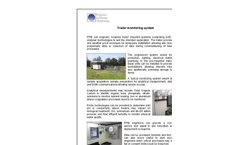
Analytical measurements may include Total Organic Carbon to identify organic load; phosphate, nitrate, ammonia to monitor nutrient loading; iron or aluminium where coagulation processes need to be monitored. ...

HYDRA-NH4 Sensor ? Measures the Nutrient Load of Waste Water ? Ammonium ISE ? Potassium ISE pH Electrode? ...

HYDRA-NH4 Sensor? Measures the Nutrient Load of Waste Water? Ammonium ISE? Potassium ISEpH Electrode? ...
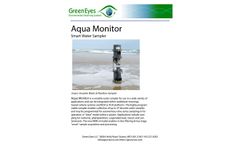
Aqua Monitor is a highly programmable sampler that uses a precision syringe pump to collect up to 47 discrete water samples. It is commonly used to be operated in autonomous time-series sampling mode as a "slave" within an integrated system. It samples for nutrients, phytoplankton, suspended-load, tracers, and contaminants. The sampler can be deployed long-term on moorings or in short-term (AUV) ...

Offices, schools, restaurants, and other facilities that are not connected to a central sewer need their own wastewater treatment systems designed to handle the highly varied wastewater characteristics generated by the different activities with each. The STAAR® Commercial Trickling Filter is a highly effective way for these facilities to manage the high organic and nutrient loads present in ...

Why use AquaPro EZ? Aquatic ecosystems are complex. When nutrient loads are imbalanced, deterioration of water quality is the end result. Decaying plant matter including algae as well as uneaten feed and fecal material add nutrients to the water and sediment. N and P contribute to the deterioration of water quality which negatively impacts the ecosystem resulting in unfavorable conditions ...
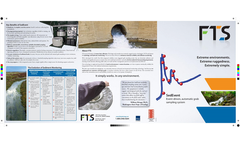
Accurate calculation of sediment loads. Accuracy that just can’t be achieved with manual grab sampling or even continuous turbidity monitoring.? ...
Excess nutrient load is a dangerous and costly problem plaguing ponds and lakes across North America an beyond. Industrial pollutants, fertilizer run off, fish and animal waste and some household detergents flow into our bodies of water, dramatically increasing the nutrient load. These increased levels lead to pond sludge build-up, murky water and algae blooms, including toxic blue-green algae. ...

The project team is investigating and examining the interactions among various components of the whole problem, including atmospheric modeling of climate change, effects of extreme events on watershed sediment and nutrient loading, in-lake response to extreme event-driven changes in atmospheric and nutrient loading conditions, ...
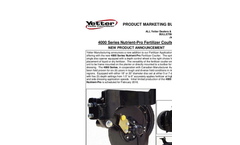
Spring-loaded and equipped with a depth-control wheel, the 4000 Nutrient-Pro Coulter is the right choice for precise placement of liquid or dry fertilizer. Proven in tough and diverse field conditions around the globe, this is a versatile coulter that can be frame-mounted on the planter or directly mounted to the ...
It works for lagooncleanout and closure, and manages nutrients very effectively (over 90% phosphorous and heavy metal removal; 50% or greater nitrogen reduction). ...

Examples will address approaches ranging from agricultural best management practices to reduce sediment and nutrient loading, to floodplain restoration and management, to strategic land protection activities. ...
However, performance data for BNR systems did not indicate that SCWRRF could meet its mass load limit by BNR with treatment alone so the other two components were proposed to make up the difference between the load limit and what could be achieved with treatment. ...

Modwen, to understand the hydrological requirements of the bog and the overall nutrient loading. The results of these studies were used to develop the remediation programme. ...
The seep liquid, however, is extremely rich in nutrients and must not be allowed to enter soil without being treated first.Liquids rich in nutrients must not be allowed to enter the soil as they cause an excessively concentrated nutrient load.2. ...

Due to the dual layer function, BBF has been successfully implemented for biological nutrient removal (BNR), tertiary treatment for water reuse application, Total Maximum Daily Loads (TMDL) compliance, and meeting stringent local regulations including TN of 3~5 mg/L for some cases. ...

It is designed to overcome the deficiencies of currently existing technologies.StormChamber™ was designed as an open bottom, high-density polyethylene infiltration chamber BMP which functions in both permeable and non-permeable soils for subsurface retention/detention of storm water runoff. It reduces nutrient and other pollutant loadings by taking advantage of ...