
Refine by
Bod Load Articles & Analysis
6 news found
From Research to a Practical Guide In the Netherlands, the Dutch Water Authorities were among the first to establish a Community of Practice to address the challenge of nitrous oxide emissions from wastewater treatment plants. The shared work of researchers, operators, and authorities has now culminated in STOWA’s Handbook on Nitrous Oxide Monitoring. The handbook is the result of years of ...
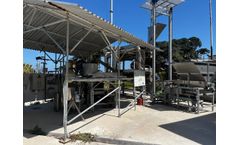
Positive effects: Energy production Management of biosolids Solids & BOD loading reduction→ enhancement of WWTP’s performance Project Website: www.biosolids2energy.eu ...
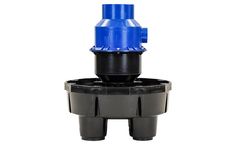
Wastewater from the facility passes through a primary septic tank into a flow equalization tank, where it is then dosed on a timed-basis to a LIXOR® 1.0 aeration system. The LIXOR reduces the incoming BOD by up to 50%, with the remainder of the BOD and TSS load handled by the HighStrengthFAST® 4.5 system at the next stage of the process. ...

The IN-PIPE system, installed in the Sevillian municipality of Lora del Rio aims to reduce the organic load of wastewater (COD, BOD, TSS, nitrogen, and phosphorus) and fat accumulations (avoiding clogging and overflows), as well to eliminate the production of corrosive hydrogen sulfide. ...

Date : Thursday 4 February Time : 2:00 pm (GMT +8) Webinar presented in English In the food & beverage industry, a new product line or a change in raw materials may result in prolonged spike in COD and BOD load as well as suspended solids. Additionally, when an effluent treatment plant (ETP) is overloaded for an extended period, you can ...

Wastewater passes through the biomass, which feeds on and breaks down the BOD and other pollutant loads. The treated effluent is discharged at the surface of the final cell where it passes through the settlement zone to produce a clean final effluent within the consent standard. E-SAF load can be reduced by the installation of an optional ...