
Refine by
Crop Yield Reduction Articles & Analysis
82 news found

ADAS welcomes the release of the All Party Parliamentary Group on Science and Technology in Agriculture’s “Feeding Britain Sustainably to 2050 – The 30:50:50 Mission” report and its objective to increase UK food production by 30% by 2050, whilst halving agriculture’s environmental footprint by 50% per unit of output. For that vision to become a reality, ...
Over the past 12 years, the YEN has helped hundreds of growers improve their crop performance and get closer to their farm’s full yielding potential. Whether you are seeking to improve crop yields, reduce your farm’s environmental impact, or improve overall crop quality, the YEN will help you: Measure your current farm performance on up to 60 factors, including seed ...
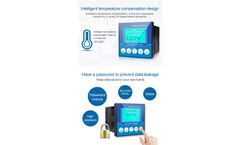
Agriculture is the backbone of our global food production system, and its sustainable development is crucial for ensuring food security and environmental conservation. In recent years, there has been a growing realization of the impact of water quality on crop growth and productivity. Water quality sensors have emerged as a valuable tool in enhancing agricultural practices by providing real-time ...

The automated robots allow farmers to use less herbicides and reduce labor to remove unwanted plants while improving the reliability and predictability of costs, crop yield and more. “AI and deep learning technology are creating efficiencies across a variety of industries and we’re excited to apply it to agriculture,” said Carbon Robotics CEO ...

Located in the highly productive greenhouse area in the Almeria region in southern Spain, a greenhouse grower with cucumbers in winter and watermelons in summer ran into some irrigation issues: the soil in the region is dry, the climate warm and the operators use organic fertilizers. The plants are grown in the typical Almeria sandy soil (enarenado) and are irrigated with a modern drip irrigation ...
ByHPNOW

Increased atmospheric CO2 levels and climate change are believed to contribute to extreme weather conditions, which is a major concern for many. And beyond extreme events, global warming is also predicted to affect agriculture.1,2 While climate change is expected to affect agriculture and reduce crop yields, the complete effects of climate change on agriculture and the resultant human food ...

Some of the most important crops risk substantial damage from rising temperatures. To better assess how climate change caused by human greenhouse gas emissions will likely impact wheat, maize and soybean, an international team of scientists now ran an unprecedentedly comprehensive set of computer simulations of US crop yields. The simulations ...

A new test could save time and money diagnosing plant viruses, some of which can destroy millions of dollars in crops each year in Florida, says a University of Florida Institute of Food and Agricultural Sciences researcher. In a newly published study, Jane Polston, a UF/IFAS plant pathology professor, examined several ways to detect the DNA genome of begomoviruses. These viruses have emerged ...

Nowhere in the world is the average grain yield as high as in the Netherlands, where it is over ten tonnes per hectare. Research by Wageningen UR shows that the introduction of new varieties has caused yields to increase by approximately 8 to 10 per cent per decade. Converted to a hectare of winter wheat, this represents an increase of 800 to 1,000 kilograms; a huge achievement for breeders of ...

Pesticide-sparing approaches to farming do not have to compromise on crop yields, new research suggests. A study that explored the impact of reduced herbicide use across a variety of different farming contexts found that herbicideefficient systems could be just as productive as conventional systems — and more so than organic systems — whilst having ...
This reduces crop yields and quality, and potentially affects food supply in some areas. ...
Phosphorus is essential for modern agriculture. Supplies are dwindling and markets are concentrated, presenting a serious threat to food security. Tackling this emerging global sustainability risk requires effective governance to ensure phosphorus is available and accessible to farmers worldwide. This study presents a series of phosphorus security indicators to support this goal. Phosphorus is ...
Of the 11 scenarios, four led to a significant reduction in emissions while maintaining, or even increasing, crop yields compared with the baseline. Five of the scenarios led to reduced crop yields. The best overall solution, balancing yield and ammonia reduction, relied on a ...

For the first time, satellite mapping of Latin America shows that the continent’s agricultural expansion has waned in the wake of the global economic downturn, according to UBC research. “Nearly every agricultural region across Latin America slowed down in expansion from 2007 to 2013, compared to the previous six years,” says Jordan Graesser, the study’s lead author. ...
Biochar, a material obtained after thermal treatment of this waste through pyrolysis, is an organic fertilizer that applied in soils and not only has positive effects on crop yields, but also represents a significant reduction of CO2 emissions compared to the direct application of manure waste on soils. ...

Despite their benefits, however, living mulches can also result in reduced cash crop yields if they compete with the vegetable crop for limited resources. ...

Zheng Guogang, head of the China Meteorological Administration, says future variations in climate are likely to reduce crop yields and damage the environment. In one of the strongest official statements to date on the challenges faced, Zheng told China’s official Xinhua news agency that climate change could have a “huge impact” on the country, with a growing risk of ...
Beetles that are helpful to farmers can be poisoned if they feed on slugs that have eaten crops treated with neonicotinoids, a new study reports. The slugs themselves are not harmed by neonicotinoids. In American field trials, researchers found that plots planted with neonicotinoid-treated soybeans contained more slugs, fewer beetle predators and had 5% lower yields. The insecticide may be ...
Increased soil biodiversity can reduce nitrogen pollution, improve nutrient uptake by plants and even increase crop yields, new research suggests. The two-year study found that levels of nitrogen leaching from soil with an abundant soil life were nearly 25% lower than for soil with a reduced level of soil life. Practices which enhance soil biodiversity such as reduced tilling, crop rotation and ...

A new NASA satellite that will peer into the topmost layer of Earth's soils to measure the hidden waters that influence our weather and climate is in final preparations for a Jan. 29 dawn launch from California. The Soil Moisture Active Passive (SMAP) mission will take the pulse of a key measure of our water planet: how freshwater cycles over Earth's land surfaces in the form of soil moisture. ...