
Refine by
Effluent Cod Articles & Analysis
16 news found
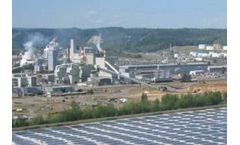
They have been successfully employing the rapid, green and safe peCOD chemical oxygen demand (COD) method for improved effluent process control which has led to significant cost savings for the mill. ...
The reason for the sudden rise of COD and BOD in the effluent from the secondary sedimentation tank reflects the failure of sewage treatment. ...
Using advanced treatment technologies, the group offers unique solutions to some of the most critical water and waste water and gas effluent challenges. Process Expertise & Applications: Water and wastewater disinfection, TOC, COD and micro pollutants oxidation VOCs, BTEX, H2S, Mercaptans, gas effluents and odour removal ...

Taking sewage treatment system as an example, the main process adopted is our patented HBF high efficient denitrification process, the effluent COD is 30mg/L, and the ammonia nitrogen concentration is 0.5mg/L, which is better than the discharge standard. ...
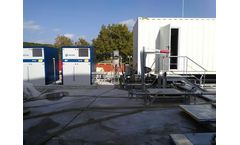
The design capacity of the Treatment Plant is 55 m3/d and requires to treat up to 504 Kg COD/day and 62,5 Kg NH4-N/day. In order to deal with this heavy polluted wastewater arising from such Municipal Solid-Waste Management Facility DEVISE has incorporated an extensive two-stage biological process, using MBR philosophy where the separation of the ‘bio-solids’ was ...
For TOC measurement, the photometric procedure is more sophisticated and bears a wider tolerance level in the results. COD The COD is the main sum parameter of water and the indicator of the sewage purification performance. Therefore COD is used to quote the effluent discharge fee. COD determination can ...
Removal of this outstanding percentage of the wastewater’s Chemical Oxygen Demand (COD) load means wastewater effluent leaving the plant is of such high quality that it dramatically reduces the impact of the HP Hood facility on the Town’s small municipal treatment plant, which receives the treated effluent, significantly improving ...
The liquid fraction from the decanter centrifuge is further treated in an aerobic SBR-NAS® system equipped with an MBR, to purify the effluent before it can be discharged. The aerobic system effectively removes nitrogen and COD and the effluent is free of suspended solids. In order to produce an effluent that qualifies for ...
The liquid fraction from the decanter centrifuge is further treated in an aerobic NAS® system equipped with an MBR, to produce an effluent which can be discharged. The aerobic system effectively removes nitrogen and COD. The effluent is free of suspended solids. In order to produce a dischargeable effluent towards open ...

Real Tech is growing and evolving, offering our clients new and innovative solutions for water quality analysis including: Real-time BOD and COD wastewater effluent monitoring systems Total solution, customized monitoring stations Early warning, event detection systems (EDS) Access to data anywhere, anytime with remote monitoring and much more...! ...

Enhances Performance of MBR Technology to Remove Contaminants and Produce High-Quality Effluent Reduces Recalcitrant COD in Effluent by More than 50 Percent Ideal for Industrial Plants, Including Refining, Chemical Processing and Textile Industries GE (NYSE: GE) today introduced a new membrane bioreactor (MBR) with membrane accommodating ...
Colsen International B.V. and Voith Paper Environmental Solutions are in the process of establishing an expertise center in order to gather knowledge about technologies which can tackle the problem of inert COD and in particularly humic substances. Industries are increasingly subjected to stringent discharge limits, for instance 50 mg COD L-1 in China. These ...
The effluent-screening programme is vital to both the Shasun production facility and the Bio-plant. ...
In pilot studies both raw and digested sludge can be treated at 15-20% dry solids, which means simplified dewatering. The effluent chemical oxygen demand (COD) level is less than 5 parts per million (ppm), so no further treatment is necessary. ...
GWE got the order for this very sophisticated 5-stage treatment plant against severe international competition. Given the very strict effluent quality requirements of COD <= 40 that have to be met under the contract, GWE designed an advanced 5-stage treatment process consisting of pre-treatment (screening, sand removal, flocculation + DAF), anaerobic ...
In 2007 GWE grew its global starch effluent capacity with 1,000 tonnes COD/day in more than 10 new projects. ...