
Refine by
Luminescence Articles & Analysis
45 news found

An atomic spectrum is a graph depicting the intensity of photons absorbed or emitted (luminescence and fluorescence) by atoms in relation to photon energy (typically expressed in terms of wavelength), which can offer relevant information regarding the chemical composition of samples. ...
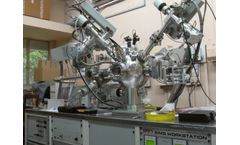
The flexibility of sputter-sectioning, in combination with the principal advantages of SIMS technique, such as large dynamic range both in the mass separation and detection systems, enables the SIMS technique to be extremely sensitive for the quantitative analysis of solid surfaces and thin films. With optimized experimental conditions, like extremely low primary beam current (down to ~ 10 nA) ...

The iGEM (International Genetically Engineered Machine) Competition is an annual event in synthetic biology. Teams participating in iGEM typically spend several months conducting research, designing their projects, and building their biological systems. These projects can range from addressing real-world problems in areas such as healthcare, environmental sustainability, and manufacturing, to ...

Research hotspots of functional polymers: Polymerization methodologies, luminescent polymers, photovoltaic polymers, biorelated polymers, supramolecular polymers, stimuli-responsive polymers, shape-memory polymers, separation polymer membranes, energy storage polymers, covalent organic framework polymers, etc. ...
One of the key focuses of Alfa Chemistry's custom synthesis services is the production of luminescent biotinylation reagents. Luminescent molecules exhibit light emission upon excitation, making them invaluable tools in a myriad of research applications such as imaging, immunoassays, and drug delivery systems. Alfa Chemistry's synthesis of ...
With state-of-the-art instrumentation and a dedication to scientific rigor, Alfa Chemistry is able to deliver macromolecular drug bioanalysis, small molecule drug bioanalysis, biomarker assay, aggregate analysis, luminescence testing, and affinity capture elution analytical services. Comprehensive Project Services Furthermore, Alfa Chemistry provides one-stop biopharmaceutical ...
Over the past decade, we've developed nearly 3,000 photochemistry-related chemicals, including common fluorophore products, fluorescent probe products, OLEDs, and other luminescent materials and intermediates, for researchers worldwide," said the Marketing Chief of Alfa Chemistry. ...
Oxygen-donor ligands can form complexes with various metals, including but not limited to transition metals, alkaline earth metals, and rare earth metals, which are widely used in catalysis, luminescence, and medicinal fields. Currently, Alfa Chemistry offers all kinds of oxygen-donor ligands, covering diketone ligands, BINOL ligands, crown ligands, as well as BIPHEN and TADDOL ...
Earlier this month, Alfa Chemistry announced the implementation of three types of specialized materials, i.e., luminescent materials, biomedical polymers, and electroplating intermediates, to its already well-established product portfolios. Luminescent Materials Luminescent materials exhibit excellent photoluminescence properties, good chemical ...

About Alfa Chemistry Having become a preferred partner for leading companies and research institutes in the chemical industry, Alfa Chemistry now aims to transform amazing photochemistry ideas into reality by offering a complete range of high-quality photochemistry-related products, including fluorophores, fluorescent probes, luminescence material, photosensitizers, ...

Such as Atomic fluorescence analysis technology, non-dispersive infrared analysis technology, UV-visible full wavelength absorption spectrum technology, enzyme substrate analysis technology, luminescent bacteria method, anodic stripping voltammetry technology, sequential injection technology, intermittent analysis technology, ring injection flow analysis technology, etc. ...
Moreover, in order to enhance the luminescence stability of CdS quantum dots, wideband gap semiconductor particle ZnS is used as the shell to coat narrowband gap semiconductor particle CdS. ...

.: the new compact discrete analyzer for routine measurement of water and soil/plants liquid extracts samples suitable for small laboratories Easychem TOX discrete laboratory analyzer, for acute toxicity determination in liquid samples using luminescence bacteria as assay kit, completely automating ISO 11348-3 and GB-T 15441 standard laboratory methods and our other products for ...

In addition to reviewing the methodology guidance, one request for exemption will be evaluated during Pack 15: Cadmium in luminescent material for on-chip application on LED semiconductor chips. 3E Analysis The previous review of the list of restricted substances resulted in the addition of four phthalates to Annex II, which must be restricted in EEE from July 2019. ...

A new system for monitoring toxicity TOXcontrol® (MicroLAN BV, The Netherlands) has been used to assess the toxicity of a selection of priority or emergent compounds in the laboratory. In this study, inhibition curves and EC50 – Effective Concentration causing 50% inhibition – of selected compounds (including pesticides, pharmaceuticals, surfactants and metals commonly detected in ...

Recently, a promising material with ~ 1.8 μm emission has been reported by the Changchun University of Science and Technology (China), also using an FLSP920 from Edinburgh Instruments. Mid-IR luminescence from NaY0.77Yb0.20Er0.03F4 measured in an FLS980 with an InSb detector IR emission spectra of Er-doped tellurite glasses upon 808 nm excitation. ...

Acquisition speed and gating capabilities of the iStar sCMOS make it a highly attractive choice for fast plasma imaging, combustion studies based on Planar Laser-Induced Fluorescence (PLIF), transient absorption and time-resolved luminescence. Antoine Varagnat, Product Manager at Andor Technology, said; “The iStar sCMOS is the only platform on the market to offer ...

Staff at Connah’s Quay Power Station have installed the latest luminescent optical dissolved oxygen (LDO) monitoring technology to minimise operational requirements whilst protecting the plant’s high value assets. ...

But how warm exactly can differ from location to location, for example because of snowmelt infiltration or a warm aquifer amidst the rocks. Luminescence can retrieve the temperatures that the rocks have experienced over thousands of years. ...

” Richard Ludescher - Professor and Dean of Academic Programs, School of Environmental and Biological Sciences - Rutgers State University of New Jersey: “Edible Luminescent Probes: Relating Photophysics to Food Quality.” Stephen Sims - Professor of Physiology and Pharmacology, Western University, Bone and Joint Institute: “Role of subcellular calcium ...