
Refine by
Luminescence Articles & Analysis
88 articles found

Optical and Physical Properties of UCNPs The luminescence of UCNPs originates from the step-by-step energy level transition of lanthanide ions. ...
Upconverting nanoparticles (UCNPs) break through the traditional Stokes limit and achieve "anti-Stokes luminescence" by absorbing low-energy near-infrared photons and emitting high-energy visible/ultraviolet photons. ...
UCNPs combined with other functional materials to construct nanocomposites and achieve synergistic effects can be used as candidate materials with more powerful functions, providing better upconversion luminescence effects and thus exerting greater application potential. It is worth noting that despite the good progress made in the synthesis and application of UCNPs-based ...

These genes encode proteins that produce a detectable signal, often luminescence, fluorescence, or color change. Common examples of reporter genes include luciferase, green fluorescent protein (GFP), and β-galactosidase. ...

Choosing the appropriate fluorescent protein is crucial as different fluorescent proteins have different spectral properties (like GFP, RFP, etc.).2. Luminescent CharacteristicsFluorescent proteins can emit light when exposed to light of a specific wavelength, allowing researchers to visualize and track the location and dynamics of the tagged protein.Applications1. ...

Biochemical Detection Methods Based on Fluorescence or LuminescenceSpecific chemical probes are used to detect the activity of acetylase or deacetylase, and these probes undergo fluorescence or luminescence changes during the enzymatic process.These methods can be used alone or in combination to obtain more comprehensive information on the deacetylation state. ...
Application of Photoresist Organic luminescent layer Encapsulation structure Electrode Transparent conductive ...
By appropriately modifying these fluorophores, coverage from blue and green light to red and near-infrared light (650-900 nm) can be achieved. . In addition, luminescent quantum dots, upconversion nanomaterials, polymer fluorescent materials, fluorescent proteins, etc. can also be used as signaling groups in fluorescent probes. 3. ...

Fluorescent Microspheres for Nucleic Acid Detection Microspheres encoded with up-converting luminescent materials of different colors can be used to bind different reporter labels, and when bound to single-stranded DNA, the fluorescence intensity will be different. A scientist used a similar method to wrap up-converting luminescent nanoparticles inside ...

Optical Sensors: Advanced optical sensors use luminescence-based technology to measure dissolved oxygen, offering precise and rapid results. ...

Since its discovery in 2004, the preparation, luminescence mechanism and application of CDs have been the hotspot of research. ...
When the separated components are eluted from the chromatographic column, they are immediately mixed with an appropriate chemiluminescent reagent to cause a chemical reaction that causes the luminescent substance to emit radiation, the intensity of which is proportional to the concentration of the substance. ...
This new type of material combines the advantages of perovskite materials and quantum dots, has ultra-high luminous efficiency (~100%) and color purity, and can freely adjust the emission wavelength, making it one of the most advanced luminescent materials ever. Compared with traditional inorganic quantum dots (such as CdSe), perovskite has comparable or superior performance in ...
Biomedical complexes have been developed for drug delivery, disease treatment, magnetic resonance contrast agents, etc. (3) In terms of sensing applications, luminescent coordination complexes, especially transition metal complexes (e.g., Ru, Os, Re, Rh, Ir complexes), have attracted much attention due to their excellent performances. ...
Luminescence property The principle of luminescence of quantum dots is similar to that of conventional semiconductor luminescence, that is, carriers in a material reach an excited state after receiving external energy, and release energy when carriers return to the ground state, and this energy is usually released in the form of light. Unlike ...

The second part deals with the photochemical and photophysical processes in nature and artificial systems, using examples taken from applications in nature, industry and current research fields, ranging from natural photosynthesis, to photomedicine, polymerizations, photoprotection of materials, holography, luminescence sensors, energy conversion, and storage and sustainability ...

What is Dissolved Oxygen? Dissolved oxygen is a measure of how many O2 molecules are present in a liquid (most often water) at any given time. It is incredibly important because oxygen sustains life in bodies of water and reduced dissolved oxygen levels can act as a warning for events that destroy ecosystems, such as algae blooms. The units of measurement are typically mg/L or on a scale of ...

In this article we answer the question, “What is the Difference between Luminescence, Photoluminescence, Fluorescence, and Phosphorescence”.What is ...
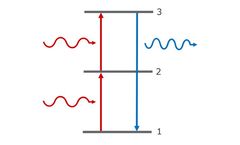
From these three states the Er3+ radiatively relaxes back down to the 4I15/2 state releasing high energy photons.The upconversion luminescence spectrum of NaY0.77Yb0.20Er0.03F4 was measured using the FLS1000 Photoluminescence Spectrometer and is shown in Figure 7. The FLS1000 can be equipped with a high power 980 nm CW laser for excitation and a double emission monochromator for ...
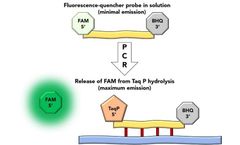
This beseeches the need for chemists and biologists to continue developing new generations of fluorescence and quenching probes, especially ones that require fewer cycles of PCR to be detected for more rapid screening.COVID-19 Testing InstrumentationDS5 UV-Vis SpectrophotometerEdinburgh Instruments provides the most sensitive fluorescence, phosphorescence, and luminescence ...