
Refine by
Nutrient Management Articles & Analysis
213 news found
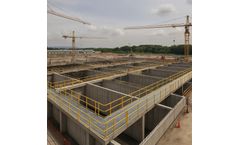
Together, these parallel projects demonstrate a fully integrated approach to wet-weather treatment, solids management, and energy-efficient nutrient removal.Original: ...

In February 2026, Defra announced the launch of a new online Nutrient Management Planning Tool, developed with support from the ADAS soils and nutrients team and RSK Business Solutions The new tool – the Plan and Manage Nutrient Applications Tool – will help farmers make smarter, more efficient ...
The 2026 ADAS Nutrition Challenge invites companies to put their nutrient-management strategies to the test. Participants will compete directly against ADAS crop scientists and the industry standard RB209 to see who achieves the highest gross margin over nutrient costs. ...
These visits have included a wide range of experiences: crop trials, infrastructure appraisals, soil and nutrient management planning, water management visits, agri-environment scheme applications, and more. ...
We can also help you with: Benchmarking your system and improving technical performance Diversifying your income stream Integrated Pest Management Planning (IPM) Soil health and nutrient management ADAS is a lead provider in the Farming Connect service, and you can use Farming Connect funding to access our advice. ...
This week, the Royal Agricultural Society of England (RASE) awarded Professor Roger Sylvester-Bradley, Head of Crop Performance at ADAS, with the RASE 2025 Science and Technology Award, in recognition of his outstanding contribution to agricultural science. For over four decades, Roger has been at the forefront of agricultural science, shaping the way we understand and manage crop performance. ...
The thought of an Environment Agency (EA) inspection causes stress for many farmers. With broad inspection areas and various regulations to consider, it can be difficult to prepare. To help alleviate some of the uncertainty, we explore the eight most common reasons for inspection failures and things farmers should consider. According to the AIC, the Environment Agency ...
The NFU held a summit at the end of last month (July 29th) to address the different challenges that farmers continue to face with national food production, focusing particularly on both water quality and water quantity. Held on the Yorkshire farm of NFU vice-president Rachel Hallos, the summit was attended by over 60 delegates, including environmental secretary Steve Reed, water companies, ...
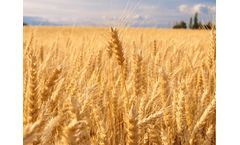
In a recent NUTRI-CHECK NET webinar, ADAS crop physiologists Dr Sarah Kendall and Dr Tamara Fitters shared how grain analysis and post-harvest reviews can play a pivotal role in refining nutrient strategies for future seasons. Many farmers are already diligent about planning their crop nutrition at the beginning of the season, but few revisit and adjust those plans as the season ...
Collaborative and concerted efforts to tackle water pollution must continue at scale to drive water quality improvements, say experts at NRW as new and interim water quality data for Wales in 2024 is published. Data for phosphorus compliance shows that 50% waterbodies in Welsh SAC rivers are now meeting stringent targets, compared with 39% in 2021. In total, 122 individual water bodies within ...
Tell us how you make nutrient management planning decisions following catch or cover crops As part of the new Cover crop decision support tool (DST) scoping project funded by AHDB, Anglian Water, Wessex Water and Southern Water, ADAS is carrying out a survey to understand nutrient management planning decisions ...
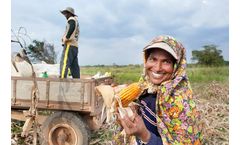
The International Water Management Institute (IWMI), in partnership with the World Vegetable Center and Sri Lanka’s Department of Agriculture is promoting safe and sustainable vegetable cultivation in Sri Lanka through a package of good agronomic practices using farmer participatory trials. IWMI’s research under the CGIAR Initiative on Fruit and Vegetables for Sustainable Healthy ...
Due to climate change, regions across Asia and Africa are experiencing higher frequencies of floods and drought. Coupled with rising temperatures, traditional crop-growing patterns have been altered, delayed, and disrupted. A subsequent decline in crop quality and quantity has shown macro-scale impacts on agriculture, vegetable markets, and local community ...
The report dives into these significant contributors of greenhouse gases – livestock and fertilizer – and details four technologies that can reduce emissions: 1) feed additives that can reduce livestock enteric methane emissions by up to 30%; 2) low-methane forages such as legumes and enriched grasses that naturally lower livestock emissions; 3) ‘green ammonia’ for ...
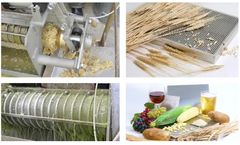
. ▪ Livestock Watering: Wedge wire screen filters are employed in watering systems to remove impurities and ensure a continuous supply of clean water to livestock, contributing to healthier animals and improved productivity. ▪ Nutrient Management: Wedge wire screens are utilized in nutrient management systems to separate solids ...

The overgrowth of algae in ponds is a significant problem, bad for water quality, and unbalanced to the ecosystem. Traditional algae control methods often include chemical treatment or mechanical removal, which can have environmental impact or labour-intensive maintenance drawbacks. Ultrasonic treatment for algae has recently shown much potential as an alternative. Such technology utilizes sound ...
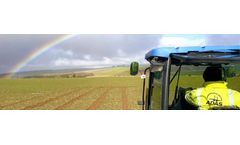
This year’s challenge takes place on the Yorkshire Wolds with each entrant being assigned a 48 m2 plot of winter wheat replicated 4 times. A separate control treatment will receive nutrition in line with RB209 field assessment recommendations and a second control treatment will be left untreated. Other than fertiliser and biostimulant choice and timings, all other crop applications will ...
Hydroponics is a method of growing plants without soil, using nutrient-rich water solutions instead. This technique allows for precise control over the growing environment, including nutrient delivery, water supply, and light exposure, leading to faster growth rates and higher yields. ...
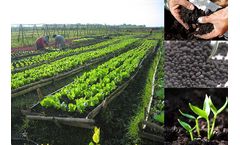
Livestock Watering: Wedge wire screen filters are employed in watering systems to remove impurities and ensure a continuous supply of clean water to livestock, contributing to healthier animals and improved productivity. ? Nutrient Management: Wedge wire screens are utilized in nutrient management systems to separate solids from ...
Over the last few years, more and more people have become aware there is a global water crisis, and the UK needs to do more to protect its water health for future generations. According to the World Wildlife Fund, 1.1 billion people around the world do not have access to water. Even more frighteningly, 2.7 billion struggle to find water for at least one month a year. It is not just a problem ...